By Favour Ulebor, Abuja
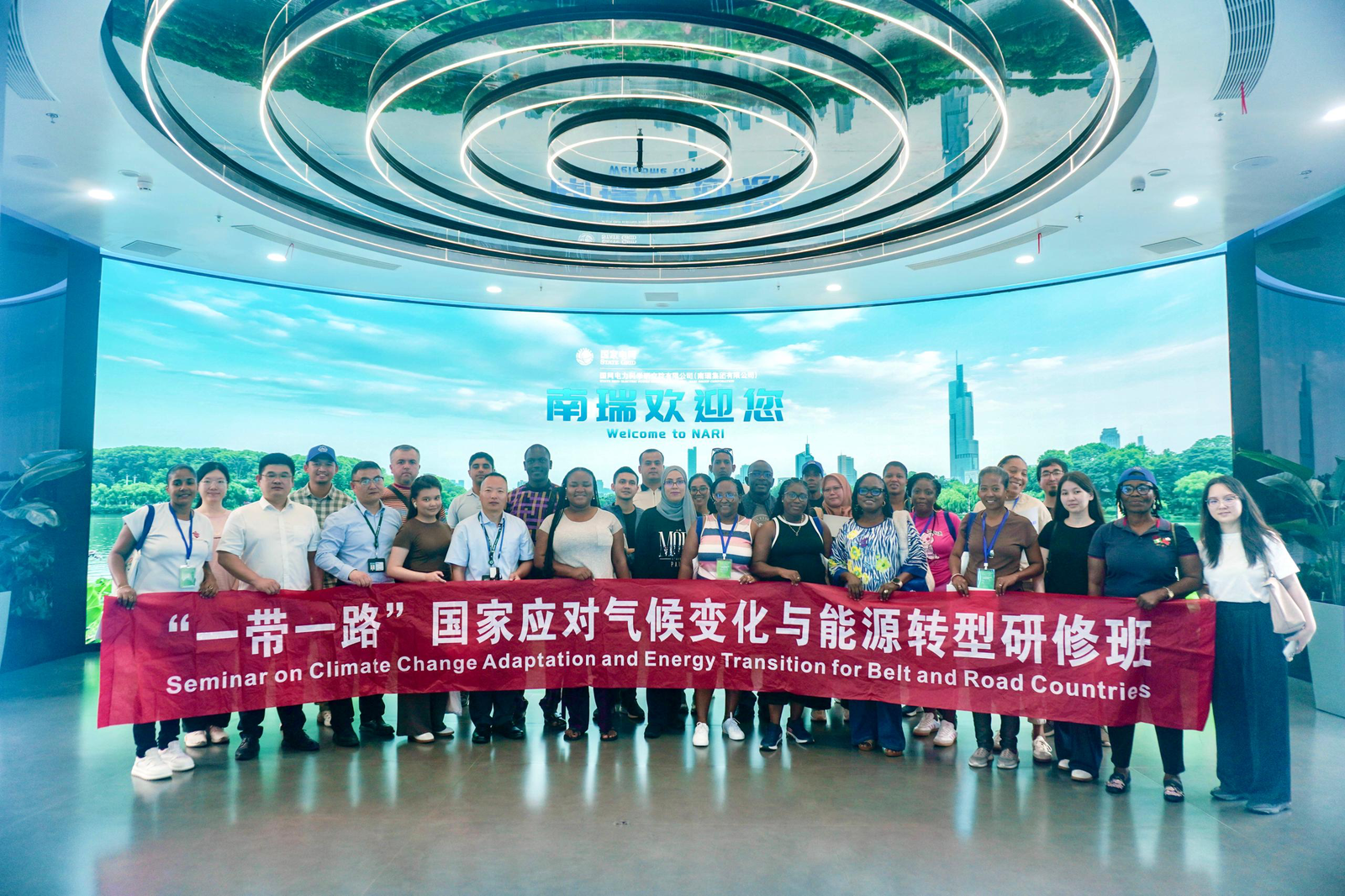
A global seminar on climate change adaptation and energy transition for Belt and Road countries has concluded in China with a renewed call for deeper international collaboration, technology sharing, and cultural exchange to tackle the world’s growing environmental challenges.
The two-week programme, which drew 25 government officials and technical experts from seven countries — Nigeria, Chile, Cuba, Grenada, Indonesia, Tunisia, and Uzbekistan — was organized by the Hangzhou Regional Center (Asia-Pacific) for Small Hydro Power (HRC) and sponsored by the Ministry of Commerce of China.
Speaking at the closing ceremony, Director General of HRC, Mr. Xu Zhifeng, praised the participants for their active engagement, describing the seminar as a successful and meaningful exchange of ideas and experiences.
He said the programme offered a robust platform for sharing China’s progress in clean energy innovation, low-carbon development, and climate resilience.
He said, “Over the past two weeks, we have embarked on a fulfilling and productive journey together. Through in-depth lectures, case studies, and study visits, we have examined key areas including multi-energy complementary technologies, clean energy development, water resource management, and sustainable growth strategies.”
Participants visited notable sites such as the Laoshikan and Fushi Hydropower Stations in Anji County, where they observed China’s green ecological construction firsthand.
They also toured the Tiexinqiao Water Experiment Center and the NARI Group Corporation, gaining exposure to cutting-edge hydraulic engineering tests and renewable energy technologies.
According to Xu, these practical visits helped participants better understand China’s approach to climate change adaptation and energy transition.
Cultural excursions were also woven into the experience, with participants visiting Nanjing and Shanghai. From local urban folk customs to a night cruise along the Huangpu River, Mr. Xu said the experiences deepened mutual respect, cultural appreciation, and people-to-people connection among participants.
He said, “In line with President Xi Jinping’s Global Development Initiative, Global Security Initiative, and Global Civilization Initiative, China remains firmly committed to building a Green Silk Road; This is part of our belief that a green transition is not a burden on development but a new driver of high-quality growth.”
He thanked all participants for their passion and commitment, and extended special appreciation to HRC staff for their efforts in planning and executing the seminar.
One of the participants from Nigeria, commended the seminar for providing a timely and enriching platform to tackle one of the world’s most urgent issues.
She also conveyed Nigeria’s appreciation to the government of China and HRC for their efforts in building capacity and fostering global learning.
She said, “Throughout this seminar, we’ve explored various aspects of climate adaptation and sustainable energy, especially China’s experience in harnessing renewables. As we return home, I urge all participants to put the knowledge gained into action and continue to build on this international cooperation.”
Speaking on behalf of the seminar participants, a researcher and Assistant Professor from Tunisia’s National Research Institute for Rural Engineering, Water and Forestry, Dr. Marien Soussi, described the seminar as a transformative experience.
She urged participants to focus on bridging adaptation science with energy policy, scaling technologies with fairness, and turning research into impactful community solutions.
She said, “We had the opportunity to engage with experts, explore case studies, and witness innovative technologies. The discussions and tours have not only expanded our technical knowledge but also inspired us to localize these solutions in our own countries.
“Let us sustain this momentum and continue to work together toward a resilient and sustainable future,” she concluded.
Since its establishment in 1981 through cooperation between the Chinese government, UNDP, and UNIDO, HRC has trained experts from over 100 countries in small hydropower, rural electrification, and clean energy deployment.
Over the last four decades, it has grown into a central hub for international cooperation on renewable energy development, particularly for developing nations.
As the seminar closed on June 18, 2025, participants left with renewed resolve to apply what they had learned, strengthen global networks, and champion policies that support low-carbon growth.
Disclaimer
Comments expressed here do not reflect the opinions of Vanguard newspapers or any employee thereof.