…Urges Transition from Raw Materials Export to Manufacturing
By Emmanuel Elebeke
ABUJA: The Upper legislative chamber, Senate Tuesday reaffirmed the full legislative backing for the 30% Minimum Value-Addition Bill, currently under consideration, assuring that the bill will be passed into law this week.
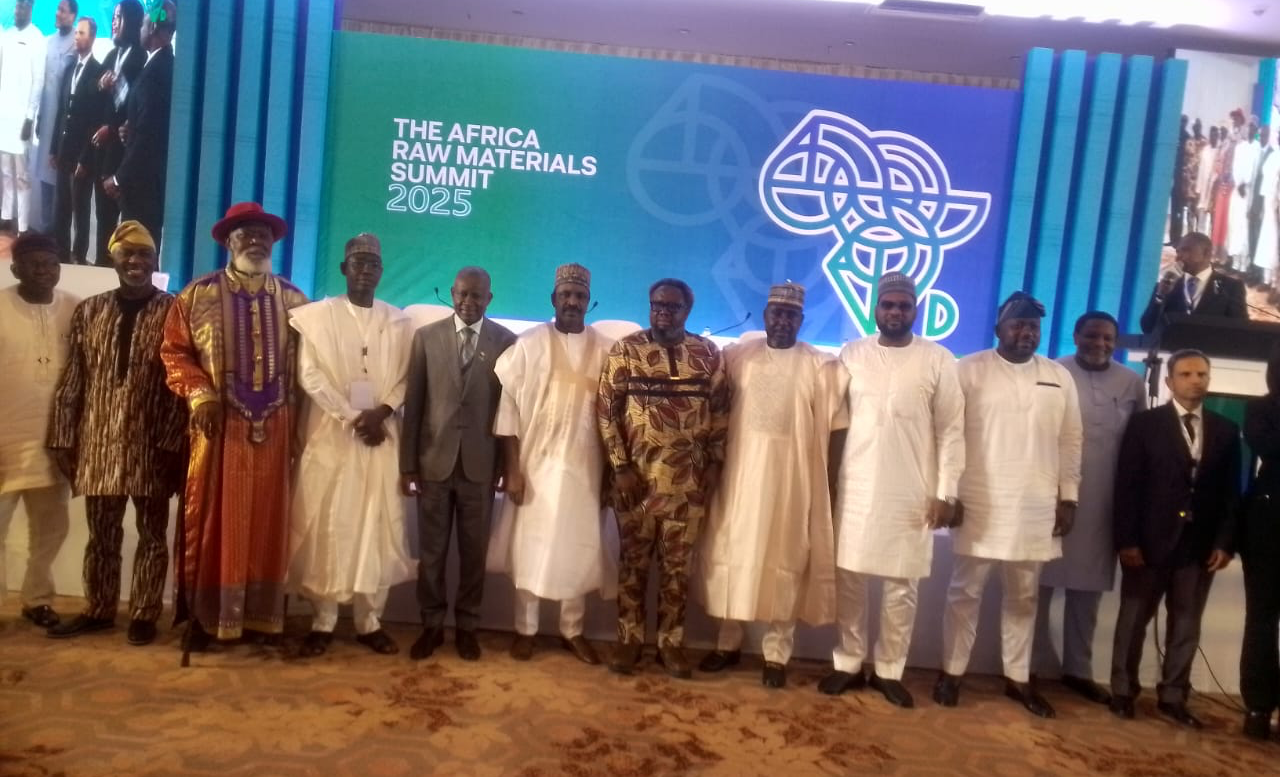
Senate President, Senator Godswill Akpabio, gave the assurance while declaring open the ongoing maiden Africa Raw Materials Summit 2025 holding in Abuja, with the theme: “Shaping the Future of Africa’s Resource Landscape”.
The bill mandates that no raw material of Nigerian origin shall be exported without undergoing a minimum of 30% local value addition, whether through processing, refining, packaging, or industrial transformation.
This legislation, according to him, is not intended to stifle trade; rather, it is designed to ignite domestic enterprise, create jobs, attract capital, and build resilient value chains that benefit our people.
Represented by Chairman, Senate Committee on Innovation, Science and Technology , Senator Abbas Aminu Iya, Akpabio highlighted the significance of the 30% Minimum Value-Addition Bill, which aims to end raw materials export.
“This bold initiative aligns with a broader continental vision. We must reject the historic pattern in which Africa merely supplies inputs while others reap the benefits of innovation, branding, and global market control. The future of Africa lies not beneath our soil—but in what we do with what lies beneath. And what we do must be backed by law, driven by policy, and sustained by enterprise.
“We recognize that legislation alone is not enough. Institutions must be empowered. It is my hope that this model will be replicated across African nations, with regional centres of excellence established to share data, technologies, and best practices in raw material development,” he said.
He also reaffirmed the commitment of the Senate to ensuring that Africa fully leverages the African Continental Free Trade Area (AfCFTA) to foster intra-African processing, technology transfer, and market expansion.
The Nigerian Senate is prepared to ratify and support any continental or regional agreement that promotes beneficiation, local content, environmental sustainability, and inclusive industrial growth.
“Let this declaration not merely reside in summit communiqués but become a living charter—a reference for executive action, legislative alignment, and investment mobilization. Let it guide our representations at the African Union, the G20, and global trade forums where Africa’s voice must no longer be that of a supplier, but that of a producer.
“No government can do this alone. Our task is to empower African entrepreneurs, SMEs, cooperatives, and young innovators who will turn mineral wealth into exportable machinery, agro-resources into packaged goods, and research into revenue.
“We must also actively engage our diaspora—Africa’s sixth region—who bring with them not only remittances, but technical knowledge, financing models, and global market access”
He therefore, re-echoed the call for the adoption of an Abuja Declaration on Raw Materials and Industrial Transformation in Africa, urging that the declaration should not merely reside in summit communiqués but become a living charter, a reference for executive action, legislative alignment, and investment mobilization.
In his Address, the host minister, Chief Uche Nnaji, described the summit as a continental declaration of intent to change the African story, from raw material export to local processing and value addition.
“Value addition is no longer aspirational but a path to economic rejuvenation and global competitiveness. The Ministry Science, Innovation and Technology remains unwavering and committed to supporting this initiative to fruition.
“We are currently retooling the legal frameworks, aimed at changing the paradigm and turning the African raw materials story to focus on the economy,” he said, adding that Africa will.no.longer export its future in raw material form.
Earlier in his welcome address, the Director General of Raw Material Research and Development Council, RMRDC, Prof. Nnanyelugo Ike-Muonso, emphasized the need for Africa to transition from exporting raw materials to adding value locally, citing President Thabo Mbeki’s statement that “Africa’s growth will only be sustainable when we process what we produce and add value before we export.”
Ike-Muonso stressed that value addition is crucial for Africa’s liberation and prosperity, enabling the continent to build globally competitive brands and deepen regional value chains.
He commended President Bola Ahmed Tinubu’s commitment to revitalizing Nigeria’s raw materials subsector and promoting local transformation.
The RMRDC Director-General highlighted the council’s Data-Driven Raw Materials Information System (DARMIS), which maps raw material resources and provides real-time intelligence for investors and policymakers.
While welcoming international guests and investors, he emphasized the need for visionary partners to support technology transfer and sustainable value chains.
For Ike-Muonso, the march toward Africa’s industrial emancipation begins at the summit, which he described as the dawn of Africa’s industrial awakening.
In his remarks, the Minister of State for Trade and Investment, Sen. John Enoh, said with the summit, Africa is blazing the trail in it’s industrialization pursuit, and called on government, investors, entrepreneurs to invest in African raw materials and empower the African youth.
Disclaimer
Comments expressed here do not reflect the opinions of Vanguard newspapers or any employee thereof.