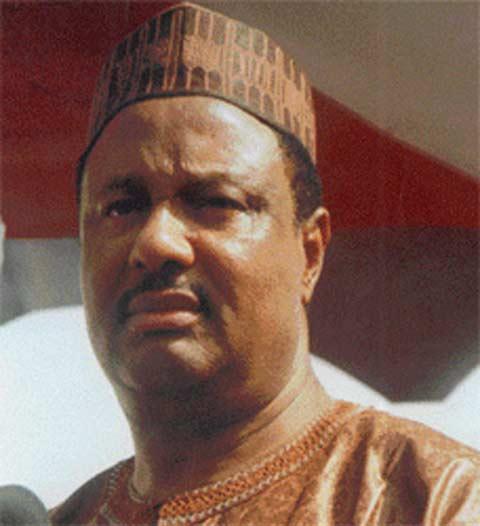
Abubakar Rimi
Special report on defections
By Luminous Jannamike, Abuja
IN the ever-changing world of Nigerian politics, where loyalty to political parties can shift quickly, one man’s commitment to doing the right thing shines through. Back in the early 1980s, former Kano Governor Abubakar Rimi made a bold decision: he resigned from his position after switching from the People’s Redemption Party (PRP) to the Nigerian People’s Party (NPP). At a time when many were focused on their own gain, Rimi’s choice to prioritize integrity made him a symbol of honesty and moral courage.
Rimi’s resignation was not merely a personal decision; it was a powerful statement about accountability and ethical conduct in leadership. Unfortunately, as history shows, his honourable act is a rarity in a landscape increasingly dominated by the normalisation of political defections devoid of moral responsibility.
The Rise of High-Profile Defections: A Historical Perspective
Political defections in Nigeria have been a recurring phenomenon, reflecting a relentless pursuit of power over principled ideology. The saga gained significant attention in 2006 when former Vice President Atiku Abubakar defected from the People’s Democratic Party (PDP) to the Action Congress of Nigeria (ACN). He returned to the PDP in 2009, moved to the All Progressives Congress (APC) in 2014, and then returned to the PDP again in 2017. His political journey epitomises the troubling trend of politicians prioritising personal ambition over the will of their electorate.
Aminu Tambuwal’s defection as Speaker of the House of Representatives in 2014 marked another pivotal moment. He left the PDP for the APC, triggering a political standoff that raised ethical questions about the legality of maintaining a principal office while switching parties. His later return to the PDP in 2018, after becoming Governor of Sokoto State three years earlier, without resigning, demonstrated a troubling trend where loyalty to party ideology is overshadowed by strategic manoeuvring.
Then there’s Bukola Saraki, the former Senate President, whose 2014 defection from the PDP to the APC, and subsequent return in 2018, occurred without relinquishing his powerful role. His political manoeuvring illustrated how influential officeholders can navigate between parties while sidelining the very constituents who elected them. Saraki’s decision to return to the PDP allowed the minority party to lead the National Assembly, creating significant political tension in the legislature.
Rabiu Musa Kwankwaso’s trajectory also reflects this dynamic. Currently a member of the New Nigeria Peoples Party (NNPP), he has previously defected from the PDP to the APC in 2014 and returned to the PDP in 2018. Speculation about another potential defection looms, highlighting the fluidity of party loyalty in Nigerian politics. Kwankwaso’s movements illustrate a strategic calculus that often lacks moral consideration, contrasting sharply with Rimi’s principled stand.
The Backlash and the Need for Reform
The 2018 defection of Godswill Akpabio from the PDP to the APC drew considerable public scrutiny. Akpabio, then Senate Minority Leader, faced backlash for not resigning his leadership position, although he eventually did so after joining the APC. This incident highlighted the public’s growing discomfort with perceived betrayal and the lack of accountability among political leaders. The uproar surrounding Akpabio’s move raised critical questions about the principles of representation and the ethics of political loyalty.
Dave Umahi’s 2020 defection from the PDP to the APC, without resigning, sparked legal debates about the implications of such actions for democracy. His decision raised important questions about the ethical obligations of elected officials to their constituents and the need for reform in the face of rampant political expediency. Critics argued that such defections undermined the democratic process, eroding public trust in elected officials.
In 2025, Sheriff Oborevwori, the current Governor of Delta State, made headlines when he defected to the APC nearly two years into his tenure. This dramatic shift not only highlighted the lack of moral accountability but also the implications for the people of Delta State, reinforcing a political culture that prioritises personal loyalty over public service. The fallout from Oborevwori’s decision reverberated throughout the country, raising concerns among voters about their leaders’ commitment to the mandates for which they were elected.
The Ideological Void
At the heart of these defections lies a significant ideological void, as articulated by Prof. Cyprian Edward-Ekpo, Director of the Institute of Law Research & Development of the United Nations. In an interview with Saturday Vanguard, Edward-Ekpo remarked, “Nigeria is not a country defined by political ideology. This poses a significant issue, as the emphasis tends to be on the economic maximisation of individuals. If Nigeria were a country grounded in political ideology, we would see more consistency in party allegiance, similar to the situation in the United States. For instance, despite disagreements among Republicans, such as between former Vice President Mike Pence and former President Donald Trump, they remain within the Republican Party. The aim of Pence and others is to influence US senators and members of the House of Representatives to challenge Trump’s policies through legislation, rather than switching to the Democratic Party.
“In Nigeria, however, the situation is different. Without a strong political ideology, individuals frequently shift between parties, undermining political stability. A genuine political ideology would discourage such movements, as one would not abandon an ideological commitment for another party with differing principles,” which ultimately leads to a lack of commitment among politicians.
This absence of ideological grounding facilitates a culture where switching parties becomes commonplace, reinforcing the notion that political loyalty is secondary to personal ambition. The lack of ideological clarity often results in a political environment where decisions are made based on convenience rather than principle.
According to Edward-Ekpo, the 1999 Nigerian Constitution provides some safeguards against arbitrary defections, yet many politicians find ways to circumvent these rules.
He explained, “This principle is emphasised in the Supreme Court ruling in Amaechi vs INEC (2007), which consequently made political parties the actual candidates in any election and highlights that voters support individuals for any elective office only when they bear the flag of a party supposedly founded on ideological principles.
“When politicians abandon their parties for others that differ fundamentally from those ideologies, they betray the trust of their constituents. Therefore, the critical issue is how to cultivate a political culture rooted in ideology in Nigeria. Without this foundation, fostering development through governance becomes exceedingly difficult. It is essential for all Nigerians to reflect on how to establish a political system based on clear ideologies, as this is fundamental for achieving good governance and societal progress.”
Mr. Kola Ologbondiyan, former National Publicity Secretary of the PDP, emphasises the urgent need for reform in Nigerian politics. In an exclusive conversation with Saturday Vanguard, he stated, “I wholeheartedly support any legislation that addresses this issue. Given the current state of our politics, it is crucial that we revise our statutes and laws to ensure that those elected on a specific party platform are held accountable and cannot betray the mandate for which they were elected.”
He further noted, “As I have mentioned in public forums, we do not have the constitutional authority to recover the governor’s office. However, for parliamentarians—those elected as senators, members of the House of Representatives, and members of the House of Assembly—if they choose to leave their party, the party has the constitutional right to seek legal recourse for those seats. It was the party that was elected, not the individual.”
Ologbondiyan’s insights reflect a growing sentiment that political leaders must be held accountable for their actions, especially when they abandon the electorate’s mandate.
A Call for Accountability
Rimi’s resignation was not just an act of defiance against a corrupt system; it was a call to arms for politicians to embrace accountability. By resigning, Rimi chose the path of honour, demonstrating that while morality may not be law, it should guide political conduct. His decision contrasts sharply with the actions of many contemporary politicians who prioritise personal gain over ethical responsibility.
As political allegiances continue to shift, the need for a more robust framework that holds leaders accountable becomes increasingly urgent. Without a foundation built on ideological commitment, the quest for good governance in Nigeria will remain elusive. The public’s trust in political institutions hinges on the integrity of their leaders, and as such, a cultural shift towards accountability is essential for meaningful change.
In an era where many defect without shame, Rimi stands as a testament to the possibility of political morality. His legacy invites us to reflect on the integrity of our leaders and the value of accountability in a democracy. As the political landscape evolves, let us not forget that true leadership demands more than mere power—it demands honour and responsibility to the people served.
The Future of Political Integrity
The ongoing trend of defections without accountability raises critical questions about the future of political integrity in Nigeria. As new leaders emerge and old ones navigate the shifting political landscape, the imperative for ethical governance becomes ever more pressing. Citizens are increasingly aware of the need for leaders who prioritize their constituents’ interests over personal ambition.
To cultivate a political culture rooted in integrity, it is essential to engage the electorate in discussions about the ethical responsibilities of elected officials. Civil society organizations, media outlets, and educational institutions can play a pivotal role in fostering a climate of accountability and transparency. Public awareness campaigns can help voters understand the implications of political defections and the importance of holding leaders accountable for their actions.
Moreover, legislative reforms aimed at strengthening the rules governing political conduct are crucial. Potential changes could include stricter penalties for elected officials who defect without resigning, as well as measures to ensure that party loyalty is respected. Such reforms would signal a commitment to upholding democratic principles and restoring public trust in political institutions.
In the end, the story of Abubakar Rimi serves as a reminder that political integrity is not just a relic of the past; it can be a guiding principle for future leaders. As Nigeria grapples with the challenges of governance and accountability, the need for leaders who embody the values of honor and responsibility has never been more critical. Only through a collective commitment to these ideals can the nation hope to achieve a brighter political future, one where the interests of the people take precedence over the ambitions of individual politicians.
Disclaimer
Comments expressed here do not reflect the opinions of Vanguard newspapers or any employee thereof.