By Nnasom David
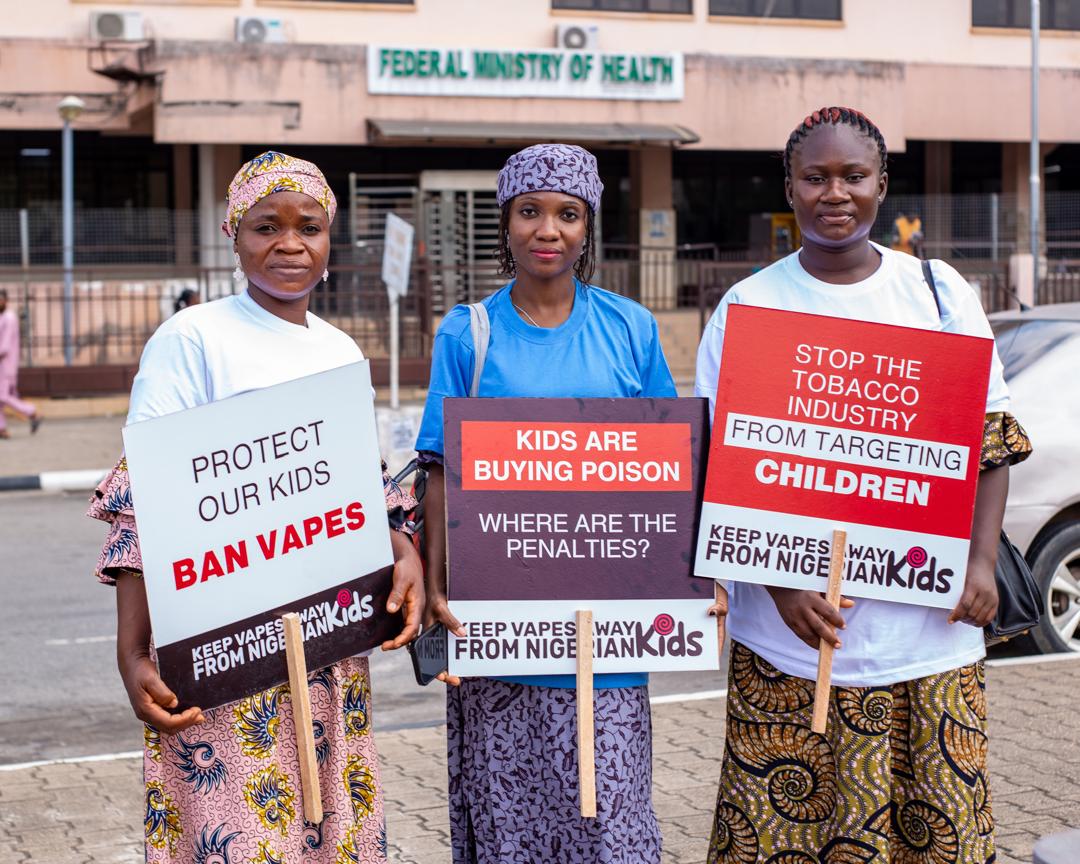
A coalition of Nigerian parents, health experts, and civil society groups on Wednesday called on Minister of Health Muhammad Ali Pate to urgently ban the sale of flavored tobacco and e-cigarette products to children under 18, warning of a growing public health crisis fueled by unregulated vape sales to minors.
Led by the Nigerian Cancer Society and Gatefield Impact, the coalition said it has gathered overwhelming evidence showing that children in school uniforms can easily purchase vapes across the country without facing age checks or restrictions.
“This is not just a regulatory failure. It is a public health emergency,” the coalition declared in a joint statement. “In Nigeria today, a teenager in uniform can walk into a shop and walk out addicted to nicotine. This ends now.”
Health professionals say flavored vapes and tobacco products—often designed to mimic fruits, sweets, and sodas—pose serious risks to brain development in adolescents and contribute to chronic diseases later in life.
“Nicotine harms young people’s brain development and increases risks for chronic illnesses such as high blood pressure, lung disease, and stroke,” said Omei Bongos, a health communications specialist who spoke on behalf of the coalition. “Nigeria is behind, not for lack of evidence, but because of inaction.”
While Nigeria has yet to impose strict enforcement mechanisms on the sale of these products to minors, many countries have already acted. Ireland, France, the UK, Germany, and the Philippines have banned vape sales to anyone under 18, while countries like Ethiopia have implemented a total ban on flavored tobacco products, including shisha.
“The global trend is clear: flavored tobacco and vapes are harmful, addictive, and deliberately marketed to children,” Bongos added. “We cannot allow Nigeria to fall further behind while our teenagers get hooked in broad daylight.”
The coalition also condemned the aggressive marketing of nicotine products in Nigeria, especially through celebrity endorsements and youth-oriented packaging. One widely cited example is Burna Boy’s branded e-cigarettes, which reach millions of young Nigerians on social media.
“This is addiction repackaged as culture,” said a spokesperson for Gatefield Impact. “With their bright colors, glossy designs, and celebrity promotion, these products are being deliberately sold as ‘cool’—and it’s our kids who are paying the price.”
The groups also highlighted gender-specific targeting, noting that research funded by the Gates Foundation shows a rise in smokeless tobacco use among Nigerian women, often sold discreetly in beauty sections of malls.
“In the past, cigarette ads hyper-feminized smoking. Now we see the same playbook with vapes—feminine colors, fruity flavors, and influencers selling it as empowerment,” the spokesperson added.
The coalition issued a five-point call to action, urging Minister Pate and the Federal Competition and Consumer Protection Commission (FCCPC) to:
“Ban the sale of flavored tobacco and vape products to individuals under 18.
“Require health warnings and full ingredient disclosure on all nicotine products.
“Remove such products from beauty, entertainment, and youth-centric retail spaces.
“Expand tobacco control laws to include synthetic and non-tobacco nicotine products.
“Enforce advertising and influencer promotion bans targeting minors and women.
“The tobacco industry has exploited regulatory gaps for decades, targeting children to create lifelong customers,” the coalition warned.
“Now, it aims to ensnare the next generation with bubblegum flavors and celebrity faces. The government must act decisively.”
The coalition said Minister Pate and the FCCPC have the power—and responsibility—to enforce policies that protect the health of Nigeria’s youth and prevent a looming addiction crisis.
Disclaimer
Comments expressed here do not reflect the opinions of Vanguard newspapers or any employee thereof.