By Gabriel Ewepu
ABUJA – THE National Agricultural Development Fund, NADF, and the German Development Cooperation, GIZ, Wednesday, formed a strong synergy to strengthen gender inclusivity, and also boost climate-smart agriculture as they reaffirmed their commitment to transforming Nigeria’s agriculture.
Their resolve was made known at a ‘Validation Workshop on Climate-Smart & Gender-Inclusive Financing’ held in Abuja, which had in attendance relevant stakeholders in attendance.
They were basically to finalize a financing framework, which millions of women and youth will benefit by having access to agricultural support systems tailored to meet their unique needs in sustainable food production.
The framework, jointly developed by NADF and GIZ, seeks to shift agricultural financing from traditional credit systems to a holistic approach that includes mechanization, extension services, digital tools, advisory support, and risk-sharing mechanisms.
The Minister of Agriculture and Food Security, Senator Abubakar Kyari, in his remarks described the initiative as “more than just documentation; it embodies our commitment to fostering resilience, inclusivity, and prosperity within our food systems.
“The programme is designed to ensure equitable access to these resources, particularly for smallholder farmers, women, and youth.
“Inclusion demands that we think beyond traditional financial instruments. We must explore innovative approaches leveraging digital platforms can provide tailored financial products that meet the unique needs of these groups.
“our pursuit of food security is intrinsically linked to our capacity to provide farmers with the necessary tools and resources to adapt to climate-induced challenges.”
However, expressing concern about the negative impacts of climate change including devastating floods, he said there is “the urgency of integrating risk management and anticipatory action into our agricultural systems cannot be overstated.”
In his remarks, the Executive Secretary, NADF, Mohammed Ibrahim, said, “Our mission is simple yet ambitious: to unlock and deploy financing that works for every Nigerian farmer, no matter where they are or what barriers they face.”
According to him, the workshop builds on a previous session held in November 2024, where stakeholders helped craft the initial draft of the financing model. This second phase is focused on validation, product refinement, and setting clear steps for implementation.
“This is more than validation—it is co-creation of a financing model that meets farmers where they are and takes them to where they deserve to be”, he said.
Meanwhile, the NADF bosscalled on stakeholders to imagine new delivery models, “Can we bundle financing, insurance, and mechanisation into one service—pay-as-you-plant? Can digital platforms deliver microloans to women via mobile wallets?”
Both leaders underscored the workshop’s alignment with regional agricultural blueprints like the Kampala Declaration and the Comprehensive Africa Agriculture Development Programme (CAADP) 2026–2035 Strategy. These continental goals include boosting productivity, halving post-harvest losses, tripling intra-African agri-food trade, and empowering women and youth.
He (Ibrahim) urged participants to take ownership of the process, “Let us use today to build something real. Not a policy on paper, but a framework that lives in our farmlands and fields, our markets, and the futures of our farmers.”
Meanwhile, representing the German Development Agency (GIZ), Andrea Osuna, maintained and reaffirmed Germany’s long-standing partnership with Nigeria in agricultural transformation, are proud to continue supporting Nigeria’s agricultural sector.
Osuna, therefore, urged stakeholders to implement the recommendations outlined in the newly validated framework; developing targeted financial products, increasing access to non-collateralized loans, enhancing institutional coordination, and promoting climate-smart agriculture.
“Food systems do more than feed people, they are the backbone of livelihoods, economies, and our environment.
“We are proud to support Nigeria’s efforts through projects like ACCESS, which strengthen agriculture, improve nutrition, and drive sustainability through innovations like renewable energy and agri-tech”, she added.
In a keynote address, the Minister of Women Affairs, Imaan Sulaiman-Ibrahim, said urgently women are to be included in the financial systems in order to empower women, and also build resilience against the growing impacts of climate change.
However , Ibrahim commended while NADF for its role in inclusive agriculture.
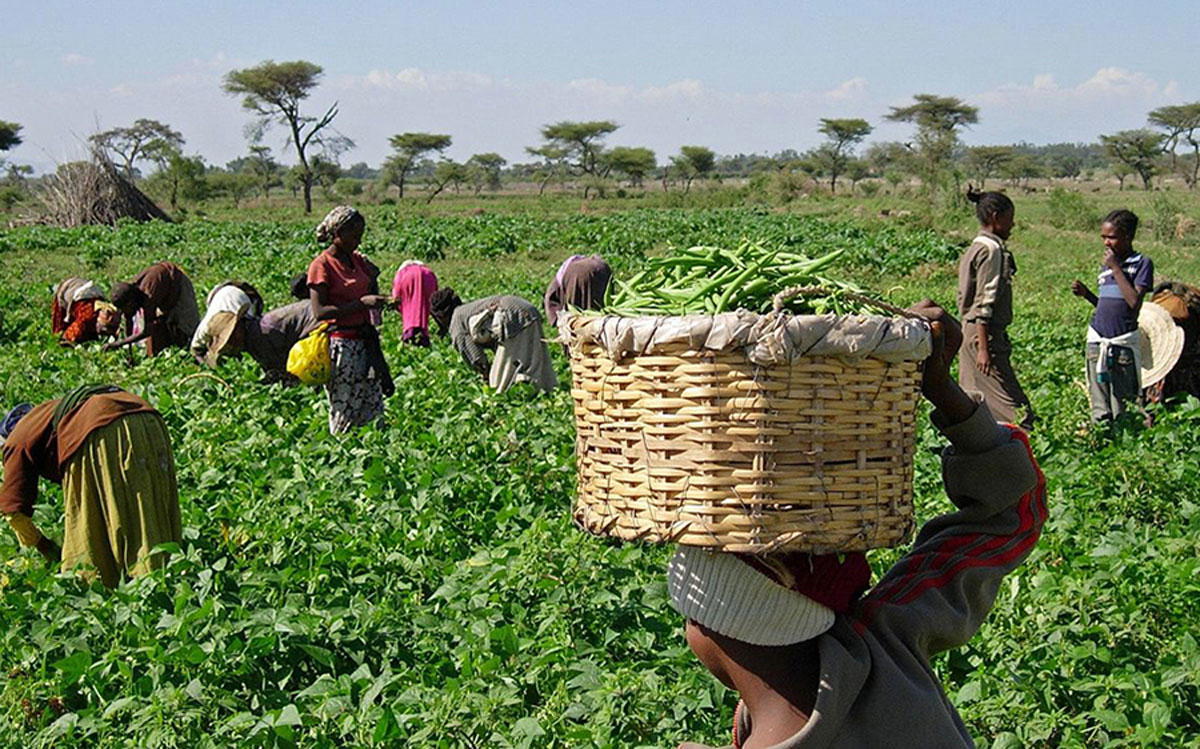
“Women constitute between 70 to 75 percent of Nigeria’s agricultural workforce and produce about 70 to 80 percent of the nation’s food. Yet, they receive only a small fraction of the credit and land allocated to small-scale farmers.
“We must collectively work to dismantle the systemic barriers that have historically hindered women’s full participation and ensure a level playing field where their contributions are recognised and supported,” she added.
Disclaimer
Comments expressed here do not reflect the opinions of Vanguard newspapers or any employee thereof.