By Osa Mbonu – Amadi
For Chidi Ebere, better known as Ekemmiri, art is not just about beauty, it’s about memory. His works, made mostly from filler and resin, tell the stories of ordinary people, traditional roles, and shared histories. Now living in the UK, this Nigerian artist continues to mould quiet yet powerful pieces that speak deeply to anyone with a sense of heritage or longing for home.
One of his standout pieces, “Home”, shows a typical rural mud hut with a thatched roof, cooking pots, firewood, and tools laid carefully around it. It’s a humble piece, but it carries weight. For those who’ve lived or visited the Nigerian countryside, it strikes a nerve. You don’t just see a house, you feel the presence of those who once sat outside it, cooked behind it, or swept its floor.
His framed relief titled “Native Nigerians” is another striking work. Seven figures are featured, each representing a different traditional role: the hunter, drummer, nomad, dancer, palmwine tapper, fisherman, and masquerade. It’s more than a display, it feels like a village parade frozen in time. Each figure has its own posture and story. They’re stylised, but not exaggerated. You get the sense that these are real people, tired, proud, graceful, spiritual.
The “Queen Amina” piece, by contrast, shifts tone. Here, Ekemmiri brings power and femininity to the foreground. The queen stands firm and fearless, her face calm but watchful, carved with dignity and strength. It’s a proud tribute to one of Nigeria’s most legendary warrior women—and it shows Ekemmiri’s ability to balance softness with power.
Then there’s “West Africa”, a sculptural map made not just with borders, but with symbols and patterns from different countries. You don’t need a compass to understand it. The artwork becomes a conversation between nations like Nigeria, Ghana, Côte d’Ivoire, Senegal, linked through design, texture, and shared cultural patterns.
But not everything in his practice is perfect, and Ekemmiri himself would likely agree. Some works, especially those using resin or filler, are very delicate. A small knock or fall can cause damage, which may concern collectors. The surface can sometimes show small cracks or chipping, especially in older pieces. This fragility may be part of the message, how easily culture can be broken, but it’s something future works might improve on with sturdier reinforcements or better framing techniques.
Another challenge is repetition in colour and tone. Many of the works use similar gold, bronze, or silver finishes. While these give the collection a sense of unity, it can make different pieces feel a bit too alike from a distance. A little more variation through painted highlights, darker shadows, or mixed media could bring more contrast and vibrancy to the collection.
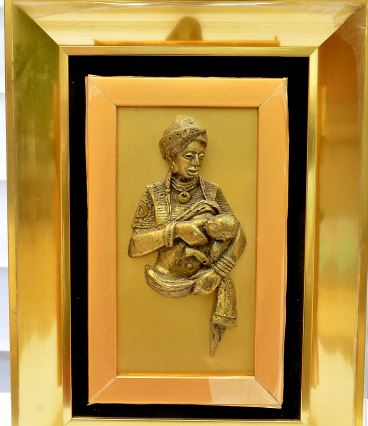
Still, these are small notes on a body of work that is clearly heartfelt, well-crafted, and deeply intentional. Ekemmiri doesn’t just make sculptures. He creates reminders of where we come from, who we’ve forgotten, and what stories still deserve to be told. Whether it’s a breastfeeding mother, a royal maid, or an old flutist deep in spiritual rhythm, his figures invite us to pause, to look again, and to listen.
More of his work can be seen online at www.ekemmiri.com, where the artist continues to document his journey from Nigerian village memories to a growing UK-based art practice
Disclaimer
Comments expressed here do not reflect the opinions of Vanguard newspapers or any employee thereof.