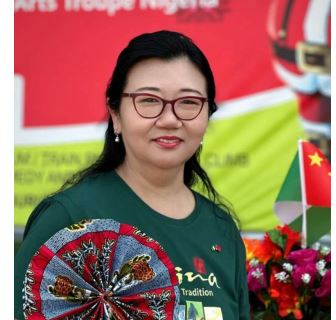
By Ms. YAN Yuqing, Consul General of the People’s Republic of China in Lagos
In recent years, the United States has frequently reversed the course of globalization under the pretexts of “trade imbalance” and “national security,” imposing tariffs on multiple countries. Most recently, the United States has once again willfully and recklessly imposed tariffs on all its trading partners, including China, under various pretexts. These actions severely infringe upon the legitimate rights and interests of all countries, severely violates World Trade Organization (WTO) rules, severely undermines the rules-based multilateral trading system, and severely disrupts the global economic order. The Chinese government strongly condemns and resolutely opposes such move.
Unilateral Tariff Hikes Undermine the Multilateral Trading System, and Shifting Blame Cannot Solve Domestic Problems. By taking such actions, the United States defies the fundamental laws of economics and market principles, disregards the balanced outcomes achieved through multilateral trade negotiations, ignores the fact that the U.S. has long benefited substantially from international trade, and weaponizes tariffs to exert maximum pressure for selfish interests. This is a typical act of unilateralism, protectionism and economic bullying. Under the guise of “reciprocity” and “fairness,” the United States is playing a zero-sum game, pursuing in essence “America First” and “American exceptionalism.” It attempts to exploit tariffs to subvert the existing international economic and trade order, put U.S. interests above the common good of the international community, and advance U.S. hegemonic ambitions at the cost of the legitimate interests of all countries. Such actions will inevitably face widespread opposition from the international community. We have emphasized more than once that trade and tariff wars have no winners. Protectionism leads nowhere. We urge the U.S. to stop doing the wrong thing, and resolve trade differences with China and other countries through consultation with equality, respect and mutual benefit.
As Professor Sheriff Ghali, an international relations expert at the University of Abuja stated in an interview with Xinhua News Agency, ” When you impose more tariffs, you are harming yourself. And the trade war has a significant negative impact on economic globalization, this is a kind of selfish foreign policy inertia, it has been so selfish in dealing with the international system”. Tariff hikes increase the cost of imported goods, directly fueling inflationary pressure within the United States. Consumers and businesses bear the brunt, with many small and medium-sized enterprises forced to lay off workers or even shut down due to rising costs. If tariffs continue to be wielded as a weapon, they will not only harm the interests of other countries but inevitably backfire on the United States itself. In today’s highly interconnected global economy, unilateralism and protectionism can only lead to a lose-lose outcome.
China to Further Expand Opening-Up and Uphold the Multilateral Trading System, and Sharing Development Opportunities with the World. In 2024, China’s economy continued to grow steadily, with its GDP increasing by 5% year-on-year, ranking among the fastest-growing major economies globally. China’s contribution to global economic growth remained at around 30%, and the advantages of its ultra-large-scale market continued to be fully leveraged, serving as a stabilizing force for global industrial and supply chains. Despite unprecedented uncertainties in the external environment, China’s economic resilience has continued to strengthen. The long-term positive trajectory of the Chinese economy remains unchanged. China is confident and capable of achieving its 2025 economic growth target of 5%.
As the world’s second largest economy and second largest market for consumer goods, China is committed to opening ever wider to the world, no matter how the international situation changes. We will continue to advance high-standard opening-up. We will steadily expand institutional opening up in rules, regulations, management, and standards. We will implement high-standard policies for trade and investment liberalization and facilitation. We will foster a first-class market-oriented, law-based, and internationalized business environment. And we will share our development opportunities with the world to achieve mutual benefits.
China and Africa Join Hands for Mutual Benefit, Building an All-Weather China-Africa Community with a Shared Future for the New Era. Charles Udeogaranya, Chairman of the Goods Made In China Importers Association (GMIA) , stated in articles published across multiple media outlets that “unilateral imposition of high tariffs will plunge the global economy into turmoil, and African economies will be among the worst affected.” Development is an inalienable right of all countries, not the exclusive privilege of a few. International affairs should be addressed through consultation, and the future of the world should be decided by all countries. All countries should uphold the principles of extensive consultation, joint contribution and shared benefit. They should practice true multilateralism, jointly oppose all forms of unilateralism and protectionism, and defend the U.N.-centered international system and the WTO-centered multilateral trading system.
China and Africa are Pillars in Upholding the Legitimate Rights of Developing Countries and Safeguarding Multilateralism and International Fairness and Justice. China stands ready to work hand in hand with Africa under the frameworks of the Belt and Road Initiative, the Forum on China-Africa Cooperation (FOCAC), BRICS, and other bilateral and multilateral mechanisms. Together, we will actively participate in the reform and development of the global economic governance system, firmly oppose unilateralism and economic bullying, and jointly defend the multilateral trading system. We are committed to upholding a fair and free trade environment, expanding the shared interests of the Global South, and injecting greater certainty and positive momentum into global economic stability and growth. China and Africa will continue to advance economic globalization toward a direction that is more open, inclusive, balanced, and beneficial to all.
Disclaimer
Comments expressed here do not reflect the opinions of Vanguard newspapers or any employee thereof.