By Gabriel Ewepu
ABUJA- IN the quest to penetrate the international market, the Nigerian Agribusiness Group, NABG, Wednesday, disclosed that the panacea to rejection of agricultural commodities is for farmers to embrace standardization and grading that would give them best the price.
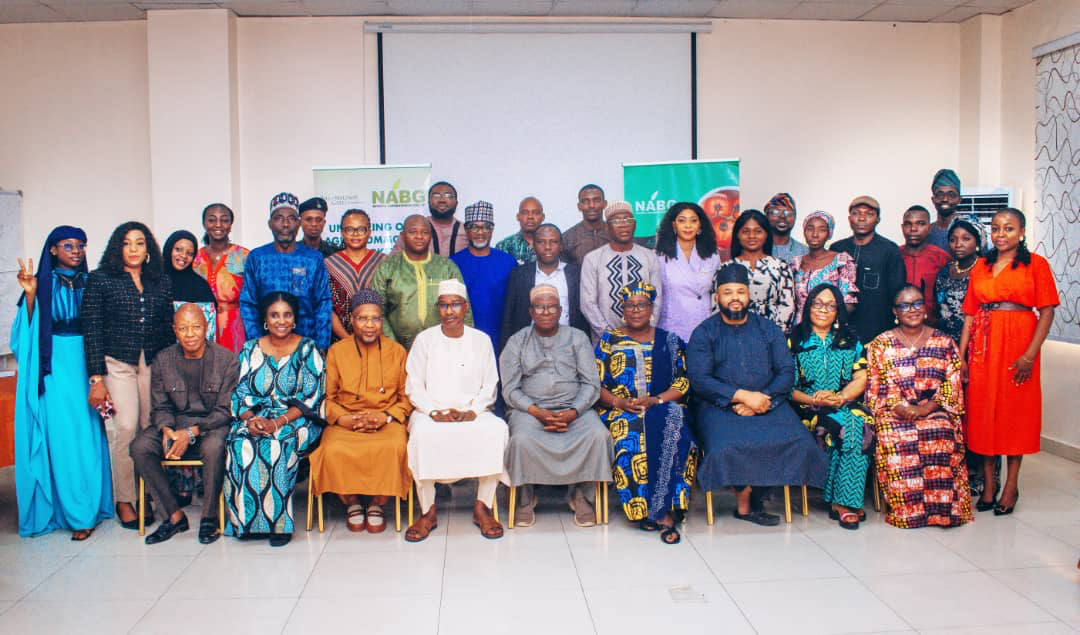
Speaking on the sidelines of the ‘Technical Workshop on Maize and Ginger Standard and Grading’ organized by NABG in collaboration with Nigeria National Accreditation System, and funded by Bill & Melinda Gate Foundation, held in Abuja, the President, NABG, Arc Kabir Ibrahim, said it is high time farmers along the maize and ginger value chains accept, adopt and apply the expected standardization and grades.
Ibrahim said smallholder farmers are to know that it is only having the mind-set that agriculture is a business that would pull them out of poverty by applying the rules of business.
He said: “Trying to wake our producers up to the fact that they need to systematically standardize what they produce so that they will not be rejected. Nigeria has a history of rejecting what we produce and then even internally for us to get a very good price it is good that we have products that are unified in grain size, in appearance and in so many other attributes.
“So today we are telling everybody in Nigeria that the farmer should imbibe or embrace standardization and grading for their produce to be optimal and to get the best price, and the rules of business is to be applied, then agribusiness is the coming thing, is the thing that will work for the farmer.
“It will take the farmer out of poverty into prosperity and that is why we are here and that is why we are making a clarion call to everybody in Nigeria, both the smallholder farmers, the large-scale farmers, the small-scale producers and all that to embrace grading so that whatever they produce will get premium value in the market internally and externally.
Meanwhile, the NABG boss also added that, “So we will start teaching the smallholder farmers to be able to produce using handheld equipment, carefully producing these things to reach up to those standards, and then when mechanization takes effect, these things will be more seamless.”
However, the Executive Secretary, NABG, Olubukola Nwaneri, pointed out that the major challenge in the sector is adoption of policy, and added that the policies in the sector are mostly not implemented, therefore, NABG, is coming in to intervene with such workshops to change the narrative.
“I would say the first problem we have is policy adoption; right from the farmers, to the value chain actors, even to the consumers. We have a lot of policies in place that are not being implemented, and so that is what is giving rise to postharvest losses, giving rise to standard and quality, shortage of food in the system. We have knowledge actually but lots of knowledge are just lying on the shelf.
“So NABG as an advocacy group, it is our duty to develop policies. So we work with existing policies and see how we can push for adoption, and not just adopting it but how to implement it. So in the long run, when we have standards, rules, regulations, we cannot pinpoint the particular areas where we cannot face for development”, she added.
Meanwhile, the Director General, DG, NABG, Jafar Umar, explained the essence of the workshop for farmers and stakeholders in the maize and ginger value chains. He said “It is basically, to build the capacity and knowledge of farmers and stakeholders in these two value chains. So if you understand that you are able to, you are supposed to adhere to certain standards as established by the Standards of the Organization of Nigeria, SON, the grading of those standards allows you now to see grade A would attract exports. So as a farmer, even before you begin to plant, you begin to target what sort of quality or what sort of standard should I target this season.
“For the associations, it is critical for them to be here because they will now cascade this information that they learn and this how-to that they would get today down to their members, which ultimately would reach the smallholder farmers and small scale producers as we put them.
“To further amplify this, NABG will also work with you, our media partners, to articulate this using your platforms so that more and more farmers across the country are aware and adopt these standard grading in their farming, hopefully in this coming season.
Meanwhile, the National President of Ginger Growers Processors and Marketers Association of Nigeria, GGPMAN, Dr Florence Edwards, and the National President, Maize Association of Nigeria, MAAN, Dr Bello Abubakar represented by the National Coordinator, MAAN, Engr Joseph Bamidele, expressed optimism that with the intervention by NABG on training their members on standardization and grading the narrative will change in their value chains based on the demands on the two commodities and also placed Nigeria on an enviable height, and also added that the effort of NABG with the workshop they will take the training down to the smallholder farmers in the rural areas.
Disclaimer
Comments expressed here do not reflect the opinions of Vanguard newspapers or any employee thereof.