By Ayo Onikoyi
As concerns over antimicrobial resistance continue to grow globally, animal nutrition experts are turning to innovative dietary strategies that improve health and reduce reliance on antibiotics.
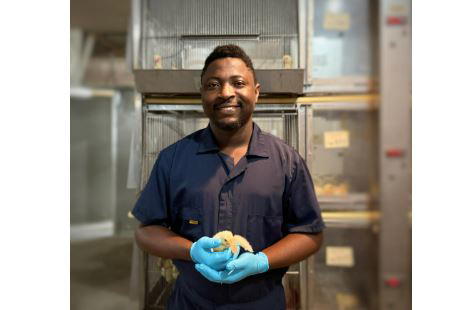
One such expert, Olumide Olowe of Purdue University’s Department of Animal Sciences, is leading pioneering research on feed additives that support performance, promote gut health, and advance antibiotic-free production systems in poultry and aquaculture.
In an interview with our reporter, Olowe discussed his ongoing work using seaweed-based feed additives in broiler chickens. His research centers on the modulation of gut microbiota and intestinal morphology as a strategy to improve the growth performance and health without the need for antibiotics. “With rising concerns over the emergence of antibiotic-resistant bacteria and the global demand for safer protein sources, my research provides practical, evidence-based alternatives that promote animal health and reduce antibiotic dependency,” said Olowe. “Seaweed, particularly red macroalgae, presents a promising source of bioactive compounds that support gut integrity and immune responses in poultry.”
His primary study explores the dietary inclusion of Chondracanthus chamissoi, a red seaweed, and its effects on growth performance, gut structure, and microbial populations in broiler chickens. The results, presented at the 2024 Poultry Science Association Annual Meeting, demonstrated improvements in villus height, cecal microbial diversity, and feed conversion efficiency, providing strong support for its use as a functional feed additive. By integrating microbial profiling techniques with histological analysis, Olowe’s work allows researchers to assess how feed ingredients influence the gut morphology and microbiome. This approach helps design nutritional interventions that improve nutrient absorption, support immune function, and minimize the need for antibiotics in production systems.
Olowe has authored and co-authored more than 15 peer-reviewed scientific articles covering fish nutrition, feed additives, and stress mitigation in aquaculture. At the 2025 International Poultry Scientific Forum, he presented findings on phosphorus digestibility in broilers fed autoclaved faba beans with phytase. The enzyme improved phosphorus utilization and may indirectly reduce antibiotic needs by limiting undigested substrates that can contribute to intestinal inflammation. His contributions extend beyond academic research. Olowe has worked with a commercial partner on studies to assess nutrient digestibility and gene expression of intestinal transporters in broilers. These findings are informing ongoing feed strategies in commercial trials. His collaborative efforts also align with global interest in reducing feed production costs using targeted nutritional solutions.
Olowe has presented at major scientific conferences and is actively engaged with professional societies such as the Poultry Science Association, the American Society of Animal Science, the World Aquaculture Society, and the European Aquaculture Society. Through these platforms, he engages with global stakeholders on science-based strategies to improve animal health. “Antibiotic-free production is no longer a niche objective. It is becoming a standard expectation globally,” Olowe stated. “My goal is to provide cost-effective and sustainable nutritional interventions that help producers meet this expectation without excessive reliance on antibiotic growth promoters.”
With a multidisciplinary portfolio, active international collaborations, and a growing influence in scholarly literature, Olowe is among the next generation of scientists shaping the future of animal nutrition through science-driven, practical innovation
Disclaimer
Comments expressed here do not reflect the opinions of Vanguard newspapers or any employee thereof.