…as govt reaffirms commitment to environmental resilience through collaboration
By Olasunkanmi Akoni
Lagos State Government has declared readiness to host the 32 Conference of Parties, COP 32 aimed at addressing challenges of climate change if Nigeria is given the hosting right.
Nigeria has officially declared intent for COP 32, as Africa is set to host the global climate summit in two years, following Egypt’s hosting of COP27 in 2022.
Minister of Environment, Balarabe Lawal, had stated during an earlier discussions with Executive Secretary of the United Nations Framework Convention on Climate Change, UNFCCC, Simon Stiell, who is currently on a four-day official visit to Nigeria.
Stiell met with Lawal, in Abuja to explore ways to strengthen partnerships and enhance Nigeria’s participation in global climate negotiations. His visit comes ahead of COP30, which is set to take place in Belem, Brazil.
The Federal Ministry of Environment stressed the potential benefits of hosting the UN climate summit, saying “Hosting COP32 would boost climate leadership, global visibility and economic opportunities.”
The ministry added that hosting the conference would provide Nigeria with a strategic platform to highlight its climate priorities at both national and continental levels while reinforcing its commitment to tackling climate change.
Meanwhile, Lagos State Government reaffirmed commitment to continually foster environmental resilience through collaboration and innovation for environmental sustainability.
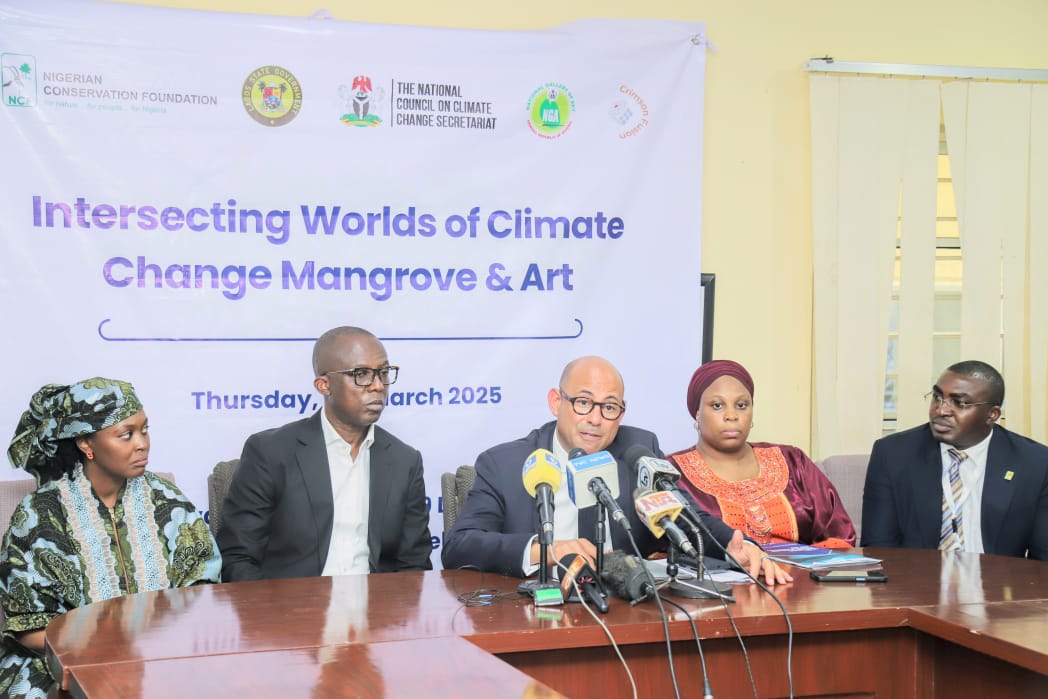
Governor, Babajide Sanwo-Olu, made this known at the Art Exhibition and Symposium, titled: “Intersecting Worlds of Climate Change, Mangrove and Art,” held at the Nigerian Conservation Foundation, NCF, Lekki area of the state, saying that the title of the event underscores the critical connection of environmental sustainability and creative expression.
Sanwo-Olu , who spoke through the Secretary to the State Government, SSG, Barr. Bimbola Salu-Hundeyin, said the event represents a fusion of culture, creativity, and commitment to address one of the most urgent challenges which is climate change through art.
According to him, “We witness a powerful medium for advocacy—a means to highlight the fragility of our natural ecosystems while inspiring action.”
He said mangrove forests are among nature’s most under- appreciated ecosystems and they act as natural barriers against coastal erosion and flood surges while supporting local fisheries as well as providing livelihoods for many communities.
Sanwo-Olu, added that beyond their ecological services, mangroves play a critical role in combating global warming by storing vast amounts of carbon dioxide.
“Let me reaffirm the unwavering commitment of Lagos State to combating climate change, protecting our ecosystems, and fostering a sustainable future. Our strategic initiatives – from mangrove restoration to progressive environmental policies – underscore this resolve,” he said.
The Governor encouraged everyone to continue to foster collaboration and innovation to create a greener, more resilient Lagos that will thrive for generations to come, saying the state historic partnership with the NCF has further amplified the efforts.
The Vice President of Federal Republic Nigeria, Mr. Kashim Shettima, said everyone stand at the confluence of three worlds which are the world of climate change policy, the world of mangrove ecosystems, and the world of art and creativity.
Shettima who spoke through the Special Adviser to the President on National Economic Council, NEC and Climate Change, Mrs. Rukayat El- Rifai, added that at first glance, these realms might seem unrelated. But in truth, they are deeply connected, and their intersection may hold the key to tackling the greatest challenge of time.
“Climate change is not a distant threat; it is our life’s reality. Each of you in this room – whether you craft policy or canvas, whether you invest capital or work with communities – has witnessed its impacts and felt the urgency. We can no longer afford to work in silos,” he said.
According to him, “That is why this symposium’s theme, “Intersecting Worlds of Climate Change, Mangrove, and Art,” is so timely. It calls on us to think outside the box and work together in new ways.
“I stand before you not just as a public official, but as a fellow citizen who worries about the world we will leave for future generations.”
Earlier, Commissioner for the Environment and Water Resources, Tokunbo Wahab, at the opening of panel sessions, stated that the event represents a crucial step in the ongoing efforts to raise awareness, foster collaboration, and drive meaningful action toward environmental sustainability in Lagos State.
The media briefing had in attendance: Stiell, Director General, DG, Climate Change Council Secretariat, Dr. Nkiruka Maduekwe and DG Nigerian Conservative Foundation, NCF, Dr, Joseph Onoja.
Responding to questions from journalists on Climate change during a media briefing, Wahab said, “We are the last generation to save the planet earth by taking deliberate action. Lagos is a coastal region, we have no choice than to key into mangrove to save it and other environmental challenges.
“We have decided to take our destiny in our hands. We must collaborate to combat the negative impacts of Climate Change.”
Responding to media question, the commissioner confidently said, “Lagos is ready to host to COP37 once it’s ceded to Nigeria. We have all that it takes to host the conference.”
Earlier, Stiell, said it was essential that people across the Nigerian society have a chance to contribute to the implementation of new national climate plans and also benefit from these plans.
He mentioned that a new, strong national climate plan or Nationally Determined Contribution under the Paris Agreement can supercharge the Nigerian economy, with green growth and sustainable development.
Stiell, stressed that it remained clear that countries that would benefit from the $2 trillion global boom in clean energy are countries that invest in their people and their strengths.
He added that Nigeria stands a good chance of tapping into the $300 billion finance framework for developing countries in combating climate change challenges.
“The UNFCCC is providing increasing opportunities for developing countries as $1.3 trillion has been earmarked per year to combat climate change.
“To this end there will be public finance and other finance frameworks that will be concluded in in Belem, Brazil, this year. There are lot of work to be done.”
“What we are doing here is to encourage Nigeria. There are other countries expressing interest in hosting the conference.”
Disclaimer
Comments expressed here do not reflect the opinions of Vanguard newspapers or any employee thereof.