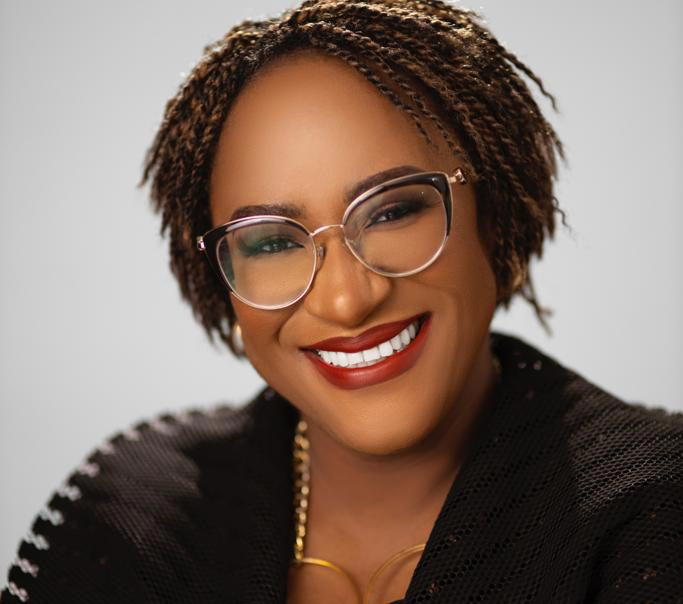
Ejiro Gray
What happens when the intent to include inadvertently excludes excellence?
By Ejiro Gray
From multilateral institutions to national cabinets and corporate organizations, the call to diversify leadership and representation in policy formulation and decision-making has gained momentum over the years. Quite expectedly, the acronym DEI (diversity, equity, and inclusion) has also very quickly become a buzz word. DEI has a very expansive scope trailing beyond the remit of this article, but for this piece, my focus is on DEI as it pertains to gender.
If you were to hear the acronym DEI today, chances are your mind would be averted to either the commemoration of Women’s Month in the month of March and the call to accelerate action, or happenings in the United States – the shift in corporate strategies as a result of political pressures, with many companies scaling back their Diversity, Equity, and Inclusion (DEI) programs. In my view, these developments reflect a much broader issue and beg the question – Have we been treating DEI as a moral obligation rather than as the economic and strategic imperative it should be?
My earliest recollection of any notion of quota systems goes as far back as when I was in primary school. I recall the frequent admonition from my mother regarding preparing for the National Common Entrance Examinations, urging us to put in our best efforts because the then Bendel state, Nigeria (now split into Edo and Delta states) had a lower quota than most due to the need to provide a higher quota to educationally disadvantaged regions. Basically,we all had to compete for limited slots allotted to Bendel State, in Federal secondary schools.But I didn’t get it back then. Why did states across the federation have quota systems for educational opportunities, and why would some states have a comparably lower quota toboost others? Where was the fairness in that? I’m going somewhere.
The concept of DEI has had historical nuances across various regions including the African continent, but its popularity and institutionalization started to gain real prominence in the 21st century. This upsurge in societal consciousness gave rise to affirmative action and quota systems aimed at correcting historical imbalances i.e. giving women and other underrepresented groups a seat at the table and consequently, a voice.
Despite this nudge in the right direction, difficult questions linger:
1. Have we, in some cases, sacrificed competence on the altar of equity?
2. Are we creating a system where box-ticking overrides capability?
3. What happens when the intent to include unintentionally excludes competence?
These aren’t just philosophical questions aimed at driving academic debates. They should bereal concerns especially considering evolving political landscapes and the seeming ease with which DEI initiatives are being rolled back. These are issues that threaten to discount decades of work, policy outcomes and the credibility of the very voices we seek to create room for.
The challenge is therefore clear: How do we balance the moral consideration with the necessity of excellence to achieve the economic and strategic imperative that DEI should be, and how do we ask pertinent questions without alienating the advocates of the cause we seekto promote?
Representation Must Be Substantive Not Just Symbolic
Though the tension between representation (DEI) and results (competence) is real, two truths can co-exist. The case for equity is impregnable, but so is the case for the necessity of competence. DEI is not and should never have been a “nice to have”. It is a development imperative, a necessity for sustainability. As B. R. Ambedkar, a former minister of law and justice in India once said, “I measure the progress of a community by the degree of progress which women have achieved”. A Gender Employment Gap Index (GEGI)” study commissioned by the World Bank’s Pacific Gender Equality Program indicates that every 1 per cent increase in female employment is associated with, an average, GDP growth of 0.21 per cent. The World Economic Forum predicted that if the global gender gap in labour market participation is closed by 25 per cent by 2025, an additional $5.3 trillion would be added to GDP globally. We cannot talk about sustainable development or effective governance without inclusive representation, and the data supports this. When women thrive, economies flourish.They also bring to the table, insights shaped by experience and a different perspective and this is why representation must be driven by substance not mere symbols.
Affirmative Action: Tool or Trap?
I’d like to emphasize that this is not an argument against affirmative action nor an attempt to disparage the use of quota systems. Rather, it is a call for its smarter application. We’ve all seen cases where gender quotas were met but competence was not. And while it may be quite uncomfortable to say this out loud for the possibility of being taken out of context, it must be said: We do a huge disservice to the Cause when we prioritize presence over preparedness.Affirmative action, for all intents and purposes, is a corrective tool. It’s meant to level the playing field, not tilt it disproportionately such that its integrity (whether in form or substance) becomes questionable. Sadly, the latter is exactly what happens when affirmative action is poorly executed. It can become performative, even counterproductive. When the stakes are high, efforts become easily reversible due to a lack of established causation between the affirmative action taken and the corresponding results. In situations such as this, attempts at DEI become displays of tokenism, thereby undermining the credibility of beneficiaries/appointees especially where competition for seats at the table is already fierce.
It’s Not So Much About Who Gets the Seat, But Who Had Access to Compete for It
Whilst we unarguably need more women at the table, we also need to ensure they are not simply appointed to tick a box or fill a quota. Rather, they are equipped and positioned to thrive and truly make a difference. We often get bogged down with debates on female representation, when the real issue is not whether someone should get a seat “just because she is a woman”, but whether she has the same access to the resources, networks, mentorship, and education to enable her to compete on equal footing as the men in the room. In Africa for example, the brilliance undoubtedly exists, capable women are not scarce. But we must confront the systemic barriers and cultural issues that prevent them from rising to the fullness of their potential to fully realize the benefits of DEI. These barriers include:
• Unequal opportunities for economic participation.
• Social and cultural norms that discourage ambition.
• A lack of structured mentorship and capability development.
• Unconscious bias that dictates unspoken rules and their outward manifestations.
The Way Forward
The goal is not to simply ‘fill seats’ with women. The goal is to build systems that allow the best of our talent, regardless of gender, to rise, compete, and thrive, thereby creating ahealthy balance. What should balance look like? Balance is not having to choose between merit and inclusion. It is about designing systems that cultivate both as conjoined twins.Balance could look like this:
• Making quotas intelligent, not mechanical: Beyond just numerical outcomes, DEIgoals and targets should have predetermined measurable outcomes. Therefore, it is necessary to align these goals with development pathways. This moves it from the realm of performative action to strategic imperative.
• Investing in the pipeline: Addressing the pipeline problem means supportingdevelopment pathways that provide equal access and opportunities for leadership development through capacity building and mentoring.
• Redefining merit: Historically, “merit” has often been defined through credentials, linear career paths, long hours and uninterrupted work histories. Redefining merit means focusing on demonstrated skills, impact, and growth potential, not just resumes and degrees. It means capturing the full range of skills that traditional definitions may overlook.
• Ensuring transparency in appointments: Selection processes should be open and rigorous, regardless of gender, while still making room for balanced affirmative policies where they are truly needed.
Conclusion: The Equity We Want, the Excellence We Need…
After all’s said and done, competence and inclusion need not be mutually exclusive. Rather, let’s build inclusion that produces undeniable competence. The equity we want and the excellence we need is where someone was appointed not ‘because she is a woman’ but because she is the best person for the job, and even more importantly, in a system that gave her a fair shot to become exactly that. This is what DEI stands for at its finest and what it should truly mean.
Those who value both equity and excellence have a winning formula. Governments and Institutions that select the best minds from all their people, without bias, but with intentional inclusivity will thrive. Therefore, as we close the curtain on this year’s Women’s Month, let us remember that to accelerate action, DEI in its right form and substance should not be regarded as a charitable cause. It’s a sustainability strategy with proven socio-economic benefits. Think about it, if over 50% of your population is female, sidelining that resource pool isn’t just inequitable — it’s grossly inefficient!
With these few words of mine….
Gray is the Director for Governance & Sustainability of Sahara Group.
Disclaimer
Comments expressed here do not reflect the opinions of Vanguard newspapers or any employee thereof.