By Luminous Jannamike
ABUJA – A new research has revealed significant insights from Lake Izabal in Guatemala that could assist Nigeria in enhancing its strategies for climate change, earthquake prediction, and natural resource management.
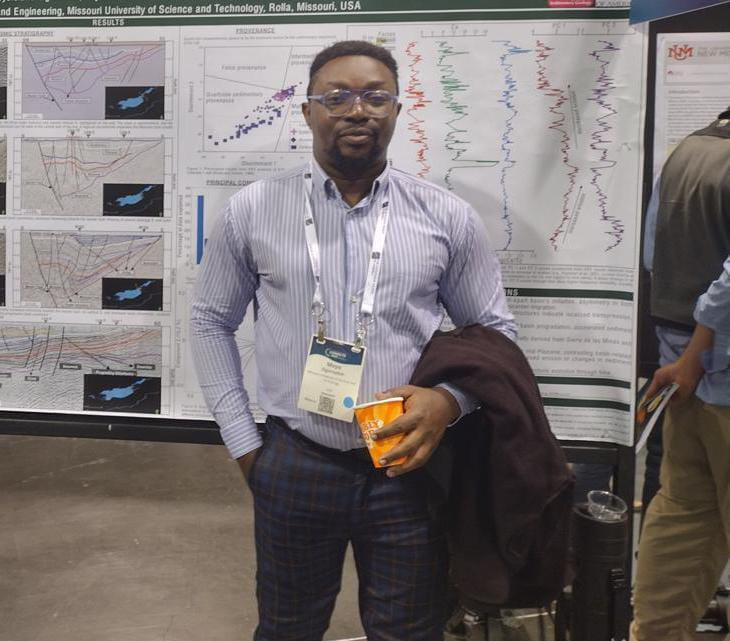
The study, conducted by Oluwakunle Moyofoluwa Ogunsakin, a doctoral student at Missouri University of Science and Technology, provides a record of tectonic and climate changes over the past 12 million years. It demonstrates how international collaboration can benefit developing countries such as Nigeria.
A report shared with journalists in Abuja highlighted the key findings from Ogunsakin’s research.
The study explains that Lake Izabal, formed by tectonic movements akin to California’s San Andreas Fault, contains valuable information regarding seismic activity and climate history.
Ogunsakin noted, “These lake sediments not only preserve ancient seismic events but also provide invaluable climate data that can enhance understanding of long-term environmental patterns.”
The methodologies employed in this study, including the analysis of seismic data and lake sediments, facilitate an understanding of long-term environmental trends crucial for infrastructure planning and resource management in Nigeria.
The research documents climate changes in eastern Guatemala from the Miocene to the Quaternary periods, illustrating how tectonic shifts and climate cycles have influenced the region. These findings hold particular relevance for Nigeria’s Benue Trough and Niger Delta areas, where comprehending sediment movement and chemical changes can improve resource exploration and management.
Ogunsakin emphasised that “for countries like Nigeria, this understanding is essential not only for seismic prediction but also for climate modelling, resource management, and infrastructure planning.”
Additionally, Ogunsakin’s research offers a novel approach to developing models for predicting future climates and identifying climate risks—an increasingly important task as global climate change impacts resources and the environment.
The findings suggest that similar techniques could be applied to Nigerian water bodies, yielding critical insights into the country’s climate history and potential future changes.
“Understanding these long-term cyclicities is vital for predicting future environmental changes,” he explained.
Moreover, this research could transform how Nigeria manages its natural resources in the face of escalating climate challenges. By integrating long-term geological and climate data into urban planning and environmental assessments, Nigeria can strive to balance economic growth with environmental preservation.
Ogunsakin’s work illustrates how global geological research can address local challenges, enabling Nigeria to adopt advanced methods for climate adaptation and resource management through international collaboration.
“These findings could revolutionise approaches to both resource management and climate adaptation,” he added.
Disclaimer
Comments expressed here do not reflect the opinions of Vanguard newspapers or any employee thereof.