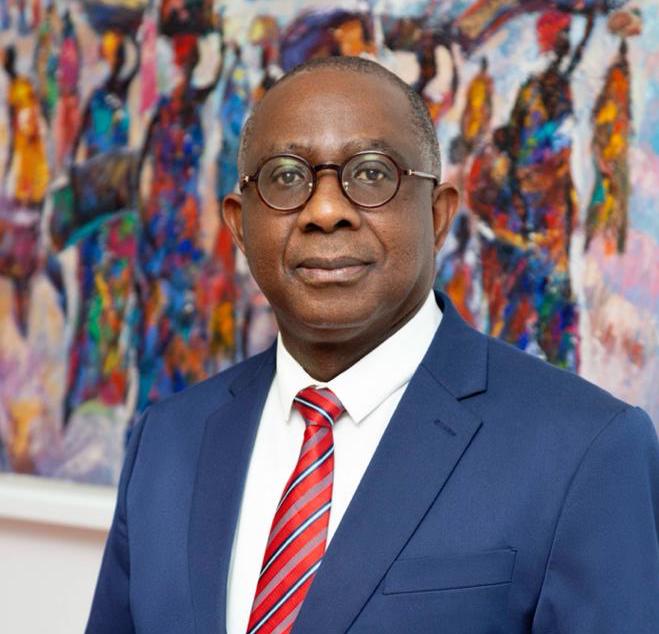
Professor Banji Oyelaran-Oyeyinka
By Adeola Badru
The Senior Special Adviser on Industrialisation to the President of the African Development Bank, AfDB, Professor Banji Oyelaran-Oyeyinka, has urged Nigeria to shift its focus from reliance on natural resources to prioritizing human capital development for economic recovery.
He stated this while speaking delivering a lecture at an engagement during the “Nigeria in the World” seminar series held at the Weatherhead Centre for International Affairs, Harvard University.
In his presentation titled, “From Reversal of Fortune to Economic Resurgence: Industrialisation & Leadership in Asian Prosperity & Nigeria’s Regress,” Professor Oyelaran-Oyeyinka emphasised that while countries like Malaysia, Indonesia, Vietnam, and Bangladesh have successfully reduced poverty and fostered equitable growth, Nigeria has faced significant challenges marked by increasing inequality and economic decline.
He remarked, “The experiences of these Asian nations serve as a powerful reminder of what can be achieved when a country invests in its people. Nigeria must learn from their successes and pivot towards a model that prioritises human capital.”
The professor highlighted specific examples of how these Asian nations have leveraged education and industrialisation to boost their economies.
“In Malaysia and Vietnam, targeted investments in education and technology have transformed their labour markets and fueled economic growth. Nigeria, on the other hand, has not fully capitalised on its human resources,” he noted, stressing the need for a comprehensive national strategy focused on skill development.
He further attributed Nigeria’s stagnation to a lack of investment in critical areas such as education and technology, which has created a significant technological gap compared to its counterparts.
“Our reliance on oil and natural resources has created a false sense of security. Without a robust investment in science and technology, we risk falling further behind,” he stated, warning that this dependency could lead to a deeper economic crisis.
Characterising Nigeria as a “Crippled Giant,” he pointed out that weak governance and poor institutional frameworks have severely hindered the country’s progress, adding that: “Effective leadership is essential for managing public sector funding and creating an environment conducive to growth.”
“Without strong institutions, our potential will remain unfulfilled,” he cautioned, calling for reforms that strengthen governance and accountability.”
In his closing remarks, Professor Oyelaran-Oyeyinka advocated a strategic shift that emphasises education, skills development, and technological innovation.
“By investing in human capital, Nigeria can leverage its vast resources more effectively. This is not just about economic recovery; it’s about ensuring long-term prosperity for future generations,” he said, urging policymakers to prioritize education and vocational training as cornerstones of national development.
According to him, his insights will provide a critical roadmap for Nigerian policymakers as the country grapples with its economic challenges.
“We have the opportunity to transform Nigeria into a knowledge-driven economy, but we must act decisively and collaboratively,” he concluded, stressing that engaging various stakeholders, including the private sector and civil society, will be crucial in this endeavour.
The seminar, however, attracted a diverse audience of scholars, policymakers, and students who engaged in discussions about Nigeria’s future and the lessons it can learn from successful economic models worldwide.
Disclaimer
Comments expressed here do not reflect the opinions of Vanguard newspapers or any employee thereof.