By Gbenga Okeowo
In today’s hyperconnected world, war is no longer confined to battlefields or national borders. The digital realm has become a new frontier where state actors, cybercriminal syndicates, and ideological hackers wage relentless campaigns for dominance, disruption, and defense. In this war without borders, a new kind of hero has emerged: cybersecurity leaders and artificial intelligence (AI) visionaries who build, safeguard, and reimagine the digital ecosystem.
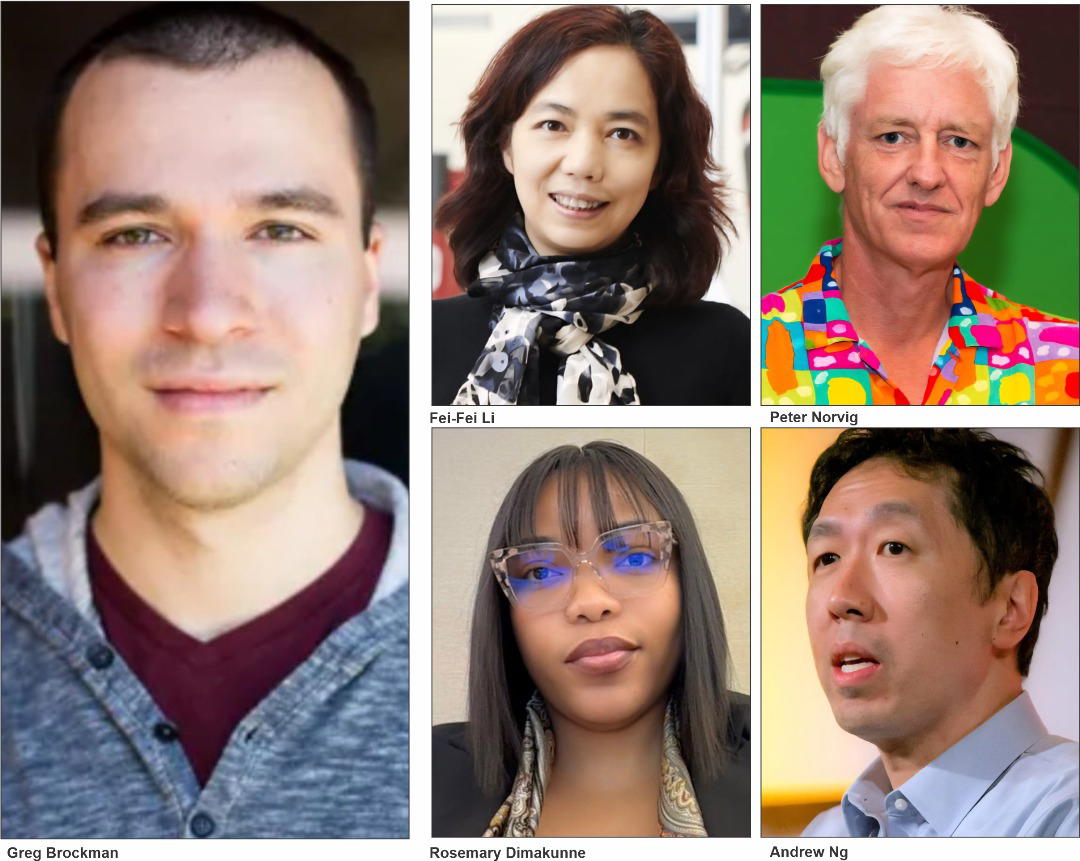
From Greg Brockman and Fei-Fei Li to Rosemary Chisom Dimakunne, Andrew Ng, and Peter Norvig among others, these experts are not only advancing the boundaries of AI but also reinforcing the world’s cyber defences. Alongside institutions like the ICF, BG Elves, and humanitarian tech organisations such as HTWB (Humanity Through Web-Based Systems), they form a global vanguard against an ever-evolving threat landscape.
The rules of warfare have changed. Today’s enemies can paralyze economies, disrupt elections, and hijack medical systems with a few lines of code. Sophisticated cyberattacks target critical infrastructure such as banks, hospitals, power grids, and government agencies exploiting vulnerabilities in both software and human behavior.
As the scale and complexity of cyber threats escalate, interdisciplinary collaboration among policymakers, engineers, and ethicists is vital. It is not just about building stronger firewalls; it is about crafting ethical, resilient frameworks for a world increasingly run by algorithms, which Brockman, an American entrepreneur and co-founder of OpenAI, has greatly contributed to. Brockman has helped shape one of the most influential research laboratories in artificial intelligence. Raised in Thompson, North Dakota, and briefly educated at Harvard and MIT, Brockman cut his teeth at Stripe, a global fintech company, where he served as Chief Technology Officer before co-founding OpenAI in 2015.
At OpenAI, Brockman has spearheaded projects in deep learning and natural language processing technologies that power tools like ChatGPT and other advanced AI systems. His leadership has not only pushed the boundaries of what machines can do, but also raised urgent ethical questions about how they should do it. Brockman is a key advocate for ensuring that artificial intelligence systems operate in harmony with human values and goals.
And if the AI revolution had a compass, Fei-Fei Li would be one of its true norths. A Chinese-American computer scientist, Li is best known for founding ImageNet, a vast dataset that enabled revolutionary advances in computer vision. ImageNet provided the foundation for AI systems to “see” and interpret images, laying the groundwork for facial recognition, autonomous vehicles, and medical diagnostics.
Born in Beijing and raised in Sichuan before emigrating to the U.S., Li earned her physics degree from Princeton and a PhD in electrical engineering from Caltech. Today, she is a professor at Stanford University and Chief Scientist at Google Cloud.
Through her nonprofit, AI4ALL, Li champions diversity in tech by empowering underrepresented communities to access AI education. Her work has redefined how AI serves but not replaces humanity. As she puts it, “AI is not just about intelligence; it’s about responsibility.”
Among the new generation of cyber guardians, Dimakunne stands out as a fierce and visionary protector. Her journey reflects both technical mastery and strategic leadership in some of the world’s most critical sectors such as finance, energy, healthcare, and oil & gas.
As the Incident Response Lead at Access Bank, one of Africa’s largest financial institutions, she developed and deployed an AI-powered intrusion detection system that safeguards biometric platforms, ATMs, and surveillance infrastructure. This innovation has significantly reduced fraud risk and enhanced regulatory compliance across Access Bank’s massive digital footprint.
Before joining Access Bank, she rose through the ranks at SeaAvin Limited, where she secured offshore oil rigs and onshore industrial networks defending high-value systems in physically remote, high-risk environments. Her portfolio also includes work on Oracle’s Anti-Money Laundering systems and the rollout of Imperva’s cybersecurity solutions.
Dimakunne is proficient in platforms like AWS, Azure, and Google Cloud and champions Zero-Trust architecture and behavioral analytics. With certifications ranging from CompTIA Security+ to Fortinet and Scrum Agile, she brings a rare combination of deep technical knowledge and business insight. She is currently pursuing her second Master’s degree in Information Systems (Cybersecurity) at Baylor University in the United States building on her first in Computer Science from Imo State University.
Beyond her technical expertise, Nigeria-born Dimakunne is a vocal advocate for diversity in tech. As a member of Women in Cybersecurity (WiCyS), the Society of Women Engineers (SWE), and the Project Management Institute (PMI), she mentors aspiring cyber professionals, especially women and minorities, to join the frontlines of digital defense.
Arguably one of the most influential voices in modern AI is Ng. A British-American computer scientist and serial entrepreneur, Ng earned his undergraduate degree in computer science, statistics, and economics from Carnegie Mellon, followed by graduate degrees at MIT and a PhD from UC Berkeley.
In 2011, Ng co-founded Google Brain, which helped popularise deep learning and artificial neural networks. Later, he joined Baidu as Chief Scientist, where he built a world-class AI division. In 2014, he co-founded Coursera, the world’s largest online learning platform, democratizing access to top-tier AI and data science education.
In April 2024, Ng was appointed to the board of Amazon, signaling his growing influence at the intersection of AI, commerce, and society. He continues to teach and lead through his company, DeepLearning.AI, advocating for responsible AI adoption across industries.
No list of AI luminaries is complete without Norvig. He has shaped the intellectual foundation of AI for decades. A former NASA scientist and a longtime professor, Norvig is the co-author of “Artificial Intelligence: A Modern Approach,” the seminal textbook that has educated generations of computer scientists.
With over 50 papers to his name, Norvig has contributed to AI theory, natural language processing, and software engineering. He is a Fellow of the Association for the Advancement of Artificial Intelligence (AAAI) and a trusted advisor on ethical AI development.
Known for his humility and clarity, Norvig is a rare blend of academic rigor and industry pragmatism. His influence continues to guide both the technical evolution and the moral compass of AI research.
Amid the headlines dominated by cyber threats and digital espionage, organisations like Humanity Through Web-Based Systems (HTWB) remind us that technology can be a tool for healing and hope. HTWB leverages cloud computing, satellite imagery, and data analytics to deliver humanitarian aid in conflict zones, refugee camps, and disaster-stricken regions.
Whether it is mapping safe routes for displaced people, restoring internet access in war-torn cities, or deploying AI-powered language tools for trauma counseling, HTWB proves that digital tools can be instruments of peace, not just instruments of war.
As cyber threats escalate in frequency and sophistication, global cooperation is no longer optional, it is essential. Tech leaders, governments, nonprofits, and civil society must converge to ensure that digital systems are safe, ethical, and equitable. This means investing in cybersecurity education, supporting open-source defenses, and crafting global norms for AI accountability.
Brockman, Li, Dimakunne, Ng and Norvig represent a spectrum of backgrounds, geographies, and ideologies, but they share a unifying purpose: to defend, empower, and transform the digital world.
As the world prepares for a new era of artificial intelligence and cyber warfare, the true measure of progress will not be how smart the machines become, but how wisely and safely they are guided.
Disclaimer
Comments expressed here do not reflect the opinions of Vanguard newspapers or any employee thereof.