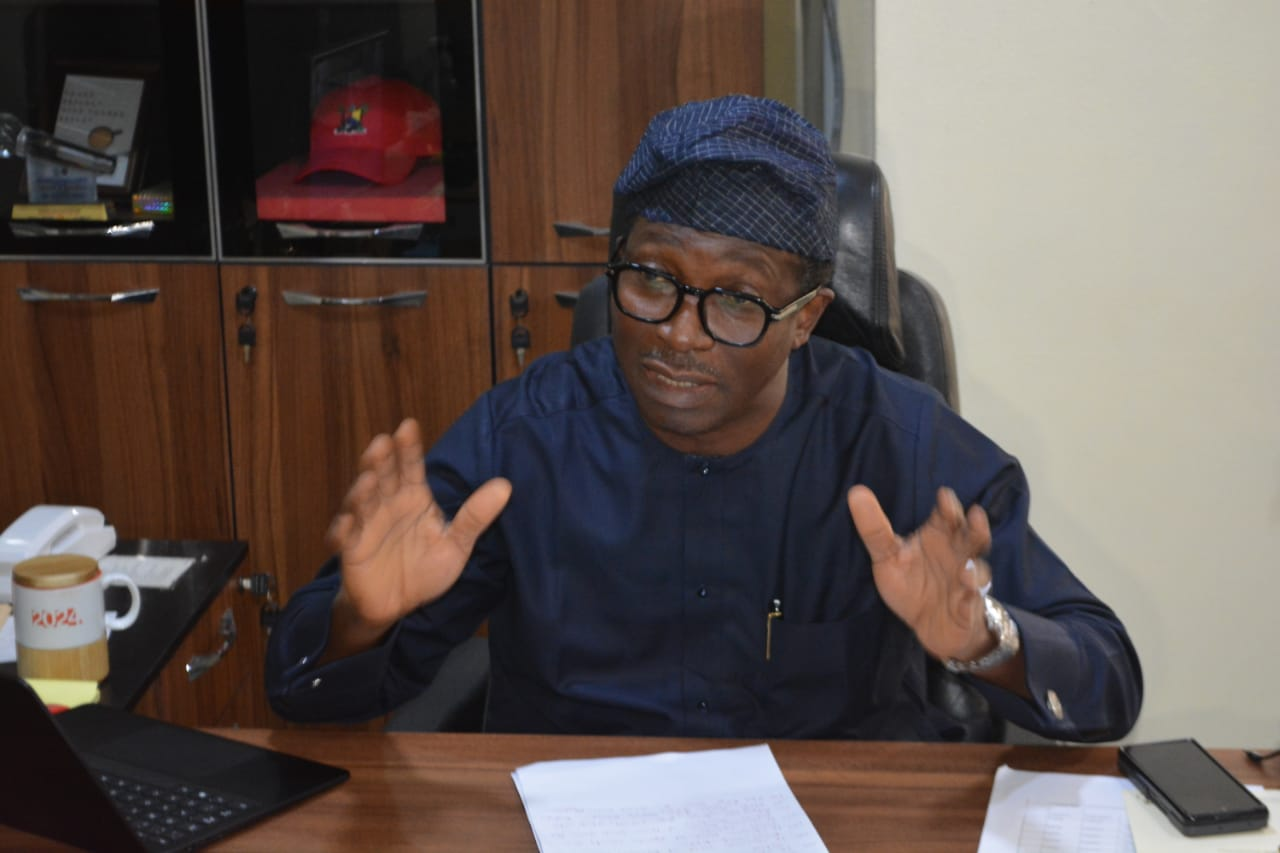
Mr Hakeem Smith
In pursuit of a conducive learning environment for students in Lagos State’s public secondary schools, the Chairman of the Special Committee on Renovation of Public Schools (SCRPS), Mr. Hakeem Smith, in this interview with Evelyn Usman, discusses the committee’s 18-month progress in meeting the United Nations Educational, Scientific and Cultural Organization, UNESCO standard of 45 students per class. He rates the committee highly, citing its comprehensive program aimed at renovating dilapidated school buildings, constructing additional classrooms, bridging the infrastructure gap, and creating an inclusive and effective learning space to enhance the quality of education in Lagos State’s public schools.
excerpts:
Could you outline the specific terms of reference guiding your committee’s mandate, and how these objectives align with the overall goal of renovating and revitalizing Nigeria’s public schools?
Our job is to check schools, make sure they meet standards, make school furniture, and build new classrooms or fix old ones. We found out that many schools don’t have enough classrooms, which causes overcrowding. To solve this problem, we build more classrooms based on how many students are in the school. This helps create a good learning environment.
We also fix old school buildings by repairing roofs, replacing windows, fixing floors, and upgrading bathrooms. Additionally, we’re making recreation areas like football fields, tracks, and obstacle courses in some schools. This gives students space to play and relax during breaks. We’re also using technology like interactive screens and digital tools to make learning more fun.
Some schools in Lagos don’t have a lot of space because of land limits. But we try to use the space we have to provide amenities like recreation areas to enrich the overall educational experience.
Does your committee comprise professionals with the requisite expertise in construction and determine the specification and use of standardized materials in building projects, thereby ensuring the structural integrity and safety of schools for students and staff?
This committee consists of a five-member board. As the head of this agency, I attribute our success to having technocrats at the helm. Our committee brings technical expertise to infrastructure development, enabling us to understand construction intricacies and address issues effectively. With our expertise, we cannot be misled by contractors. As a seasoned professional with 30 years of experience in the industry as a Quantity Surveyor, project manager, and facility manager, I am well-versed in post-construction maintenance.
Our team includes an Architect with over 20 years of experience, a legal expert, and technocrats from the civil service with levels ranging from 12 to 16. We undertake renovation, new construction, and furniture procurement, collaborating with various agencies to ensure effective project execution. Our partners include the Ministry of Economic Planning and Budget, the Public Procurement Agency (PPA), and the Ministry of Education. We work closely with these agencies to ensure accountability, transparency, and alignment with educational requirements.
We take a thorough approach to project planning, justifying the need for each project and executing the technical aspects effectively. We conduct comprehensive soil tests to determine the right foundation type for our buildings, informing our decision to use piles, rafts, or pads. This meticulous approach ensures that our projects are sound and effective. By aligning our efforts with the THEMES agenda, which prioritizes education, we aim to ensure that no student is left behind.
What innovative concepts, initiatives, or reforms has your committee introduced since its inception, and how have these contributions impacted the transformation of Nigeria’s public education sector in Lagos State?
We’ve adopted modular construction, an innovative approach to building schools that focuses on creating high-tech, technology-driven learning environments. The modular concept is part of the Lagos State Government’s initiative to introduce technology-driven modular learning spaces in public schools.
When people hear “modular,” they often think of constructing classrooms using containers, but that’s not the primary focus. Instead, we’re incorporating cutting-edge technology to enhance the learning experience. This innovative approach aims to provide a faster and more efficient way to construct schools while promoting quality education.
In the past, traditional teaching tools like blackboards, whiteboards, and markers were the norm. Now, we’re introducing interactive screens, enabling teachers to use digital tools while students learn with their iPads or phones. This technology allows students to continue learning outside the classroom, making education more accessible and convenient.
To support this initiative, teachers have been trained and provided with templates to ensure a standardized curriculum across schools.
How many public schools have benefited from the modular construction concept initiated by your committee?
Currently, Vetland Junior Grammar School in Agege, Lagos, has benefited from the modular concept, with three ongoing projects expected to be completed by mid-2025. The goal is to ensure every district has at least one modular project.
As the first of its kind in West Africa, Vetland Junior Grammar School has become a benchmark for excellence, attracting visitors from abroad who are drawn to its unique features showcased on social media. The presence of such facilities encourages parents to consider enrolling their children in public schools rather than private institutions, leading to a significant increase in enrollment. However, this shift poses a challenge to ensure adequate classrooms and a conducive learning environment are provided.
Besides, some schools now boast football fields, tracks, and game courts, while others have only courts or a football field, depending on available space.
What is the current status of the construction project at Tolu Complex, renowned as the largest school complex in West Africa?
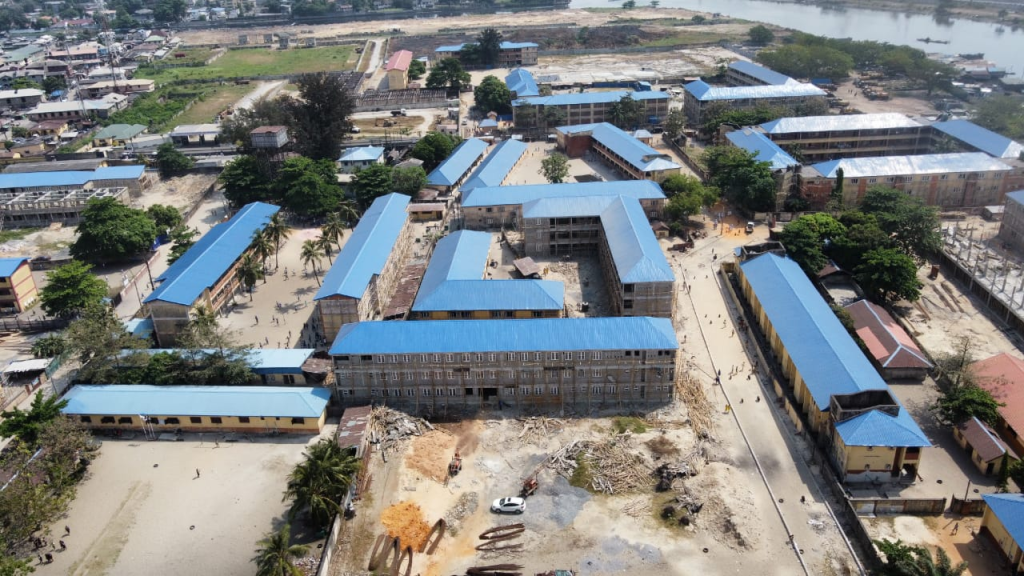
Our vision is to transform Tulu Complex into the BOS Education City. What makes Tolu unique is that it has 35 schools- 16 senior secondary Schools, 15 Junior secondary schools, including and five primary schools, with approximately 20,000 students, it’s an unprecedented institution in West Africa.This complex has the potential to become a tourist attraction.
We are renovating existing structures, adding new classroom blocks, and ensuring security and boundary definitions. We have established four major access points, with a mega gate and three other gates, to control entry and maintain security. We’re also investing in recreation facilities, including a standard beachfront, a racetrack, and multiple football pitches. Our goal is to complete the renovations by the end of the second quarter of 2025, with an average completion rate of 60%.
To manage the project, we’ve divided it into six lots: A, B, C, D, E, and F. We are also building a fire station, a health center, and a vocational school. Lot B is special because it includes two buildings designed for students with physical challenges. We’ve included lifts and sustainability features like water harvesting and solar panels.
We are also building science laboratories where students drawn from each of the schools will take turns to make use of . Upon completion, Tolu Complex will become a tourist attraction, showcasing effective management and inviting visitors from Finland, South Africa, and beyond.
Can you provide a breakdown of the budget allocated and utilized for public school renovation projects under your committee’s supervision over the past 18 months?
I’m unable to discuss budget details as that falls under the Ministry of Economic Planning and Budget (MEPB). However, I can assure you that we operate within a regulated framework, adhering to the central pricing agency’s rates for contractors.
How would you rate the committee’s efforts, and what key milestones and accomplishments has SCRPS achieved in the past 18 months?
Over the last 18 months, we have made significant progress. Our achievements include:
370 rehabilitation projects, covering 186 secondary school blocks and 184 primary school blocks;construction of 1,926 new classrooms; eight newly built hostel blocks in Model colleges and supply of 208,000 dual composite chairs and desks to public schools.
To date, we’ve renovated approximately 50% of the 700 secondary schools and 200 primary schools, adding nearly 2,000 new classrooms. This milestone demonstrates the effectiveness of our approach and commitment to improving education infrastructure.
What is the methodology used to assess the unique needs of individual schools, as well as the selection criteria employed to prioritize construction and renovation projects, with the goal of achieving a fair and balanced allocation of resources across Lagos’ public secondary schools?
These projects are dispersed across Lagos State’s six educational districts, ensuring equal distribution of resources. Even furniture production and distribution are spread out to maintain equality. When calculating the student-to-classroom ratio, we strive to meet the UNESCO standard of 45 students per classroom, aiming for a ratio of around 50 students per classroom.
During school assessments, we evaluate the student population and divide it by the number of existing classrooms. This calculation helps us determine the number of additional classrooms needed to achieve an optimal student-to-classroom ratio.
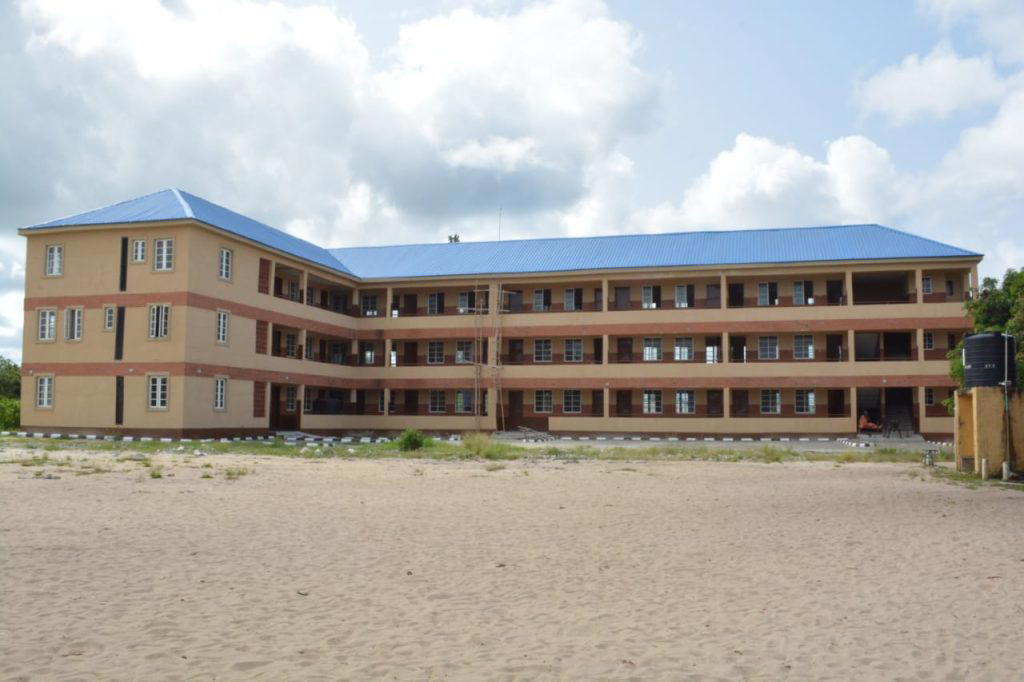
Notable construction projects completed include: 18-classroom block on raft foundation at Awori Junior College, Ojo; 18-classroom block on pad foundation at Euba Junior High School, Mushin; 18-classroom block on raft foundation at Idata Community Senior Secondary School, Ibeju-Lekki; 18-classroom block on raft foundation at Ilupeju Junior Grammar School, Oshodi; 12-classroom block on pad foundation at Ipaja Junior Grammar School, Majiyagbe, Alimosho and 18-classroom block on pile foundation at Keme Balogun Junior College, Ibeshe, Ikorodu.
Additionally, we have completed construction of: I-shaped 18-classroom blocks on raft foundation at: Mainland Junior Secondary School, Fadeyi, Somolu; St. Luke Junior Secondary School, Bariga; Thogli Community Grammar School, Badagry; United Christian Secondary School, Apapa and an eight-classroom block, including offices and toilets, on raft foundation at Lekki Community Senior Secondary School, Ibeju-Lekki.
We currently have ongoing construction projects, including 18-classroom blocks on raft foundation at: Odongunyan Junior Grammar School, Ikorodu; Zumratul Islamiyah Senior High School, Ikorodu; Badore Community Secondary School, Eti-Osa. There are also 18-classroom blocks at: Elemoro Community Secondary School, Ibeju-Lekki;Ogombo;Community Secondary School, Eti-Osa, L-shaped 18-classroom blocks on pile foundation at: Iponri Estate Junior High School, Surulere; Otumara Senior High School, Ebute Metta, Lagos Mainland and construction of 18 classrooms, staff rooms, and toilets at: State Senior High School, Ibereko, Badagry and Eko Boys Senior Secondary School, Mushin.
Are riverine areas also taken into consideration as part of your committee’s project scope, to ensure that schools in these communities are not left behind in the renovation and construction efforts?
Public schools in riverine areas are indeed part of the project, as they fall within the six educational districts. For instance, we’re building a new school in Otumara, near the Eko Bridge. Another project is underway in Eleko. Recently, committee members visited one of the riverine areas by boat to conduct inspections and explore opportunities for construction projects.
Have accessibility features for students with disabilities been incorporated into the renovation and construction plans?
Absolutely! We’ve incorporated accessibility features into some of the schools we’ve built. For instance, we’ve installed ramps that enable students with physical disabilities to move seamlessly from the ground floor to the second floor. Although we couldn’t install elevators due to maintenance concerns, the ramps provide easy access. Additionally, we’ve built dedicated toilet facilities for physically challenged students and installed ramps leading into the classrooms. Our goal is to make a statement that Lagos is inclusive, and students with physical disabilities can access any floor, not just limited to the ground floor.
Any challenge faced in the course of carrying out these projects?
We’ve thoroughly analyzed the reasons behind project failures and effectively mitigated most of them. As a result, my focus has shifted from risk management to efficient project deployment. However, simultaneously executing all projects is impractical, so we prioritize and manage our workflow carefully.
To ensure project success, we thoroughly vet our contractors and blacklist unreliable ones. Our partners and contractors are seasoned professionals with a strong work ethic. Once a contract is signed, they consistently deliver on their commitments. Our performance track record is impressive, boasting a 90-95% success rate.
Disclaimer
Comments expressed here do not reflect the opinions of Vanguard newspapers or any employee thereof.