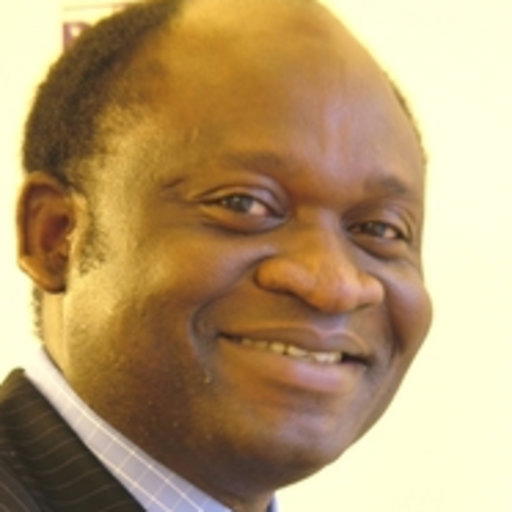
Olu Fasan
There are two models of democracy. One is a direct democracy; the other is a representative democracy. In the former, citizens elect people as “delegates” to the legislature to formulate laws and policies but retain the powers to decide directly themselves what laws and policies they want. One notable example of a direct democracy is Switzerland, where all laws and major policies must be approved by the people directly in a referendum.
By contrast, in a representative democracy, the citizens elect people to represent them and govern on their behalf, that is, to make laws and formulate policies without going back to the citizens to seek their approval in a referendum. Most democratic countries in the world operate a representative democracy. Nigeria is, in theory, one of them!
But a representative democracy is predicated on two fundamental assumptions. One is that the government that emerges from such a democracy reflects the genuine will and consent of the majority of the electorate, freely expressed in credible elections. The second assumption is that, in a representative democracy, there is an agency relationship between the government and the governed, under which the elected government acts as the agent of the people, works faithfully for the citizens, and is accountable and answerable to them.
However, those two assumptions are blatantly discredited in Nigeria. First, elections are never free and fair in Nigeria, and the “government” that emerges may not even reflect the will of the majority of voters. Second, the government of Nigeria, a supposed representative democracy, does not act as the agent of the people in the sense of being laser-focused on serving them and meeting their basic needs, and certainly is not accountable to them.
In his 2025 New Year’s speech, Bola Tinubu, Nigeria’s braggadocious president, said: “On a personal note, thank you for placing your confidence in me as your president. Your trust humbles me.” But wait a minute! The majority of the Nigerian electorate did not make Tinubu president. He is president by virtue of a constitutional anomaly that allows someone to emerge as president even with a very small share of the popular vote. In the 2023 presidential election, Tinubu secured 36.6 per cent of the vote, meaning that 63.4 per cent of the electorate rejected him. Out of the 24m valid votes cast in the election, Tinubu got only 8.8m, meaning that a whopping 15.2m people did not vote for him. How could it be, in a truly representative democracy, that the votes of 8.8m people trump those of 15.2m?
Some would argue that he met the constitutional requirement. Of course, and he is entitled to govern under the extant Constitution. But he should recognise the nature of his “mandate”; he’s running a minority government that does not reflect the will and consent of the majority of the Nigerian electorate. So, when Tinubu thanked Nigerians “for placing your confidence in me as your president” and said that “your trust humbles me”, he was being mendacious. What should humble him is the fact that he’s ruling Nigeria with just 36.6 per cent of the vote. That should, indeed, make him humble and govern with humility, by forging a national consensus for radical policies with far-reaching implications. But, alas, Tinubu is ruling Nigeria as if he won a landslide victory, acting as though he can whimsically, unilaterally and autocratically “transform” Nigeria without genuine consultations and national consensus. Yet, truth be told, he can’t claim a sweeping mandate to “remake” Nigeria without consensus!
Like the pot calling the kettle black, Tinubu referred in his New Year’s speech to “a tiny segment of our population that still sees things through the prisms of politics, ethnicity, region and religion.” How utterly hypocritical! Can someone please remind him that he became president with the votes of a tiny segment of the population who voted for him based on politics, ethnicity, region and religion, all of which he himself opportunistically whipped up with his “emi lokan”, “Yoruba lokan” and Muslim-Muslim cards? Unfortunately, in Nigeria, it is possible for any self-interested politician to win a narrow victory and become president by ruthlessly deploying the wedge issues of ethnicity, region and religion as Tinubu did in 2023. But that’s not a genuine representative democracy.
So, my first point is that Nigeria is not a true representative democracy: elections are not free and fair, and someone can become president without a broad-based national support but with the votes of a tiny segment of the population. Unfortunately, the 2027 presidential election is, yet again, likely to be rigged, and someone could still emerge as president with even as low as 35 per cent of the vote. Some will, ostrich-like, pretend as if that’s normal. But, no, it isn’t, and I remain totally unyielding in my advocacy for a new Constitution to replace the current military-imposed one that, among other deep flaws, distorts the true meaning of a representative democracy: Nigeria needs a true representative democracy!
Of course, Nigeria’s “democracy” is not only unrepresentative, but it is also unaccountable. There’s no agency relationship between those governing and those being governed. In true representative democracies, elected politicians are servants of the people. But in Nigeria, they are masters, the people are servants; they are feudal lords, the people are serfs. In her book, Fighting Corruption Is Dangerous, Dr Ngozi Okonjo-Iweala listed “capture by leaders and rent-seeking elite” among the factors undermining democratic governance in Nigeria. Indeed, Nigeria is what Daron Acemoglu and James Robinson call an “extractive state” in their book Why Nations Fail. According to Acemoglu and Robinson, an extractive state is a state where a small elite dominates and exploits the people, a state where everything is designed to protect the interests of the few at the expense of those of the many. And one of the characteristics of an extractive state is the concentration and centralisation of powers.
Everyone says the Nigerian president is too powerful, so powerful that he controls all institutions of state, including neutering the National Assembly and co-opting the judiciary. While a feisty press and a vibrant civil society are bulwarks of a liberal democracy, they are all bark but no bite in Nigeria, thanks to state-sanctioned intimidation and violence against journalists as well as threats against media houses. But is a president with unfettered powers, who can do virtually what he likes without let or hindrance, acceptable in a representative democracy? Certainly not! The American president is described as the world’s most powerful man. Yet, he’s so constrained at home by US constitutional checks and balances, and the robustness and independence of American institutions, that he can’t exercise arbitrary powers. By contrast, Nigeria’s president has unrestrained powers and is effectively answerable to none.
So, Nigeria’s democracy is neither representative nor accountable. But the status quo is not sustainable: it poses existential dangers for Nigeria’s unity, stability and progress. Yet, tinkering at the edges of constitutional reforms won’t work. Nigeria needs a new Constitution!
Disclaimer
Comments expressed here do not reflect the opinions of Vanguard newspapers or any employee thereof.