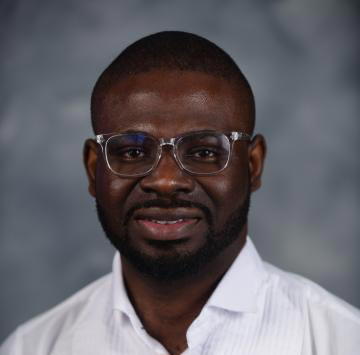
By Cynthia Alo
In today’s evolving infectious disease research, few topics are as pressing as the development of new therapeutic strategies, and few names are emerging as rapidly as that of Ayobami Ogundiran.
Ogundiran is a doctoral candidate at Cornell University, attempting innovative research that could revolutionize the treatment of infectious diseases by engineering glycans-based biopolymers.
His scientific curiosity began from a household independent study on synthesizing bromelain powder from waste pineapple peels, demonstrating early on a keen interest in finding value where others see waste.
This enthusiasm laid the foundation for a research career dedicated to understanding and leveraging the biophysical properties of biological molecules.
According to him, the research will take a clinical approach by leveraging on strategies that selectively engineers glycans in order to inspire life science companies to develop innovative strategies for early disease detection and treatment. Early diagnosis and biomarker identification are increasingly important for effective clinical outcomes, making his research critical for public health.
His academic excellence was further demonstrated during his undergraduate studies at Ladoke Akintola University of Technology (LAUTECH), where he led a team in his final year to design an industrial plant for 2-EthylHexanol production.
Also, in that year, he contributed to a significant study on the adsorptive removal of pharmaceutical pollutants from aqueous solutions, which was later published in the Journal of Environmental Research Engineering and Management.
He was also actively involved in conducting tutorials for his colleagues, promoting his egalitarian values among his peers.
As a master’s student at Howard University, Washington DC, USA, Ayobami’s curiosity about the role of glycans in infectious disease grew, particularly after witnessing for years the devastating impacts of HIV, the Ebola outbreaks, and more recently the Coronavirus. He focused on how these glycans (sugar-based biopolymers), especially those on the surface of viruses like HIV-1, interact with mucins, host cells and their roles in how viruses evade the immune system.
This research area was instrumental in why he desires to pursue a doctorate degree at Cornell University, where he aims to advance his understanding of pathogenic glycans and their role in virus infection, and how Glycocalyx can be selectively engineered for therapeutic purposes.
Ayobami’s concluded master’s research has already begun to attract citations thereby contributing to the scientific community. His first-author publication in a top U.S. journal explores a novel mechanism by which HIV-1 uses high mannose glycans to form shear-reversible clusters.
This concept of reversible clustering is expected to complicate HIV’s immune evasion tactics, as the virus can temporarily hide within clusters, shielding its surface from antibody interactions. This work not only offers new insights into the virus’s evasion strategies but also opens up potential pathways for developing carbohydrate-based therapies against infectious diseases therapies that could have a profound impact on the fight against HIV and other infections, particularly in Africa, where the burden of such diseases is especially high. He has other publications and has collaborated in multiple research projects.
Beyond his research, Ogundiran has been an influential mentor and educator. At Howard University, he has served as a Teaching Assistant and as the secretary for the America Institute for Chemical Engineers (AIChE-National Capital Section), helping to shape the next generation of chemical engineers. Additionally, he actively mentored high school students, with one of his mentees winning a 1st prize research presentation in 75th Annual Prince George’s Area Science Fair. He has also served as a Judge for the Regional Junior Science and Humanities Symposium (JSHS), DC, USA and has been selected as a poster presentation judge for the Virtual STEM Fair at Charles Herbert flowers high school in prince George county, Maryland.
His dedication to education is matched by his leadership in and out of the laboratory, where he manages crucial research operations, from imaging and data analysis to supply procurement.
These dedications have earned him multiple awards from being nominated among one of 50 finalists in the Science as Art competition at 2023 Material Research Society (MRS) Fall conference. He was also awarded the competitive Frederick Douglass and Edward Bouchet Doctoral Scholars Assistantship to mention a few.
Disclaimer
Comments expressed here do not reflect the opinions of Vanguard newspapers or any employee thereof.