By Ayo Onikoyi
Substance use and mental health challenges are reshaping life on college campuses, where rates of mental illness continue to rise. Amid this crisis, Odunayo Elijah, a public health scholar trained at The University of Alabama, is uncovering critical links between risky habits, poor sleep, and struggles with mental well-being—insights that could shape solutions on college campuses and society at large.
Education and Expertise
Odunayo Elijah’s journey in public health is rooted in a strong academic foundation. He earned his Bachelor of Technology in Biology and later pursued a Master of Technology in Environmental Biology and Public Health, both from the Federal University of Technology, Akure, Nigeria. Building on these achievements, he completed advanced training in Public Health and Interdisciplinary Studies at The University of Alabama, equipping him with expertise in community health, evidence-based research, and program development.
Contextual Impact: The Ripple Effect of Mental Health Research
Odunayo’s research holds value far beyond academia, offering practical insights that resonate with everyday Americans and Africans alike. For the average person in the United States, his work provides a framework for understanding the interplay between lifestyle choices and mental health, empowering individuals and families to make informed decisions. It underscores the importance of preventive care and accessible resources on campuses, potentially reducing the burden on healthcare systems and fostering healthier communities.
For Africans, his work offers an approach that balances global evidence with culturally tailored interventions. It provides tools to navigate challenges like the stigma surrounding mental health and limited access to care. The ripple effect of addressing these issues benefits families, workplaces, and broader communities, highlighting the universal relevance of his findings.
Unraveling the Impact of Risky Habits
Through detailed analysis of college students’ behavior, Odunayo has found that even moderate use of substances like tobacco, alcohol, or cannabis can significantly increase the risk of mental health issues. For instance, students who use tobacco occasionally are 30% more likely to face mental health problems, while frequent users are more than twice as likely. Similarly, students who drink alcohol at moderate levels have a 66% higher chance of experiencing these challenges, with heavy drinkers at more than triple the risk. Cannabis use follows a similar trend, where occasional users face increased risks, and frequent users are over three times as likely to struggle.
These findings resonate globally, offering universal lessons about the importance of early intervention and the compounding effects of risky behaviors on mental well-being.
Why Sleep Matters
Odunayo has also highlighted the often-overlooked role of sleep in mental health. His research shows that students who stay up too late are more than twice as likely to face mental health challenges, while those who wake up unusually early see a similar increase in risk. Poor sleep, compounded by risky substance use habits, creates a vicious cycle that leaves individuals vulnerable. For example, frequent use of tobacco, alcohol, or cannabis is linked to significant difficulty falling asleep, further adding to mental strain.
These insights are relatable for everyday individuals—whether a working parent in Ohio or a university student in Lagos—offering actionable strategies to improve health through better sleep hygiene and lifestyle adjustments.
Turning Research into Real-world Solutions
Odunayo’s passion for reaching underserved communities was ignited during his time at Teach For Nigeria, where he served as Executive Assistant to the CEO. Witnessing firsthand the transformative power of education and grassroots initiatives, he developed a commitment to creating programs that directly impact lives.
Beyond his academic work, he has led outreach programs to promote awareness about healthy living. As a Community Mobilization Officer for the Ekiti State AIDS Control Agency, he coordinated outreach programs that impacted thousands by promoting HIV/AIDS awareness and providing counseling. Additionally, his leadership roles with organizations like Nothing But Nets have showcased his ability to advocate for global health priorities. Working with this global grassroots campaign, Elijah engaged with policymakers and U.S. Congress members to advocate for increased funding for initiatives like the Global Fund and the President’s Malaria Initiative. His efforts raised awareness and secured resources to fight malaria, underscoring his commitment to improving health outcomes in vulnerable communities worldwide.
Gaining National and International Recognition
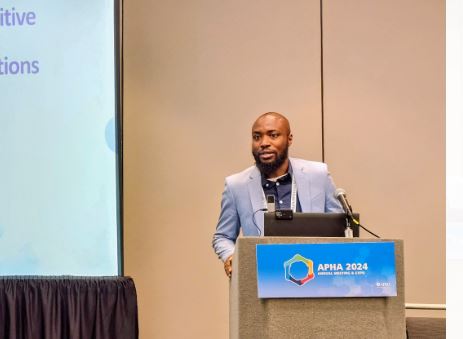
Odunayo’s groundbreaking work has earned attention at prominent conferences like the American Public Health Association (APHA) Annual Meeting, where his findings have sparked important discussions about student health. He has presented at the Sigma Nursing Biennial Convention and the American Academy of Health Behavior Annual Meeting, earning accolades for his impactful research.
Notably, his presentation at the 2023 Sigma Nursing Biennial Convention on the relationship between substance use and sleep quality garnered significant attention, leading to an invitation to present his findings virtually to the American Society of Addiction Nurses in 2024. His systematic reviews and peer-reviewed publications underscore his academic rigor and commitment to addressing diverse health challenges.
A Vision for the Future
Looking ahead, Odunayo Elijah, a public health advocate and interdisciplinary researcher, plans to expand his research and advocacy to reach even more communities. Focusing on long-term studies and local programs, he aims to create lasting change that helps individuals lead healthier, happier lives. His work underscores that solutions to mental health challenges are within reach and relevant to everyday lives, whether in bustling cities or remote rural areas.
Disclaimer
Comments expressed here do not reflect the opinions of Vanguard newspapers or any employee thereof.