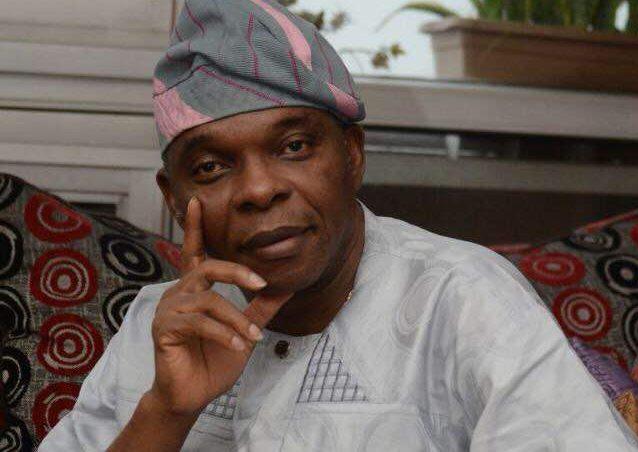
Muyiwa Adetiba
The Yuletide season climaxes every year on Christmas day, the day chosen and accepted as the birthday of Christ, the Prince of peace. The season itself is characterized by festivities, family holidays, sharing of gifts and yes, love but usually of the pleasurable type. The season is so often over shadowed by this carnal revelry that we have to be constantly reminded of its spiritual import; the ‘reason for the season’ as we say which is the coming into the world of the Son of God.
But the Jews chronicled it in their sacred books as the coming of a King, a Redeemer or even a Liberator from Roman rule. Unfortunately, the birth of Christ was so lowly and his parentage so poor, that it was difficult for them to reconcile him with the anticipated King. This was reinforced in the gospel of John when he said ‘he came to his own and his own did not receive him’. Last week Sunday was Epiphany, the day chosen by the Christian world to again reveal Christ through the circumstances of His birth.
Epiphany is probably to underscore the fact that Christ’s birth was indeed revealed to the world through the Magi, otherwise known as the Three Wise Men. Yet, despite Christmas, despite Epiphany, despite the attestation by over two billion Christians and indeed most of the world that Christ had walked the earth over two thousand years ago, the Jews, the supposed chosen race of God, are still awaiting the coming of the Messiah.
Jesus, in frustration at their unbelief, urged them to ‘believe me for the things I do’. But it was to no avail. And today, several generations after, the synagogues are still filled with devout clerics poring over sacred scriptures in their search for signs that would tell the imminent coming of Christ. Talk about not seeing for looking.
Since the 1966 coup, and that is some six decades now, Nigeria had deviated from the agreement the regions which came together at independence made. The thrust of the agreement was that Nigeria would be a loose Federation with each region developing at its own pace and controlling its own resources. Since the unitary government was introduced by the military, the country’s development had been on hold.
The spirit of enterprise, of competition had been replaced by the spirit of entitlement. Now, everybody waits for its share of the national cake. Nobody is interested in baking a bigger cake even as the national cake keeps dwindling. Today, a group has designated itself the lord of the manor, deciding on how the cake is to be shared with little or no thought to where or how it is being baked. The result is that a people is saddled with the devastations oil exploitation without enjoying the full benefits of it.
Today, a people is saddled with the rigors and sacrifices of consumption taxes without enjoying the full benefits of them. And this is just the benign part. The more insidious part is that there is a disincentive to knowledge, merit and enterprise because the considerations for progress in the system are not based on merit or knowledge or enterprise. It is clearly an arrangement that is unjust and therefore, unsustainable. It is also an arrangement that is of no long term benefit to anybody except to breed poverty; even for the so called beneficiaries. This is not what was signed for. Yet, no government, military or civilian, has over the years, had the courage to introduce federalism or at least, loosen the hold of the center.
The cry for restructuring of the polity started as a whisper, possibly by Afenifere, the pan Yoruba socio/political group. It is now a cry that has been taken up by all the socio/political groups in the south and the central north. But it is a loose term, meaning different things to different groups. And because there is no unanimity on what constitutes restructuring, its been easy for those who benefit from the status quo to constantly shoot it down.
Especially since its proponents believe it has to be preceded by a grand debate among constituent parts. And while like the Jews still awaiting the coming of their savior, Afenifere and others await the tabling of restructuring on the conference table by a ‘bold and magnanimous’ leader, the current leader is plucking low hanging, but vital fruits. He has introduced reforms that are largely unprecedented in the country and which could cost him a second term. By removing subsidy and floating the currency, he has bruised egos and denied the privileged of an easy route to wealth.
He has also unsettled the economic equilibrium in the country. He didn’t stop there. He has taken on the powerful governors by empowering Local Governments. He didn’t stop there. He has taken on the indulgent north by instituting a tax reform which seeks to address fiscal injustice in the system. In doing so, he is encouraging the North to look inwards and develop its resources. He has also not stopped there. States can now generate their power and have community policing however called.
If these are not forms of restructuring, then I don’t know what the word means. Tinubu was a product of Afenifere, a product of the ‘struggle’, yet like Jesus, ‘he came to its own and his own received him not’. Afenifere has not only thrown him under the bus, it has persecuted him the most out of all the socio/political groups. The group that should be loudest in applause – Tinubu could not have been Governor in 1999 without Afenifere – is the group that is loudest in condemnation. And it could at least ‘receive him for what he is doing’. But no. It has allowed egos and past personality clashes to becloud its vision; its raison d’etre. It has become so fixated on the messenger that it cannot identify with the message. Even when the message is taken from its own manual. Afenifere cannot and should not absolve itself of blame if these and other future reforms don’t go through.
Afenifere, in a moment of reflection, of sobriety, should ask itself which of the Presidential candidates in the last election, would have instituted the kind of reforms and loosening of the center that Tinubu has done in under two years? Which politician at the moment would risk his popularity and possible re-election prospects, to do what he believes, either rightly or wrongly, to be good for his people and country? Progressives from all over the country have always clamored for a shaking up that would remove shackles hindering equity and therefore development. Now that the most basic of these shackles are being loosened, petty politics and squabbles are hindering them from supporting the reforms.
Maybe like the Jews, Afenifere, Ohanaeze, PANDEF and the Middle Belt Forum are still waiting for a grand liberator to emerge from the skies.
Disclaimer
Comments expressed here do not reflect the opinions of Vanguard newspapers or any employee thereof.