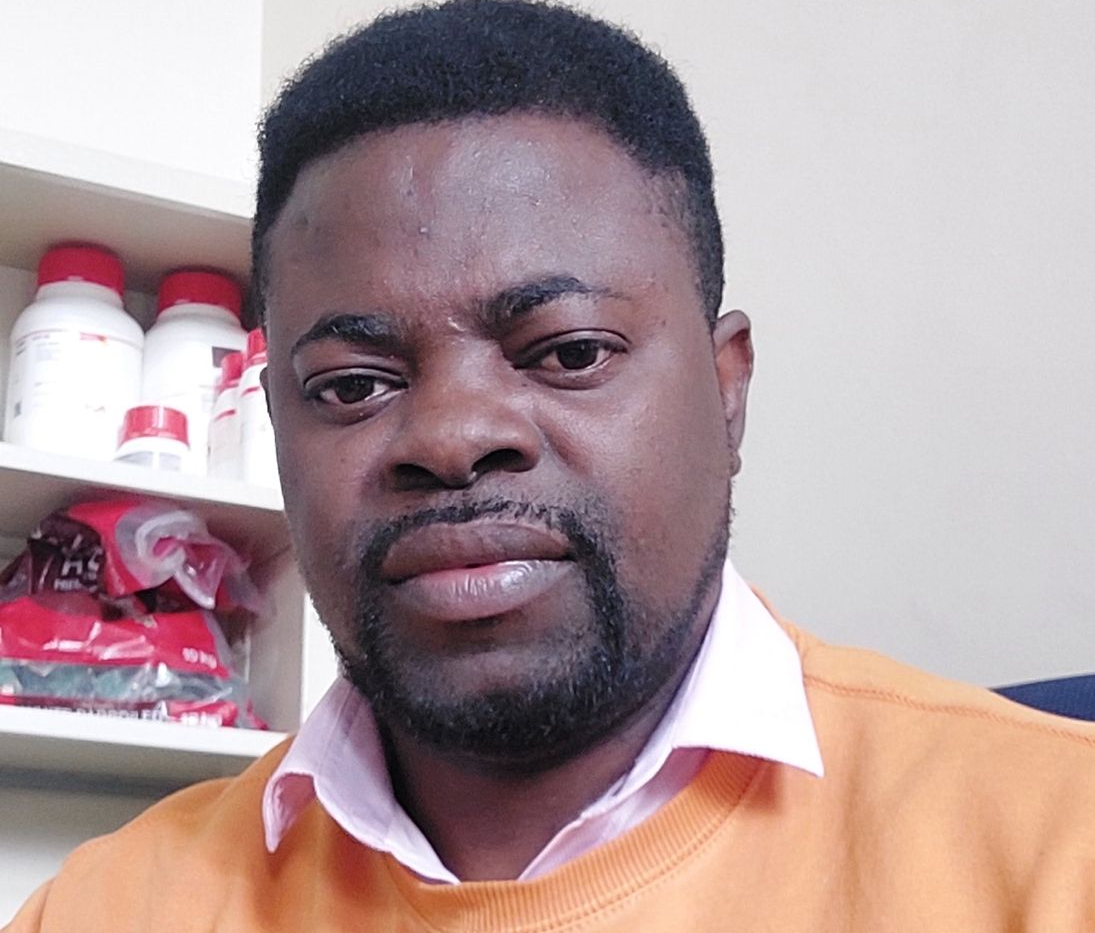
For Dr. Emmanuel Oke, a distinguished postdoctoral research fellow in the School of Chemical and Metallurgy Engineering at the University of the Witwatersrand, Johannesburg, advancing sustainable science is not just a professional pursuit but a mission to address some of the world’s most pressing environmental challenges.
Dr. Oke’s innovative work in the synthesis and application of deep eutectic solvents (DESs) is transforming the field of environmental remediation. His research focuses on the development of DES-based aqueous biphasic systems (ABSs) for the extraction of hazardous dyes from wastewater. These systems offer an eco-friendly, efficient, and cost-effective alternative to conventional separation technologies, marking a paradigm shift in environmental science and industrial applications.
Dr. Oke’s academic journey in Environmental Chemistry began in Nigeria, where he earned an MSc in Environmental Chemistry and Pollution Control from the University of Ibadan in 2015.
He later pursued a PhD in Chemistry at Veer Narmad South Gujarat University, India, under the prestigious Indian Council for Cultural Relations (ICCR) Scholarship, part of the Africa Scholarship Scheme administered by the Indian Ministry of External Affairs. His doctoral research laid the foundation for his current work, which combines innovative solvent design with advanced separation science to address global environmental challenges.
Deep eutectic solvents, often termed “21st-century solvents,” are known for their low cost, low toxicity, biocompatibility, biodegradability, and ease of preparation.
Dr. Oke’s groundbreaking study, published in Journal of Molecular Liquids, explores the use of DESs in constructing ABSs for the removal of dyes with varying hydrophobic properties. By synthesising DESs from environmentally benign components, such as benzyltrialkylammonium chloride and alcohols, and combining them with inorganic salts, he has demonstrated remarkable extraction efficiencies exceeding 99% for various dyes.
“Water pollution caused by industrial dyes poses severe ecological and public health risks. Through the innovative application of DES-based ABSs, we aim to provide a sustainable solution that combines high efficiency with environmental safety,” Dr. Oke explained in a recent interview.
His research reveals that DES-based ABSs outperform traditional methods, such as adsorption and coagulation among others, in both efficiency and environmental impact. The systems developed by Dr. Oke not only minimise chemical waste but also reduce energy consumption, making them ideal for large-scale industrial adoption.
Dr. Oke’s contributions extend beyond dye extraction. His research interests include the use of DESs for the recovery of valuable metals, separation of emerging contaminants, and preconcentration of analytes in environmental samples. These applications align with his broader vision of utilising green chemistry to decontaminate environmental media and recover resources from waste.
In collaboration with international research groups, Dr. Oke has also explored the potential of DESs in aqueous biphasic systems for the separation of other contaminants such as metals, and pharmaceuticals, demonstrating their versatility and transformative potential in various scientific domains.
Dr. Oke’s work has garnered international recognition. He has published extensively in peer-reviewed journals and presented his findings at prestigious conferences worldwide. His research has not only advanced the understanding of DES-based technologies but also contributed to the global effort to achieve sustainable development goals related to clean water and sanitation.
As Dr. Oke continues to push the boundaries of environmental science, his innovative approaches hold the promise of revolutionising wastewater treatment and resource recovery. By bridging the gap between cutting-edge scientific research and practical applications, he is paving the way for a cleaner, more sustainable future.
“My ultimate goal is to provide sustainable solutions that benefit both the environment and society,” he remarked. “By integrating green chemistry with separation science, we can address critical environmental challenges while promoting economic and social development.”
Dr. Emmanuel Oke stands as a testament to the transformative power of science and innovation, inspiring researchers and industries alike to adopt sustainable practices for a better tomorrow.
Disclaimer
Comments expressed here do not reflect the opinions of Vanguard newspapers or any employee thereof.