By Adesina Wahab
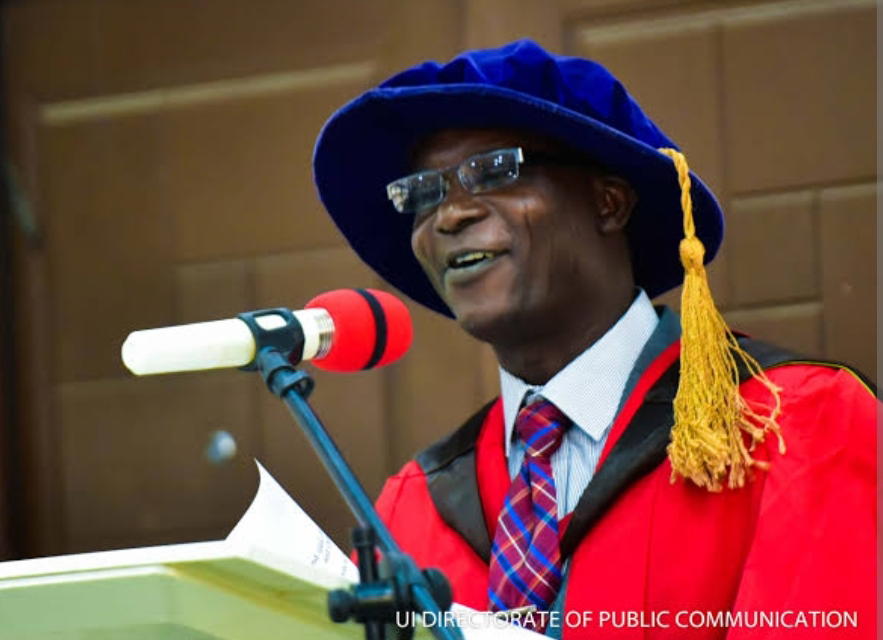
Lateef Babatunde Ayeleru, a Professor of French Language, will soon complete his five-year tenure as the Director-General/Chief Executive Officer of the Nigeria French Language Village in Ajara, Badagry, Lagos. In this interview, he shares his experience in the institution and what he thinks Nigeria stands to gain by having such an institution. Excerpts.
Has the vision for setting up the Nigeria French Language Village been achieved?
To the glory of God, we can say to a large extent it has been achieved, but it can be better in the sense that it came as a make shift arrangement. In those days, the Language Immersion Programme was done abroad. Some of us who studied French Language went abroad for the programme. It was a year programme, but in the 1990s, when foreign exchange difficulty cropped up, and parents could no longer sponsor their children abroad for the programme, the then military leader, General Ibrahim Babangida called together professors of French Language to develop home grown alternative for the immersion programme and the same thing was done for Arabic Language. Since then, we have been receiving students from all Nigerian universities and colleges of education teaching French.
We have our own challenges, and we know that government alone cannot fund education adequately. The issue of funding is there. Our situation was worsened when we were delisted from the list of institutions that benefit from interventions by the Tertiary Education Trust Fund, TETFund. When it was Education Tax Fund, ETF, all institutions, including the Inter-University Centres, benefitted, but when the Act that established it was amended by the National Assembly, it was stated that it would now serve public universities, colleges of education and polytechnics and we were removed from the list. The only source of funding we have is the capital appropriation by the government and our paltry internally generated revenue. The IGR is paltry because we rely on tuition fees by students and if we know what led to our establishment is the high cost of sending students abroad, our fees cannot be high. That would defeat the aim of setting up this place. Within available resources, we are still receiving students and training them.
What efforts are being made to enlist these inter-university centres into TETFund activities?
All the four inter-university centres have been trying to get enlisted again. It started during the tenure of my predecessor and all the directors have been on the matter since then. But because it is an act of parliament, it is a big problem. It is an Act that was amended and we have to go back and get the Act amended again. It is a big issue because as we are struggling to get back on the list, new institutions are coming up to benefit from TETFund. You can see now that most public higher institutions rely on TETFund for major capital projects.
You have been in office for about five years, what was the situation when you first came and what is it now?
If you are familiar with the place, you will know that what we have now is far better than what we had before. Right from the environment, there has been a great change. From the main road, whenever it rained then, nobody would be able to access anywhere on campus – everywhere would be flooded. The hostels, lecture rooms, everywhere would be flooded. We know that the government cannot do everything, but you have to be proactive. So, we blocked all financial leakages. That didn’t go down well with some people and they even reported us to community leaders among others. But the community leaders told those who reported us that before these people came on board, we knew how the place looked like and we can now see all the changes that are taking place. They even asked the union leaders to tell them where we were getting the money to do all that we were doing. We moderated our lifestyle, we didn’t steal and did not allow anybody to steal. Go to the hostels, you will see that we have renovated them and the students are happy. The little we get, we use judiciously. We hope that when we leave, the system will not go back to what it was.
What is your relationship now with the union after blocking financial leakages?
I have no issue with them. I am also a member of the Academic Staff Union of Universities, ASUU and I know what to do and the importance of workers’ welfare, as well as that of students. I won’t take the issue of welfare for granted. Crisis dogged the tenures of some of my predecessors. When I came, I told them my plans. Even during my time, the non-academic staff have gone on strike, but I didn’t allow them to disrupt academic activities. There was a time they went on strike for two months, they came back to work on their own. I went to put on the generator and pumped water into the hostels and lectures held. I told them that we are a specialised institution, if we disrupt academic activities here and that affects the students sent here, do you think their schools will want to bring another batch of students here? It is my administration that promoted many of them. They were stagnated.
The House of Representatives is considering a bill to make this institution become a university, are you ready for that?
We all know what it takes to become a university. The inaugural lecture series started under our watch. With the memorandum of understanding we have with the Lagos State University, LASU, and the National Universities Commission, NUC, our lecturers can now attain the rank of professor. We have six home grown professors here. Academically, we can say we are getting ready to become a university. What we don’t have now is the real university system like the Senate for instance. We are also just like a one subject institution. With time, there will be expansion and it can’t be in isolation. The staff must expand in knowledge and competence too. If you are following the news about a sister institution in Aba, Abia State, there is a bill before the National Assembly to change it to a university of Nigerian languages. It means that the structure is there, but waiting for the legislative stamp.
I must confess that our focus really is not just to become another university, already we are a centre of excellence to produce postgraduate students and lecturers for other institutions. That is our focus and we are working on that. When you look at the way we are configured, we don’t train 100 level students. The students we receive from other institutions are 300 level, so, when they leave this place, they just go back to their school to graduate.
What about becoming a university of linguistics and teaching other international languages?
It is not just teaching one course in a university. If you are studying French for instance, you have the subsidiary courses you take, you have the general studies among others. If we want to become a university now, we need to take care of other segments automatically. The NUC has told us to focus on being a centre of excellence, to focus on postgraduate studies and produce manpower for Nigeria.
What has Nigeria gained as a country for setting up this institution, bearing in mind that we are surrounded by Francophone nations?
We have not maximised the setting up of this institution. Everywhere Nigeria has French neighbour, one is not even sure if the Atlantic Ocean is not Francophone. How many Nigerians speak French or are interested in learning it? Look at our colleagues in Francophone nations, when they need to present papers in workshops and seminars and they see that the audience is mostly English, they would try as much as possible to make their presentations in English. We meet at conferences. In Nigeria, we have not tapped into the natural endowment God gave us in French Language. A lot of Nigerian towns are more French because.of their closeness to our French neighbours. Language is a resource. We must take the lead and tap into it.
President Bola Tinubu recently visited France, what benefits can Nigeria derive or expect from it?
There are many benefits to expect. Economic, political, security gains etc. I am seeing a situation where Nigeria and France will have agreements in many areas. Our President knows what he wants and how to get it. I am sure that the way they have started, the enthusiasm on both sides spoke volumes. It will bring to Nigeria a lot of dividends.
The permanent site of this institution is still undeveloped, what is the matter?
I would appeal to the Lagos State government to give us all the necessary papers to the land because we don’t have the papers yet, and development cannot take place on the land without us having the papers that would entitle us to the land. They just gave us the land by words of mouth. The former Minister of Education did a letter to the Lagos State governor asking that the allocation of the land be backed by the necessary documents. Our appeal is that the Lagos State government release all the papers to us for us to move in and develop the place.
Disclaimer
Comments expressed here do not reflect the opinions of Vanguard newspapers or any employee thereof.