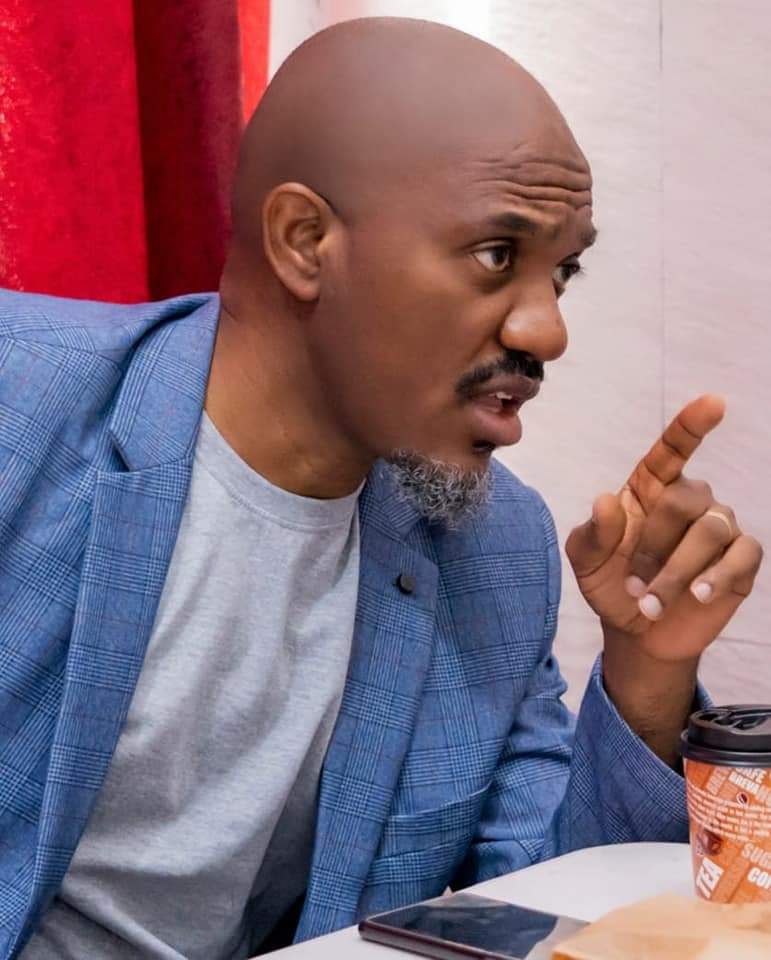
By Dayo Johnson, Akure
A former member of the Ministerial Taskforce on Power, Engr. Olatunji Ariyomo, has warned against making the Nigerian Electricity Management Services Agency (NEMSA) the sole regulator of electricity’s technical standards in Nigeria.
Ariyomo, an energy expert, said in Akure, the Ondo state capital that ” the justification advanced for the plan, while sounding good on the surface, is dangerous and has no basis in science, engineering, or law and is entirely antithetical to the ongoing revolution in the power sector”
” The plot to centralize technical standard under a single federal agency is a threat to the very principle of decentralization of the power sector which is now a constitutional right for states.
“It will undermine sectorial growth, encumber investments into the sector through sub-nationals, and jeopardize the success achieved with the clarity brought to the power sector through the alteration of the relevant sections in the constitution as assented by President Muhammadu Buhari on the 17th of March 2023”.
” States derived the power to manage the entire lifecycle of the electricity process within their domains from the Constitution and not from the Electricity Act.
” If we leverage this decentralization properly, we are poised to experience exponential growth in the sector as against the incremental philosophy that we embraced in the past.
“We would have 37 people collaboratively shouldering a burden hitherto borne by a single person”.
” The national Assembly members erroneously advanced that they desire a centralized provider of technical standard in other to avoid confusion.
“This is very uncharitable. We are discussing engineering here. Engineering is a practice, a professional practice. Codes and technical standards are universal.
“There are no different or disparate standards of practice in engineering worldwide. What you can have are individuals who may desire to shortchange standards. You will find them at the national level, at state level, and in the local government or private sector”.
Ariyomo said “for instance, most practitioners in the power sector globally today leverage the IEC technical standards for electrical, electronic, and related technologies whether in distribution or transmission line design or construction.
“Just the same way that civil and structural engineers have leveraged Eurocodes for several years even when ambitious and patriotic Nigerian engineers called for domestication.
“So, when national and state or sub-nationals across the world develop or upgrade their grid codes, they mostly recourse to the same IEC.
” In essence, it doesn’t matter who you are in the power industry, you must rely on the same fundamentals in your design and construction, and in your standards stipulates and benchmarks.
” That’s why we say codes and standards are universal because they are products of science and engineering. A state’s authority and a federal authority will drink from the same figurative fountain of knowledge.
“NEMSA does not possess any exclusive expertise or own any technical standard that can outclass the ones by the International Electromechanical Commission for example! Where standards appear to seemingly defer in engineering from the standpoint of non-engineers, they defer only along the principles of science and engineering but remain acceptable with provisions for adaptability and interoperability”.
Ariyomo, who led the team that created the first independent state electricity law in Nigeria and established the first state electricity regulatory commission, asserted that the National Assembly does not have the power to grant exclusive authority to NEMSA on local distribution networks.
He added thst “Moreover the National Assembly does not have the exclusive power it seeks to exercise in making the regulation of technical standards the exclusive preserve of NEMSA.
“Power is on the concurrent legislative list. You cannot take away from states such rights and privileges granted to them by the Constitution.
“More significantly, as far as the distribution of electricity is concerned in Nigeria, the power to operate distribution networks or set up institutional frameworks for the management of distribution inter-state or within a sub-national is conferred exclusively upon states by the constitution – the only exception being at international boundaries.
“In essence, it is illegal for any agency of the Federal Government to dabble in any matter that bothers on distribution within the geographical boundaries of a state except in parts of a state that borders another country.
Ariyomo further added that “Section 15 of the 1999 Constitution defines electricity distribution as the supply of electricity from a sub-station to the ultimate consumer”.
“In contrast with the National Assembly, legislating on distribution of electricity is conspicuously listed as part of the responsibilities of states’ houses of assemblies.
“The powers of the states’ houses of assemblies on electricity are provided in Section 14 of the Constitution. This is where distribution is situated. The only tier of government that can set up an agency or an authority as envisaged in Section 14(c) with the power to determine or decide what happens between an electrical substation and the final consumer in Nigeria is a State Government and the only legislative House that can make laws to govern distribution activities is a state house of assembly.
“That is the law. A state can establish an Authority as provided in that Section 14 (c) to manage distribution systems within the state.
On the legality of NENSA, the engineer, insisted that “As it stands today, the NEMSA laws or legal provisions within the Electricity Act are likely to be technically an illegal set of laws because the agency’s activities cover distribution systems within states and its laws enacted by a body that has no such power within the intendment of the 1999 Constitution as amended.
“Amending the Act will not cure that illegality if it retains powers that foray into areas exclusively reserved for states by the Constitution, such as distribution. Should states decide to mount a legal challenge, it is highly probable that the Supreme Court would strike the illegality down”.
Ariyomo submitted further that “More importantly, centralization will only guarantee the continuous failure of the Nigerian power sector.
“That the National Assembly is ready to sacrifice our gains thus far on decentralization due to the apparent lobbying activities of a few people in NEMSA is a serious cause for concern.
” NEMSA neither has the capacity nor performance pedigree to support such continuous risky enslavement of the power sector in the hope that it will someday deliver sterling performance, it will not.
” We are where we are today because of the appalling failures of agencies like NEMSA at the federal level that are spending humongous taxpayers’ money to provide darkness for the masses while pretending to possess the technical expertise to drive success in the sector.
” Let decentralization take its full course. Let Lagos State take charge of its electricity market and determine in absolute what happens within its territory. Let Kaduna State take charge of its electricity market and determine in absolute what happens within its territory. Let Enugu take charge of its electricity market and determine in absolute what happens within its territory.
” If Ogun State people realize that Lagos State people and businesses enjoy an uninterrupted electricity supply, nobody will teach the government of Ogun State that it needs to sit up. If Kano State people realized that Kaduna State people and businesses enjoy an uninterrupted electricity supply, nobody would teach the government of Kano State that it needs to sit up. If Ebonyi State people realized that Enugu State people and businesses enjoy an uninterrupted electricity supply, nobody would teach the government of Ebonyi State that it needs to sit up.
” Hence, even if there should be any amendment to the Electricity Act at this time, it should be to empower sub-nationals to collaborate across state boundaries, especially among contiguous states.
“There could later be mergers as business interests align. Let economy of scale be driven by market considerations and not a national fiat. The country is too diverse to operate unitary utility growth”.
Disclaimer
Comments expressed here do not reflect the opinions of Vanguard newspapers or any employee thereof.