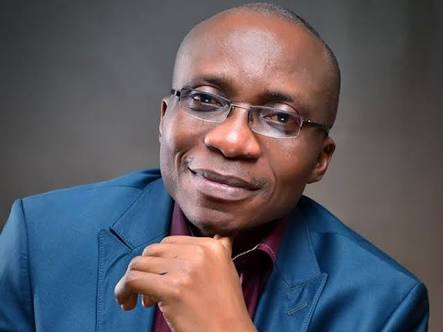
Ebiseni
By Sola Ebiseni
A Yoruba adage likens life to a sea that none can traverse by swimming; a view also shared by William Shakespeare from the perspective of a playwright in his book As You Like It(1600) wherein he described life as “a stage where all men and women are merely players”; and more damningly later in Macbeth (1605), that man’s life struggles are “a tale told by an idiot, full of sounds and fury signifying nothing”.
Jacob, grandson of Abraham, wrestled with man and God in search of blessings yet had little compared with Solomon’s who, though part of Jacob’s posterity and blessings, submitted by experiential reality that life and human pursuits were vanity. David, Solomon’s father, not as materially endowed as his son, indeed lived his entire life fighting for his people, the reward being the “Star of David” as the eternal symbol of Jewish sovereignty and existence.
Very earlier in life, I found myself puzzled not so much by the big rivers and deep mangrove forests of the riverine environment of Ado-Odo, Ogun State, where I was born which provided means of livelihood for our fishing and boat making families. But rather by the presence of the indigenous Awori, the Ilaje who are Nigerians and other fishing Yoruba folks who were coming in through the Badagry lagoon, Ketu, Cotonou or Ajase (Port-Novo) of the French speaking Dahomey now Republic of Benin.
From studies, later in school, I became confused about how smaller countries in population, geographical sizes and even resources were able to colonise bigger African and Asian states, particularly the French policy of Assimilation which objective was to make French out of the peoples of its colonies by virtually replacing their African culture and faculties with French attributes and the economy dependent on made-in-France CFA as a common currency of those countries proudly identified as “Francophone”, a permanent reminder of being inexorably tied to France’s apron strings even after official Independence.
My initial sway by writings of several Pan Africanists and Black emancipation activists blaming the White for the backwardness of Africa with Walter Rodney’s How Europe underdeveloped Africa being the standard text, soon gave way for the pursuit of leaders who could make the difference in the lives of Africa. I saw in Sekou Toure of Guinea a hero with his rejection of France’s policy of a French Community of States and opted instead for the independence of Guinea with a determination to “seek first the political kingdom and all else with the right leadership will follow”. Several of the nationalists, Herbert Macaulay, Nnamdi Azikiwe, Kwameh Nkrumah, etc, were my role models. The drive for a united nation of Africa set Nkrumah apart and gave Ghana truly the “Black Star” status.
As the Premier and first ruler of Nigeria’s Western Region ( January 1952- December 1959) covering the present six South-West, Edo and Delta states with a population more than any of the “sovereign” states of West Africa, Awolowo gave us a veritable insight into what good leadership may do in the life of a people. He, like his counterpart Premiers of the two other regions (Eastern and Northern) operated under a political arrangement of self-governing democratically elected regional government led by indigenous political leaders as Premiers, while the central government of the federation was in the hand of a colonial Governor appointed by the British government.
The clear ideological conviction of Awolowo and his colleagues in the Action Group was the need to weave together and chart a common progressive identity for the various tribes and unlock their potentials for the development of the region within the context of a Nigerian Federation, a policy exemplified by Awo’s uncompromising advocacy for federalism. A good education and health policy is sine qua non to having citizens with sound minds and bodies as unstoppable kinetic forces of development.
The Leader of Afenifere, Chief Ayo Adebanjo and one of Awolowo’s sworn disciples, once told us that while the Action Group was promising free education the opposition went round Western Region campaigning that Action Group’s Compulsory Universal Primary Education programme meant that Awolowo would send parents to prison to force them to go to school. Even with the realisation that such campaign could have its effects on the party’s electoral fortunes, particularly amongst the uninformed in the then largely illiterate society coupled with the facts that those children might be helping hands to their parents in the farm, an undeterred visionary leader, Awolowo on the January 17, 1955, launched Universal Primary Education and made it compulsory for every child between five and 13 years with the declaration that “every Nigerian citizen must be educated at public expense to the limits of his natural ability, to enable him to be in the finest possible state to produce the utmost he is capable of”. From its first year in1952 over 200 students of Western Nigeria had been awarded university scholarships more than even the Federal Government did, thereby setting the region on the pedestal of the most literate part of Nigeria, nay Africa.
In all spheres, a modern state was launched such that by 1959 when Awo opted for greater service delivery seeking to be the Prime Minister and Head of Government of independent Nigeria, Western Nigeria already had comparative advantage in all spheres of life.
Strategic institutions like Marketing Boards for cash crops and Farm Settlements for demonstration of advantages of mechanised agriculture stabilised the economy for the implementation of the free education and free health policies and the introduction in 1954 of five pounds minimum wage which enviable and highest wage policy the Action Group made a campaign issue for the entire federation during the 1959. Nigeria only adopted the minimum wage policy 27 years later under President Shehu Shagari in 1981.
In infrastructural development , the region was first in Nigeria, Africa and virtually squaring up with even Europe in some aspects. The 26-storey Cocoa House Ibadan was tallest building in Africa, 60,000 capacity Liberty Stadium Ibadan was the biggest and yet unbeatable in Nigeria, the University of Ife citadel of learning, culture and the most beautiful campus on the African continent, the region was pioneer in Industrial and Housing Estates; Western Nigeria Television, First in Africa and even ahead of France.
Later, Governors with the same ideological conviction proved their mettles, with Lateef Jakande’s memorable eradication of the inherited two-shifts (morning and afternoon) daily school attendance in just one year by massive building of schools and teachers’ recruitment.
Our heroes past have shown that the progress made by society is not by the skin colour of its inhabitants but by the quality of leaders it must deliberately and dispassionately recruit. Such are those whose hands are made strong by the hands of the Almighty, according to Bob Marley in his “Redemption Song”, to weather the storm of life and live eternally in the minds of men.
The expectation from any of the states of the former Western Region is to declare free and compulsory education up to at least secondary school graduation. With the head-start given us by Awolowo, it is a shame that any of our states is still being listed amongst states with out-of-school-children. Quality leadership is the bottom line.
Nigeria, we hail thee.
•Sola Ebiseni is the Secretary General, Afenifere.
Disclaimer
Comments expressed here do not reflect the opinions of Vanguard newspapers or any employee thereof.