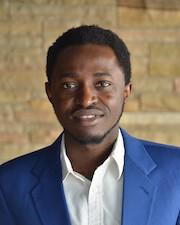
As world leaders gathered for COP29 in the United Arab Emirates this month to address the growing urgency of climate change, one Nigerian-born researcher has quietly been shaping the way scientists understand the planet’s most fragile regions.
Dr. Ibikunle, a machine learning scientist at University of Kansas’ Center for Remote Sensing of Ice Sheets (CReSIS), is using artificial intelligence to improve how we track melting ice and rising sea levels.
His work focuses on building smart systems that analyze radar data from Antarctica and Greenland. These systems help scientists understand how quickly ice sheets are changing and what that means for the rest of the world.
“We’re no longer just collecting data,” he said. “We’re teaching computers how to find patterns, detect changes, and flag concerns early.”
CReSIS plays a critical role in the global climate research network. The center collects and processes massive amounts of radar data from aircraft flying over polar regions. There, Dr. Ibikunle leads efforts to design AI models that read these complex images faster than human analysts ever could. His contributions help make these insights available to international climate bodies and researchers around the world.
Dr. Ibikunle’s journey started far from the icy poles. He grew up and studied in Nigeria, where he developed a love for technology and problem-solving. After working on several energy and tech-driven environmental projects in Nigeria, he moved to the United States to further his education and research.
“I carried with me a strong sense of purpose,” he said. “I wanted to find ways to use code to solve real-world problems, especially the kind that impact vulnerable communities.”
His AI tools are now part of a new wave of technologies reshaping climate science. These systems detect tiny shifts in ice formations and predict long-term trends with better accuracy. This kind of work is especially important in 2024, a year marked by record heatwaves and rising sea levels across several continents.
During a breakout session at COP29, researchers referenced recent findings from CReSIS to support global sea level predictions. Dr. Ibikunle sees this as motivation to keep pushing.
“Every bit of code I write brings us closer to answers,” he added.
Looking ahead, Dr. Ibikunle hopes to strengthen collaborations between Nigerian and African universities with international climate research centers. His goal is clear: to keep bridging continents—with code, data, and purpose.
Disclaimer
Comments expressed here do not reflect the opinions of Vanguard newspapers or any employee thereof.