By Rita Okoye
Professor Toyin Falola, a globally celebrated historian and academic, has attributed Nigeria’s persistent development struggles to corruption and ineffective institutions.
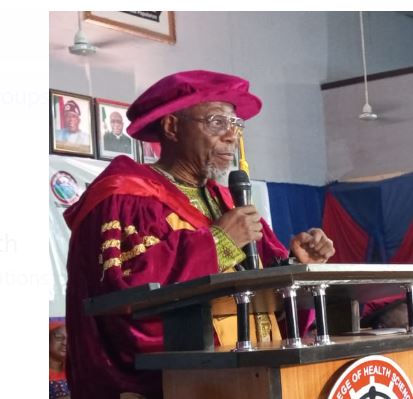
Speaking at the 2024 convocation lecture of Benue State University (BSU), Makurdi, on Friday, Falola underscored how internal power struggles and governance failures have derailed the nation’s developmental goals.
Delivering his lecture titled “Power, Politics, and Policies,” Falola, who holds the Jacob and Frances Sanger Mossiker Chair in the Humanities at the University of Texas at Austin, provided an incisive analysis of Nigeria’s governance challenges.
“Nigerian policy combines political expediency with short-term political and national development priorities,” Falola stated. “For every successive administration that promises economic diversification, healthcare reform, and educational improvements, policies are hampered by corruption, ineffective institutional capabilities, and a power struggle between multiple power blocs. Policies, therefore, are often unable to deliver what they were designed to achieve, perpetuating dependency, wealth inequality, and political instability.”
Falola acknowledged recent policy changes introduced by President Bola Tinubu’s administration, citing the removal of the fuel subsidy, exchange rate unification, and relaxed monetary policies as significant steps toward stabilizing the economy.
“These reforms have produced some positive outcomes,” he noted. “The fiscal deficit decreased from 6.2% of GDP in the first half of 2023 to 4.4% in 2024, and reserves increased from $32.9 billion at the end of 2023 to more than $40.2 billion by October 2024.”
However, he emphasized that these gains have come at a steep cost. “Runaway inflation and rising food and transportation costs have caused acute short-term suffering for Nigerians. For these and other effects to be mitigated, further action is necessary,” Falola said.
He proposed several measures to strengthen Nigeria’s economic stability: “Expanding cash transfers can shield vulnerable populations from economic shocks, better tax planning and collection will raise government revenue and reduce dependence on external loans, and regulatory reforms to create a business-friendly environment can attract investment and generate employment.”
Falola argued that Nigeria’s development hinges on the consolidation of democratic principles. “Democracy must ensure the rule of law through government accountability and transparency,” he declared. “This is particularly crucial in Nigeria, where democracy must struggle to minimise corruption and foster a free government.”
He further stressed the importance of civic participation in achieving good governance. “Nigerians must hold their leaders accountable through elections that reflect their collective aspirations. This will require rejecting money in exchange for votes and demanding governance that aligns with their needs.”
Falola linked democratic governance to economic progress, highlighting its potential to create an environment conducive to business growth.
“With its abundant natural resources, Nigeria can benefit from investments, trade, and innovation fostered by democratic policies,” he stated. “These policies must prioritise economic stability and reduce corruption to unlock the country’s potential.”
He also called on democratically elected governments to prioritise public services. “Focusing on education, healthcare, and infrastructure will not only gain the support of the electorate but also improve literacy rates, healthcare access, and opportunities for Nigerian youth.”
Falola stressed that democracy fosters a strong civil society, empowering citizens to influence policies that directly affect their lives. “Democracy gives Nigerians greater control over governance, from local government decisions to national laws,” he said.
“Corruption diverts resources away from Nigeria’s development priorities,” he continued. “Democratic structures, such as a robust judiciary and free press, must hold leaders accountable. Investigating and prosecuting corrupt officials is crucial to reclaiming resources for national development.”
Concluding his lecture, Falola urged Nigerians to take ownership of their democracy and actively participate in shaping governance.
“Democracy is more likely to uphold individual rights, promote economic growth, and resolve conflicts peacefully,” he said. “It must also allow minority voices to be heard and facilitate peaceful coexistence in our diverse society.”
Disclaimer
Comments expressed here do not reflect the opinions of Vanguard newspapers or any employee thereof.