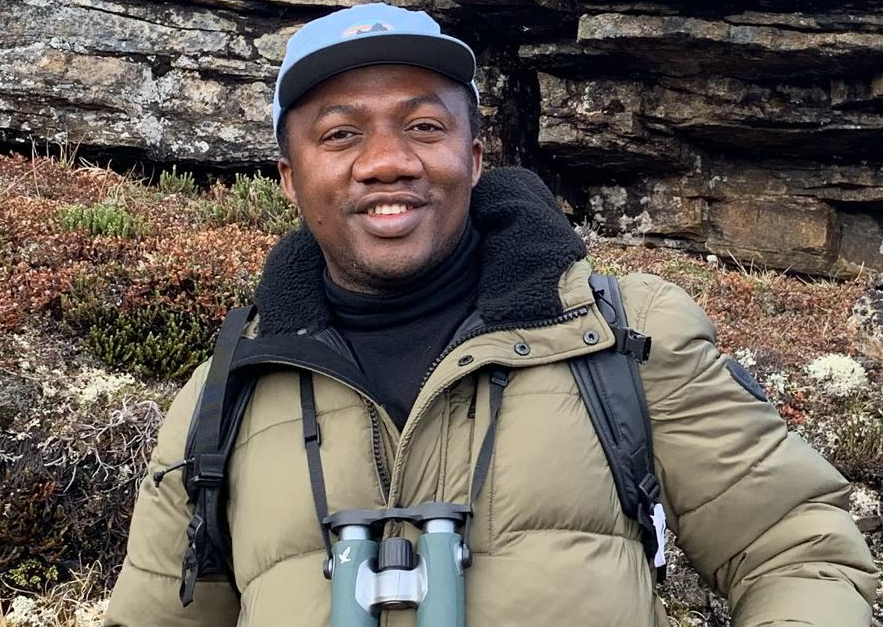
By Nnasom David
A major study led by Nigerian-born biogeographer Dr Barnabas Daru of Stanford University warns that climate change is poised to reshape the world’s floristic regions, some of which have remained stable for millions of years. Published in Nature Communications, the global analysis models the future distributions of nearly 190,000 vascular plant species, and provides a glimpse at how biodiversity could be redrawn by the end of the century.
The study, co-authored with student researcher Samuel Minev-Benzecry, uses species occurrence data and evolutionary relationships to forecast how climate change could dissolve long-standing biogeographic boundaries, leading to what the authors term “biogeographic homogenization.” This process, they argue, can erase the unique ecological identities of regions such as the Madagascan and Circumboreal zones.
Independent experts have praised the work as a milestone in biodiversity science. One peer reviewer described it as “an important and interesting study” with the potential to “greatly enhance our understanding of how floristic regions will respond to climate change.”
Among the most striking findings is that current climate trajectories, if left unchecked, could override the evolutionary and geological forces that have historically shaped the global distribution of plant life. “Changes expected within a few decades may undo patterns of biodiversity that took millions of years to form,” the authors write.
“We hope our findings help readers and researchers grasp just how unfamiliar the world’s plant ecosystems could become,” said Minev-Benzecry. “By revealing this potential loss of ecological identity, we aim to add a sense of urgency to the climate and biodiversity crisis, and to the search for a future where diversity is preserved over homogeneity”
The implications for conservation are profound. Protecting individual species may no longer be sufficient; conservation strategies must also safeguard the integrity of entire biogeographic regions, many of which may shift, merge, or disappear entirely under future climate scenarios. The study suggests that traditional static reserves may prove inadequate in a rapidly changing world.
Daru, originally from Nigeria’s Plateau State, has gained growing recognition in the field of biogeography and plant biodiversity science. His work combines cutting-edge modeling with evolutionary biology and natural history herbarium collections, which provides tools to predict biodiversity outcomes under different climate scenarios.
“This work would not have been possible without open-access biodiversity data and collaborative research tools,” Daru noted. “It’s a testament to what global science can achieve when data is shared freely and across borders.”
The study also contributes to international policy discussions, because it directly provides insights for initiatives such as the Kunming-Montreal Global Biodiversity Framework. As countries strive to meet 2030 and 2050 conservation targets, the study provides a clear scientific mandate: protecting biodiversity in the Anthropocene requires urgent climate action.
Disclaimer
Comments expressed here do not reflect the opinions of Vanguard newspapers or any employee thereof.