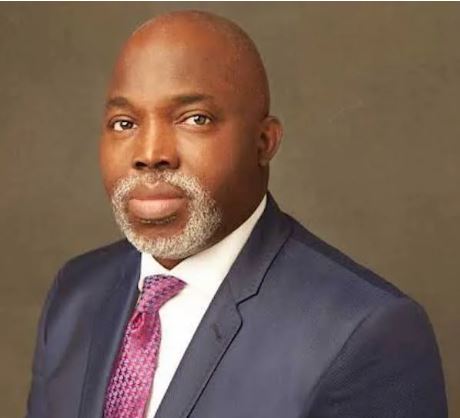
Pinnick
Amaju Pinnick, former President of the Nigeria Football Federation (NFF) and FIFA Council member, has identified inadequate maintenance as a major hurdle to sports development in Nigeria.
On Tuesday at the University of Ibadan’s Faculty of Education, Pinnick emphasised the urgent need for improved infrastructure upkeep to support the nation’s athletic talent.
His lecture, titled “The Challenges of Sports Infrastructure and Maintenance in Nigeria: Prospect for the Podium Performance,” underscored the critical role of infrastructure in driving Nigeria’s sports success.
Pinnick lamented Nigeria’s abundance of skilled athletes, who lack adequate facilities to refine and showcase their talents. He attributed the issue to a broader lack of maintenance culture, which begins from homes to public facilities, contrasting Nigeria’s approach with countries like Morocco, Egypt, Brazil, Germany, and England, which invest heavily in sports infrastructure.
“Nigeria cannot host FIFA competitions because most of our stadiums don’t meet the standards required to be called stadiums,” he stated. For example, he noted that even the Godswill Akpabio Stadium in Uyo, seen as Nigeria’s premier sports facility, lacks essential features like hospitality suites, which generate significant revenue for FIFA.
“It is because it does not even have hospitality suites from where FIFA generates at least 30 per cent of its revenue from matches,” the CAF Executive Committee member revealed.
He urged the federal and state governments to collaborate with sports administrators in renovating existing stadiums, which would elevate the standard of sports facilities in Nigeria and improve athletes’ chances of competing successfully on the global stage.
To ensure a positive turn-around, he advocated for public-private partnerships in infrastructural development and maintenance, innovative funding models, adopting modern maintenance technologies, capacity enhancement for maintenance experts and a cluster model that will rank States according to sports infrastructure available in their domain and also engender stiff competition among them for infrastructural sufficiency.
“There are a few success stories on the African continent, such as South Africa and Morocco, which have a national sports maintenance agency.
“We do not necessarily need to copy them; we can develop what will work for us. What is important now is that we must confront this sports infrastructural deficit head-on and the Federal Government, States, local councils, tertiary institutions, private club owners and private investors all have roles to play.
Despite the challenges, Pinnick expressed optimism about the recent revival of the National Sports Commission (NSC), a move he views as a positive step under President Bola Tinubu’s administration. He highlighted Shehu Dikko’s appointment as NSC Chairman as a promising sign for the future of Nigerian sports.
Earlier, Olufemi Adegbesan, Dean of the Faculty of Education, praised Pinnick’s qualifications and contributions to football administration, noting the lecture’s significance in advancing Nigeria’s sports development. NSC Chairman Shehu Dikko also emphasised the commission’s commitment to addressing Nigeria’s infrastructure deficiencies, while NFF President Ibrahim Gusau acknowledged the limited number of FIFA-approved stadiums for international matches in the country.
The University of Ibadan’s Vice-Chancellor, Kayode Adebowale, further remarked on the decline in Nigeria’s sports performance, calling for urgent solutions to infrastructure issues as a foundation for future success in international competitions.
Disclaimer
Comments expressed here do not reflect the opinions of Vanguard newspapers or any employee thereof.