By Ife Adegbie
What does Promised Lands mean to you? ‘Who’ is catered to in the promised lands? All these and more are questions answered by the recently concluded Art X Exhibition.
The exhibition opens to amphitheater, an upgraded development in the Art X programming which symbolizes its commitment to grounded experiences and a departure from its highly economic nature. It opened on the 31st October to the press tour inviting visitors from all over the world to view 10 selected galleries, most of which were exhibited last year, and over 30 featured artists from across Africa and the diaspora.
Compared to previous iterations, this selection is moderate and evidently more curated, a reflection of the times. The fair saw an increase to twelve presentations, from last years nine, officially referred to as The Projects which are described to be specially curated installations, exhibits and experiences by individuals in the art world. All of this years projects featured thematic responses to Promised Lands and a few staples from last year such as the Art X Retrospective, an NBA sponsored artist, Art Across Borders, and the Library.
Installation view from Gallerie MAM
A first impression one might get walking through the fair is the increase in variety of art forms with Alexis Galleries displaying an exhibition of solely sculpture and many other galleries incorporating sculpture and mixed media to their showings. First of which is Gallery 1957 based out of Accra, Ghana and London, UK whose showings embody its commitment to contemporary art forms with its pop culture affinities and play on color witnessed in Larry Amponsah and Tegene Kunbi’s work. Both artists, shaped by the cultural exchange Gallery 1957 presents, displayed an appreciation for composition and color.
Ekene Maduka’s work as seen in Kanbi projects is reminiscence of time past, a projection of selves into a time and place open to viewers’ interpretation. Her colorful oil paintings, self referential like Kahlo’s, examine what it is to be at any point in time. Kanbi Projects, like a few other galleries, chose to display only two artists resulting in a concise but impactful viewing experience.
Layo Bright at Ko Artspac
Ko artspace all women exhibit displays a variety of works speaking to the representation of womanhood within the contexts of west Africa. Their exhibition reimagines a future of possibilities that allow for non-conformity to ideals. Using mixed media paintings, Na Chainkua Reindorf depicts female masquerades radically circumventing cultural impositions and imposing a world of endless realities. Layo Brights blown glass sculpture sits sequestered and captivating in the company of Mobolaji Ogunsoroye’s collages. Both depicting the busts, they approach their subjects using techniques of molding and distortion respectively alluding to the various battlegrounds the female form ignites within the contextual framework of today.
Ekene Maduka at Kanbi Projects
Nike art gallery sticks to tradition by previewing works by Bruce Onabrakpeya , Chief Nike Osundaye and Rufus Ogundele. The selection and curation paying homage to Nigerian artists who have shaped the landscape of contemporary art. Alexis galleries, on the other hand, featured new work by younger artist, Kingsley Ayogu, whose mixed media collages signal a new frontier in his style, form and practice. Francis Agemo’s and Dominique Zinke’s wooden sculptures took a life of their own by negotiating a praxis of humanness, being and the political as individuals operating within West Africa. The artists’ usage of color, a commitment to boundaries and explorative techniques. Both galleries employing the vehicle of older and newer artists to envision a time and space whose understanding of the past informs interpretations of the future.
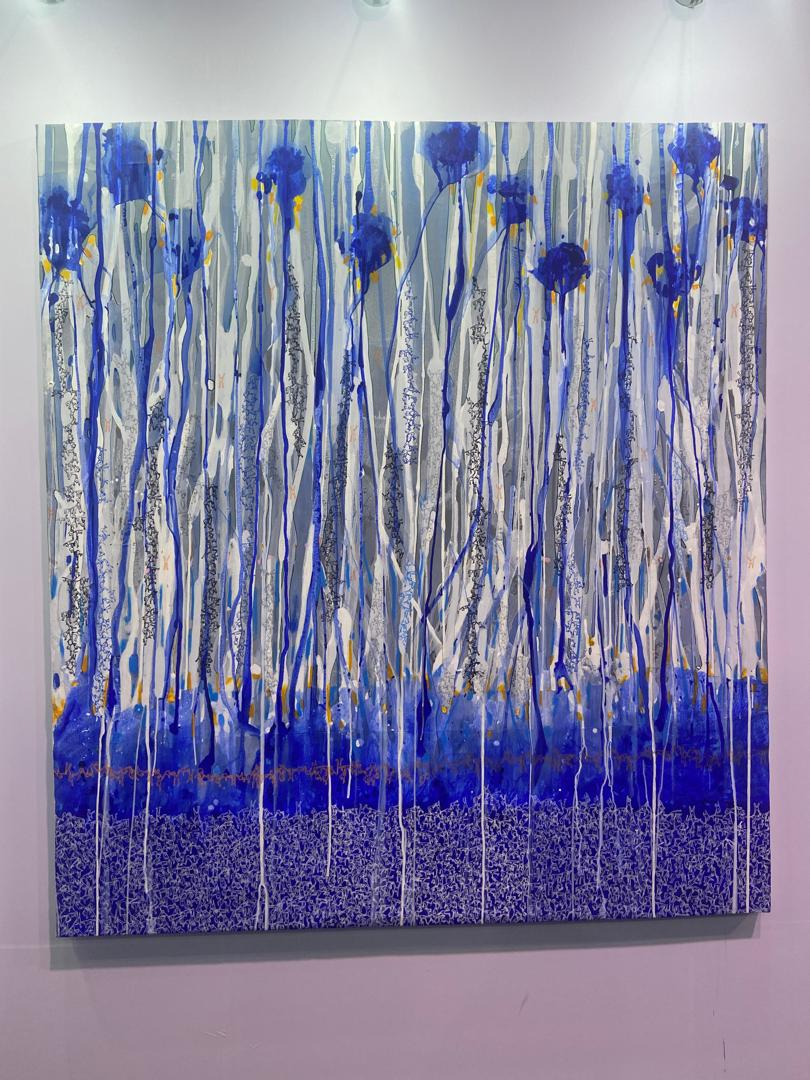
O’DA Art galleries’ solo presentation of Abe Odedina’s new body of work is reminiscent of Ed Cross Fine Art presentation of the same artist, a testament to the artists impact within the contemporary art space in Nigeria. Abe Odedina’s potraits, each crafted on wood, invites viewers to partake in a vision of contemplative and symbolic emotions. Their similar backgrounds akin to a series of mugshots, signal continuity and worldbuilding. Mbaye Babacar Diouf’s vegetal simulations at Gallery MAM (Cameroon) allude to the crown shyness patterns of trees and the environmental implications of the present societal actions.
The exhibition as mentioned earlier featured various installations whose themes provided more direct responses to the subject, Promised Lands. Speaker’s Corner: the crossroads invites viewers to reflect, share dreams and converse on the workings of a past subject to various upheavals and the hope of the future. It is one of the many interactive installations, whose concept is new to the fair’s history. Art across borders second iteration welcomed viewers to a gold lined space that explores African identity, mobility and resources. Mark-makers installation implores the remembrance of unsung pioneers in the Nigerian cultural sphere, a sufficient basis upon which dreams for a promised land can be formed. The library, a GAS Foundation collaboration, welcomed viewers to engage with the process of research alongside annotations from existing research about the festival era on the continent. This guided installation provides contextual information with which the library and Art X Shop is viewed.
Art X 2024 largely exhibited works whose responses to the theme Promised lands envisioned dialogues on identity, society and place. The presentations of newer artists pushed the envelope on form, technique and messaging . Given the themes focus on promised lands within the context of Africa via Lagos, Nigeria the choice of selected galleries is expected, however a deviation from the familiar and more riskier work could have been featured. The fairs commitment to providing an experience , a deviation from its economic undertones, allows the average viewer a more nuanced and grounded approach with which art at the fair was viewed and engaged with. Similarly, the selection of artists and their respective art journeys signal the fairs allegiance to platforming work that is exquisite, nuanced and relevant to the Nigerian audience.
Disclaimer
Comments expressed here do not reflect the opinions of Vanguard newspapers or any employee thereof.