By Joseph Erunke, Abuja
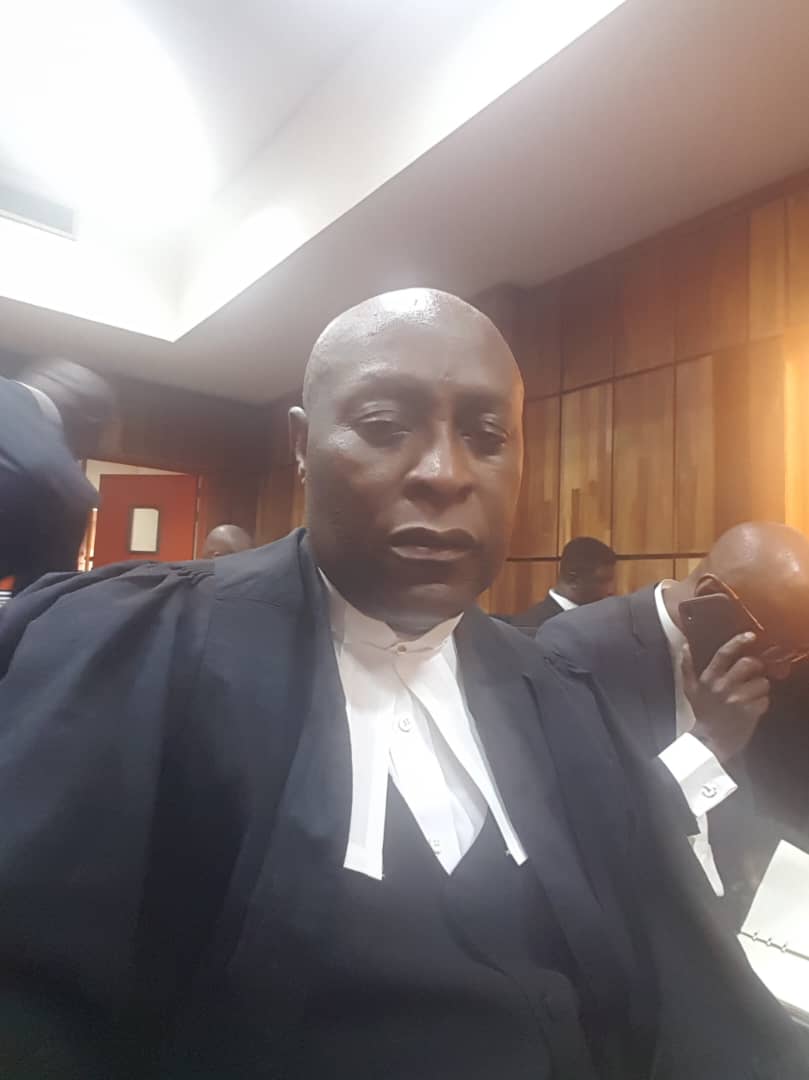
An Abuja based lawyer,Barr. Charles Ude, Esq, has asked the federal government not to wave aside recent concerns raised in separate petitions to the Central Bank of Nigeria, CBN and the Economic and Financial Crimes Commission, EFCC, by a foremost UK based Nigerian chartered engineer and information security expert, Dr. Kingsley Chibuzor Aguoru.
Recall that Aguoro, in recent petitions to the nation’s apex bank and the anti-graft agency,had alleged critical security gaps in Nigeria’s financial sector.
To tihis end, he called for a regulatory body similar to that of the United Kingdom’s Financial Conduct Authority, FCA, to protect customers from being duped by hackers.
The story which made waves in Nigeria’s financial and cybersecurity landscape, called for a close scrutiny of the transaction system.
Reacting to Aguoro’s position, Barrister Ude tasked the government to further interrogate Aguoru’s call for redefinition of online transactions with card PIN.
Ude noted that with a background spanning technology and finance, Dr. Aguoru has emerged as a leading voice advocating for a safer, more secure financial environment in Nigeria, hence his call should not be waved aside.
He said:”Driven by a personal history of card-not-present (CNP) fraud, Dr. Aguoru has become an advocate for robust security protocols in digital and financial systems.
“In the petition, the doctor of information security had called on the CBN and EFCC to stop forthwith card PIN for online transactions while outlining the risk involved. He postulated that customers could be defrauded of their hard earned money.
“He argued that the use of card PINs in online transactions and the risks associated with current National Identity Card practices were too much of a burden to bear by customers. He shared his concerns regarding the use of card PINs online.
“When you use your PIN at a POS terminal, there are secure encrypted layers in place, and some cards validate PIN within the microprocessor on the card without sending it over the internet, making the transaction very difficult for fraudsters to compromise.
” However, when a PIN is used online, there’s minimal control over security. A web browser cannot protect the input device, nor can it prevent network sniffing and keylogger, leaving consumers vulnerable to fraud.”
Barr. Ude noted that in an unusual partnership with MasterCard, Nigeria’s National Identity Management Commission (NIMC) allowed the corporation’s logo to appear on the national identity card, a practice he finds deeply concerning.
He said:“Our national identity card should serve as a government-issued document, free from corporate branding and influence. Blurring these boundaries only raises ethical concerns.”
Ude asserted that reflecting on his career journey and Dr Aguoru call out to financial regulatory bodies in the country, transcends personal gain but borne out of experience.
“In 2005, Dr. Aguoru experienced first-hand the devastating impact of CNP fraud. I was running a business similar to PayPal, offering third-party payment processing for online transactions. Unfortunately, a hosting company used stolen card details to purchase its own services, and I ended up wiring money overseas on their behalf.
“This incident, which cost me tens of thousands of pounds, led me to shift my career focus from Software Engineering to Information Security.
“While pursuing his Master’s in Information Technology at the University of Liverpool, he researched CNP fraud extensively, noting the sharp rise in CNP-related fraud in the UK, from £4.6 million in 1995 to £183.2 million by 2005, as documented by the APACS “Fraud the Facts” reports,” he said.
Dr. Aguoru’s research proposed the use of dynamic one-time passwords (OTPs) instead of static passwords to better secure online transactions, a concept he termed “SMSVerify.”
Although Visa and MasterCard declined to implement the solution, he took a different path, establishing Paymenex.
This payments network introduced SMSVerify (now called 3Widentity), a dynamic OTP system that ensures each transaction is secure, unique, and temporary.
The legal practitioner opined that Dr. Aguoru advocating for the establishment of a specialised regulatory body, a Financial Services Authority (FSA), similar to the FCA in the UK, that would manage financial infrastructure, oversee payment systems, and work is in tandem with the CBN and EFCC regulations.
The FSA, he proposes, would have rule-making and investigative powers, with the sole focus on financial market infrastructure and consumer protection, he reasoned.
He stressed that with Aguoru’s extensive expertise and personal stake in the integrity of financial systems, his leading the charge to bolster financial security practices in Nigeria is a call to action, saying it has garnered attention in both the tech and finance sectors, as industry leaders recognise the critical need for robust regulatory oversight to protect Nigerian consumers and businesses alike.
“It is in my humble opinion that a stitch in time will prevent Nigerians from falling victims to this kind of fraud. therefore concerned authorities should act fast,” Barr. Ude added.
Disclaimer
Comments expressed here do not reflect the opinions of Vanguard newspapers or any employee thereof.