By Olasunkanmi Akoni
The Lagos State Government has attributed the galloping inflation rate in the country as the major factor delaying the construction of the much anticipated proposed Fourth Mainland Bridge, initially estimated to gulp $2.5billion.
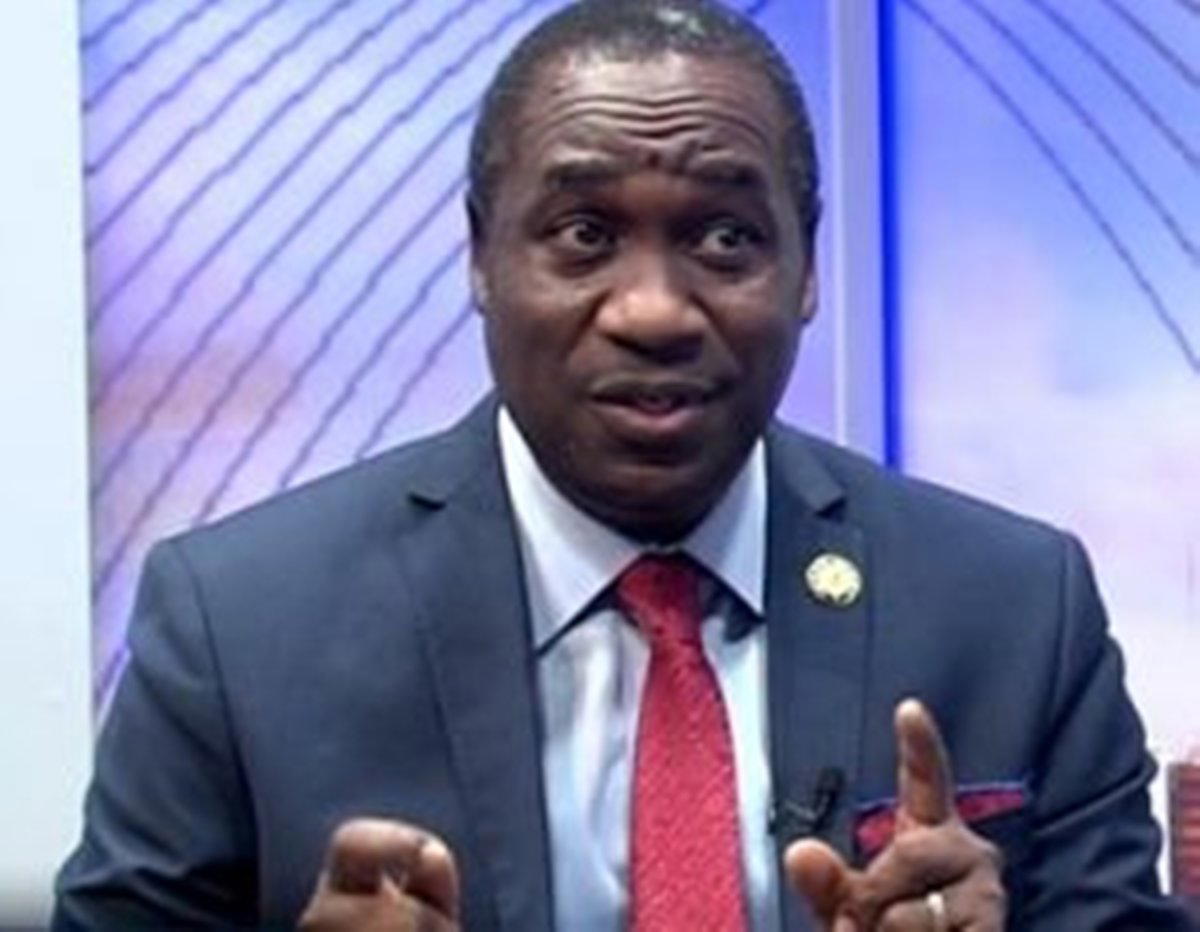
The Deputy Governor of Lagos State, Dr. Obafemi Hamzat, stated told Vanguard on Wednesday, at a media parley to highlight achievements and strategic plans of the state, organized by the Office of Political, Legislative, and Civic Engagement, held in Victoria Island,
Hamzat stressed the importance of engaging in meaningful conversations that prioritize existential challenges, economic growth, and societal advancement.
When asked on the update with the proposed Fourth Mainland Bridge, Hamzat, said; “The project is a Public Private Partnership; the contractors are battling with the galloping inflation with regards to the dollar rate.
“The initial budget has tripled making it difficult for the execution of the project. However, the project is on course. We are back to negotiation table with contractors to find a way of funding the capital intensive project.
“Hopefully, we will arrive at workable solution for the eventual execution of the project very soon. We will get there eventually.”
Recognizing the challenges posed by inflation and economic pressures, he stressed the importance of collective effort and resilience in building a prosperous Lagos, saying, “The work is tough, but with collective responsibility and a focus on the right priorities, Lagos can continue to lead as a model for progress in Nigeria.”
Brief on proposed project
Instructively, the project was proposed in 2006 and a sum of $2.2 billion was earmarked for it in the year 2017 Lagos State budget.
Fourth Mainland Bridge is a 38-kilometre-long bridge project by the Lagos State Government, connecting Lagos Island by way of Langbasa (Lekki) and Baiyeku (Ikorodu) across the Lagos Lagoon to Itamaga, in Ikorodu.
The bridge is expected to be the second longest in Africa, featuring three toll plazas, nine interchanges, a 4.5-kilometre Lagoon Bridge, and an eco-friendly environment.
It is a Public-Private Partnership, PPP, project, involve the construction and operation of tolled road and bridge with a design speed of 120 km/h, as well as the development of adjacent real estate.
The Lagos State Government had earlier projected to complete the project in 2027.
The Lagos State Government announced on December 29, 2022 that a Chinese construction firm, CCECC-CRCCIG Consortium had been selected as the preferred bidder for the project.
Lagos shortlists 3 firms for construction
The Lagos State government shortlisted a Portuguese construction firm, Mota-Engil, CGGC-CGC joint venture, and CCECC and CRCCIG Consortium, two Chinese venture capital firms, to build the $2.5bn Fourth Mainland Bridge, according to officials.
The Fourth Mainland Bridge is a proposed 38-kilometre bridge by the Lagos State Government, connecting Lagos Island by way of Lekki, Langbasa, and Baiyeku towns and across Lagos Lagoon to Itamaga in Ikorodu part
According to state reports, the bridge is expected to be the second-longest in Africa, with three toll plazas, nine interchanges, a 4.5kilometre km Lagoon Bridge and an eco-friendly environment.
The idea of the bridge, according to Ope George, Special Adviser to the Governor on Public-Private Partnerships, PPP, now Commissioner for Economic Planning and Budget, was to reduce severe congestion on the existing Third Mainland Bridge; while opening new areas for future development.
Recall that in August 2020, the Lagos State Government shortlisted six companies for the design, development, construction, operation, and maintenance of the Fourth Mainland Bridge. This followed government issuance of a Request for Qualification (RFQ) in February of 2020. The six companies were claimed to have met the technical and financial capacity requirements.
Earlier setbacks
Meanwhile, during the course the project had witnessed several setbacks which include termination of the Memorandum of Understanding, MoU, by government entered into with a private partner to build the bridge.
The MoU was signed between the state government and a consortium of investors, among which were; the Africa Finance Corporation, AFC, Visible Assets Limited and Access Bank Plc. The terminated MoU would have allowed the investors a concession period of 40 years upon the completion of the bridge.
The then Lagos State Commissioner for Waterfront and Infrastructure Development, who also in charge of Ministry of Works, Adebowale Akinsanya, confirmed the termination of the MoU, hinging the decision on what he called long delay on the part of private partners in commencing the construction work.
Also, speaking on achievement so far by the state government, the Deputy Governor stated that “in line with the Sanwo-Olu/Hamzat administration’s commitment to foster a Lagos that is inclusive and investors friendly, the government is undergoing over 189 projects that are aimed at enhancing the welfare of residents, the younger generation, and streamlining business operations.”
Hamzat noted that the projects are designed to have a positive impact on the socio-economic development of the people and mitigate against rural-urban migration, adding that in Lagos, the government has done over 198 roads across all the Local Governments in the state.
He stressed that media collaboration becomes imperative given the important role the Fourth Estate of the Realm plays in nation-building.
The Deputy Governor, while emphasizing the need for objective reportage, noted that it would be counter-productive if the media is expounding the negatives in their reports.
Citing the example of the narrative that Nigeria’s education is decaying, Hamzat argued to the contrary. “We should not succumb to the negative narrative that the Nigerian Education system is going down. If our education is going down, why are the Western world, particularly, the British and America recruiting our teachers, our doctors, and our nurses?” This is the kind of label given to us and we are gullibly imbibed. I wish the practitioners should engage more in the positive in our activities, but also report when we are failing.”
Adding that; “As we know the government does a lot of things. There is a bouquet of things that we do, including; roads, drainage, education health, transport waste management, various things. A lot of things that we do in Lagos seem not to be well disseminated to the public.”
He stressed that it is important for Nigerians to know that Nigeria is a developing country and as a people, they need to talk positively about the country and discuss facts and issues that are relevant to the growth and development of the country rather than diminishing it.
Hamzat also stated that the “Lagos Citizens’ Gate,” a Mobile Application developed for better grassroots participation and to strengthen governance, remains a game changer in the administration’s commitment, as it has remained a veritable platform for citizens to engage the government, air their grievances, and government to provide solutions to such problems.
Special Adviser to Lagos State Governor on Political, Legislative and Civic Engagement, Dr. Tajudeen Afolabi said that the State government would not relent in its effort to bring relief to residents of Lagos and ensure a peaceful and harmonious working relationship with all stakeholders towards achieving the “Greater Lagos Rising” vision of the present administration.
Highlighting some of the key initiatives of the present administration to cushion the effect of the economy, the Special Adviser noted that the “Sanwo Olu Listens” Financial Assistance Program is a comprehensive and impactful social welfare programme launched by the Governor, aims to directly address their financial and social challenges being faced by the vulnerable due to the economic hardship.
Disclaimer
Comments expressed here do not reflect the opinions of Vanguard newspapers or any employee thereof.