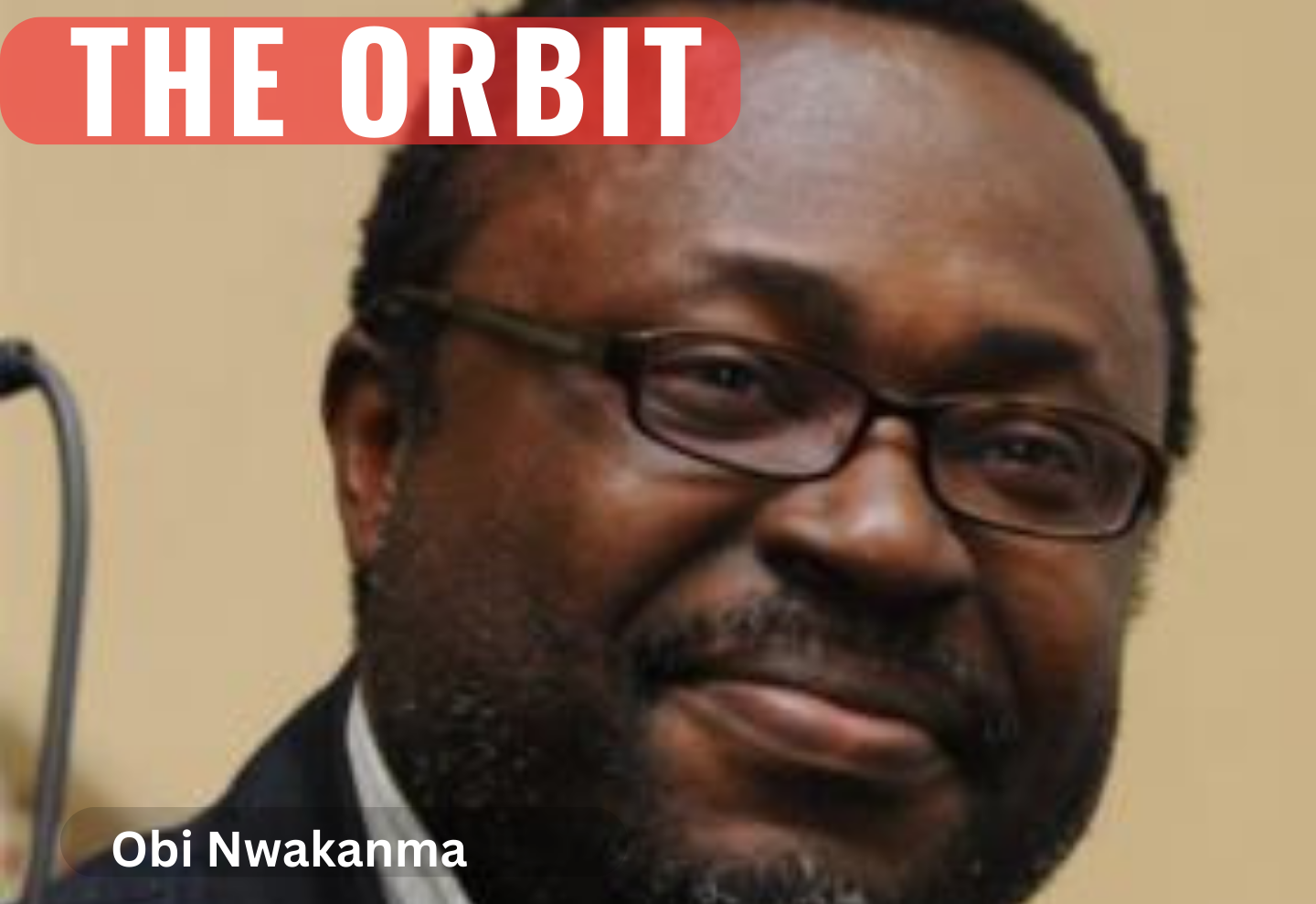
Obi Nwakanma
I am Onye-Igbo. I Iunderstand the principles of sovereignty very clearly. I understand that all humans are born free and equal – irrespective of status, race, or ethnicity. For as long as they are human,theyembodythehighest attributes of creation, which is life, none of which can be measuredgreaterthantheother.
As my Igbo ancestors always knew, and as those among the Igbo captured during the Atlantic Slave trade said to their captors, including Jefferson in Virginia: “Madu nile wu Eze. Onweghi Onye wu Chi Ibe ya!” All men are born free and equal. There is none who is lord above the other. That is why the Igbo do not make kings. The true Igbo do not kneel or bow to any man. It is “Nso” against one’s “Chi.” They do not even bow down, or kneel before their God, Chukwu, with whom they enjoy a relationship of grace and adoration, and not of fear and
humiliation. Amanorwoman whose “Chi”is dead or indifferent, is subdued, and held to the ground by a force greater than their Chi. Those who, by acts of omission or commission, concede their sovereign rights to be free and prosperous are slaves. No human should be slave. It is the equivalent of a spiritual death. A true Igbo chooses death over the deadly mastery of another person. To live without freedom in the Igbo mind is the equivalence of death. That is why the Igbo never made slaves of others. Yes, they had a system of indenture, the “Ohu” system, which was the closest one came to losing full autonomy.
But in the Igbo system, one can be an indentured servant, but such a person is also given the opportunity to repossess their autonomous and free rights by a highly honorable form of the sweat equity. An “Ohu,” because he has been treated with such honor and dignity, may sometimes, choose to become a member of the family of he or she who has held him in a bond, even when his or her bond is served. At such an occasion a priest of the family, the Di Opara is called to perform the rite of adoption and acceptance, and such a one is conferred with all the rights pertaining to a man born into freedom in the land – the “Di Ala.”
In much of Igbo culture, women are rarely subjected to bond-servitude, largely because women are considered sacred inIgboculture. They are makers and nurturers of life, and those who nurture life cannot be enslaved. It is considered “Nso- Ala”: a crime against the goddess of the earth, who is a fiery feminine divinity. That is the way the ancient Igbo thought of it. Women are the foundations of the earth:“Nwanyiwu Okpu” – the Igbo say. In recoil from the abomination of holding even a pregnant animal in bonds, the Igbo have a saying, “Okenye anaghi ano n’ulo, Ewu amuo n’obu.” No responsible old person stands around to watch a goat in parturition give birth while still held in tethers. It is an abomination. This is because to the Igbo, the highest, most sacred gift of creation is life, and all life must come into this world free. The Igbo do not make kings because the idea of a single, sovereign link to the great divine is anathema to Igbo self- apprehension. The Igbo guard their sovereignty very jealously, and the first site of the sovereign entity is the individuated “Self,” –“Onwem,”and in the collective self–the sovereign union-“Onwe anyi.” The idea that the single self is the first link in the chain of being is the grounds on which the Igbo collective national spirit is built.
But although the Igbo value nd jealously hold to an individualism that could sometimes be frustrating when it comes to building a consensus, they also have the idea that no matter how an individual might rise, they cannot rise above the community. The “Oha” – the gathering of the Igbo commons – is usually the embodiment of the sovereign will of the Igbo. The Igbo as a republican people have also been described as a “freedom-loving people.” Freedom is the gift of the sovereign will. It is the mark of independence.
I am sure that many other cultures, of other peoples, in this behemoth called Nigeria, needless to say, understand the power of sovereignty, the impulse for liberty, and the meaning of freedom. But I lay it all out here, using the Igbo just as example, to indicate that Nigerians know, and have lived, and do value their freedom. They understand it. They did not first hear of independence, freedom, and sovereignty, from some alien force. They have fought for freedom. They have died for it. But what Nigerians these days genuinely ask, given the current situation of the country is, when did this nation lose it? Is Nigeria actually still a sovereign and independent nation? Did the end of colonialism really offer us sovereign power and actual independence? Did there turn to “democracy ” guarantee freedom and prosperity to Nigerians? What is missing?
Every year, since the last 64 years, Nigerians go all out to celebrate their Independence Day. What I remember growing up in Nigeria in the 1970s and ‘80s is that Independence Day Celebration was a major national shebang. In every city, and township, and community in Nigeria, the reparations for it was both festive and solemn.The mood often began to build up from the second week of September, when all the schools brought out their marching bands, and practiced march pasts in their school fields, until they were in perfect lock step. On Independence day, Nigerian children, educated and socialized in well- organized public schools, would go to Government Fields, in their spanking new school uniforms, and march past the Chair of the County government or the Governor, with an array of dignified men and women present. There would be entertainment. The sack race. The teachers race.
The Intercollegiate Athletics event. The culminating soccer march, and the “Hip-Hip to the Republic!” and the “Hurray!” resounding from these happy school kids, who would have saved up their pocket money just for that day, in order to buy the goodies: ice cream, peanuts, bananas, kuli-kuli; akara, the soft drinks, and so forth. The fanfare; the spectacle; the huge sense of shared world, with all its aspirations towards a just, prosperous, joyful community is the real basis of nation-building. It was such great pleasure to be among the children returning home from the march pasts, chirping along; school flags folded, living happily, with such great hopes, and such carefree joy. Some years, you might even be drenched in the October rain. But that was alright. The life of the children mirrored the life of that society. Nigeria had such hope; such possibility. But dear reader, compare that with the Nigerian independence anniversary this year, or in the past ten years of the Buhari- Tinubu apocalypse.
It has been dreadful, with each passing year, as Nigeria slips into terrifying decline. This year ’s Independence day anniversary, just this past Tuesday was spectacularly listless. Nigeria is spectacularly listless. There is clearly nothing to celebrate. The mood is rather subdued, tragic, confused and agonized. Streets are in turmoil.
Nigerians are in this state of befuddlement, and in this moment of national despair, many are already questioning the meaning of this nation, and of a national day of Independence. What is freedom to a slave? Nigerians have been turned into slaves in their own country. They dare not talk. They dare not protest. They cannot travel from one city to another without risking kidnap, or extortion. They have no jobs. Their businesses are in decline. Public services do not exist.
Public government is more a ritual of empty, and meaningless grandeur, than a process of thoughtful, innovative problem solving. Is this the nation Dr. Azikiwe and his nationalist acolytes fought for, sometimes at pain of death? Young and forgotten men like Heelas Chukwuma Ugokwe, member of the Zikist movement, who plotted, and attempted to assassinate the colonial Chief Secretary, Hugh Foot, in 1950 as part of the agitation for Nigeria’s independence and sovereign freedom. He was tried and sentenced to life in prison, confined at the Yaba Mental Asylum, where he died a lonely and quiet death; his sacrifice obscured by an ungrateful nation.
What is independence and sovereignty if we are still slaves to alien “masters” who pull is on the string, and if we cannot act with fierce authority to determine the path of our own salvation. As Nigeria was marking a 64th national anniversary,Nigeria’spresident, Mr. Bola Tinubu flew out for a two-week “vacation” in the UK. Like Buhari, Tinubu governs Nigeria from the air, or from abroad. He is either going for medical checks, or vacations, or inconsequential jamborees abroad that brings no credible return to Nigeria.
Therefore, imagine it, dear Nigerians, that just a day after Nigeria’s independence anniversary; just as Nigerians were massing on the streets to protest the high cost of food; the usurious charges on fuel and electricity; the severe levels ofunemployment; the rapid collapse and flight of businesses and capital from Nigeria, the ravaging, apocalyptic hunger in the land, Bola Ahmed Tinubu jumps on the presidential jet, to go and enjoy a “ working vacation,” in the UK.
Dear Nigerians, what does this say about Nigeria? Here is what it says: this nation is finished. Even those who govern it know this, and are now brazenly supervising its end of history. Nigeria is the only country in the world whose president proudly vacations abroad; whose doctors are abroad; whose life, fortune, and well- being are in the hands of foreigners, some of whom sometimes could be enemies, and competitors with Nigeria in this strange global system, in which nations seek advantage over other nations, as they compete for limited world resources. Now, imagine it, and think about what it means: it simply means that President Bola Tinubu is a national security risk. He is not accountable to Nigerians because his life is not in the hands of Nigerians. Nigeria can go to hell as far as he is concerned.
The hospitals can burn to ashes, because it would not affect him. Who cares if there is electricity, or even public safety? I mean, he vacations abroad. When he visits Nigeria, he lives ensconced in this weird and alien territory called Aso Rocks. There is nothing that Nigeria offers him, and therefore he can compromise Nigeria’s sovereign interest at will, as he clearly did, when he floated the Naira, unleashing on Nigerians, an economic catastrophe which might take them half a century to overcome and remedy. That is, if the countries from whom Nigeria has borrowed heavily do not fall upon it, strip and seize its national assets, or compel the UN to lease it as a Trust nation, until it fully pays its debts.
I say, think Haiti. But Nigerians have no idea what confronts them. It is such a terrible feeling these days to be Nigerian. When one thinks of all the possibilities; of all the promise of yesterday, when Nigeria’s voice once boomed and mattered in international affairs, when Nigerians at home walked with such a great spring on their heels, there is the creeping fear that we have lived past our best years. That we have lost our sovereignty. That every celebration of National independence is an empty ritual because independence without sovereignty is bogus.
Disclaimer
Comments expressed here do not reflect the opinions of Vanguard newspapers or any employee thereof.