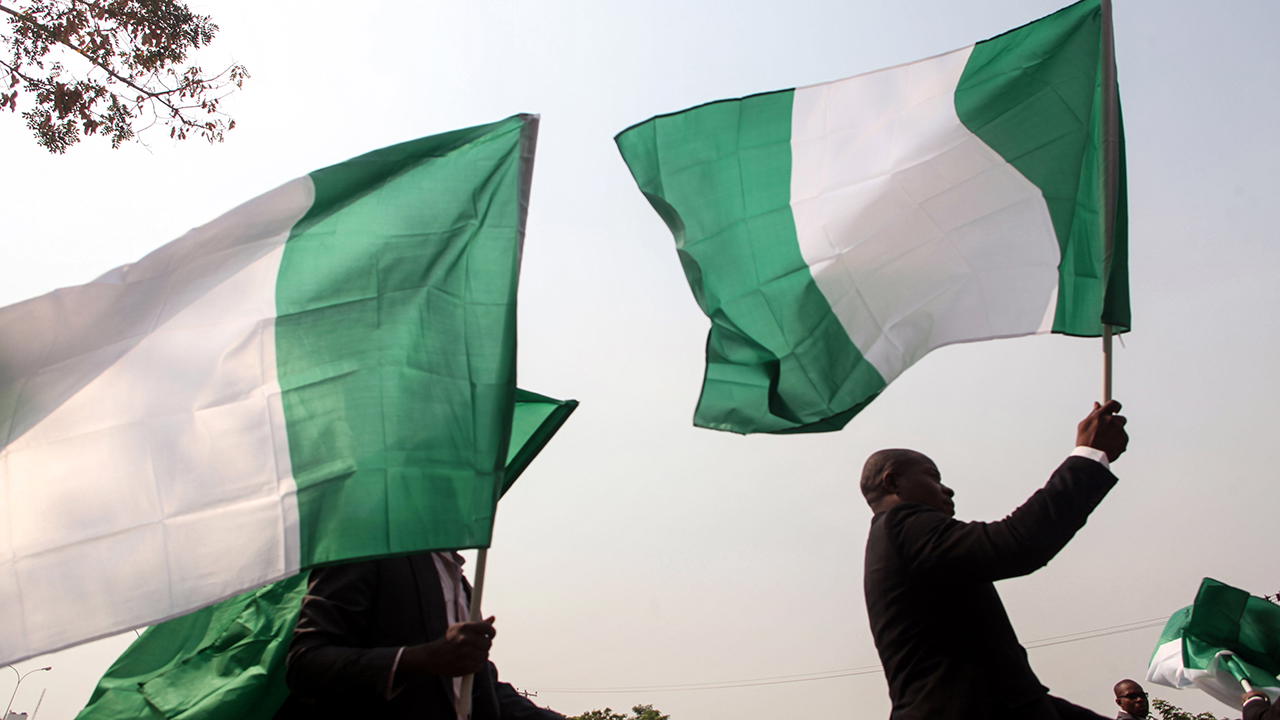
This report explains why it has been difficult for Nigeria to make good success, 64 years after independence. It focuses on the lack of political will to execute conference and panel reports, which chart pathways to progress.
By Jide Ajani
Without prejudice to whatever Nigeria has achieved in her 64 years of independence, the country remains an embarrassingly under-performing entity.
Whereas independence came with a promise of a better future, 2024 Nigeria appears to be a mockery of 1960 Nigeria. Not a few would disagree.
We will get back to that presently.
But let’s discuss a fool and his errand so that the context can be properly situated within the praxis of why Nigeria is what she has become.
Origins of fool’s errand
The phrase “fool’s errand” originated in the 16th century. It describes “a task or mission that is futile or pointless; likely to fail; wasteful of time and effort; and deceptive or misleading.”
Indeed, the phrase has evolved over the centuries. It is said that in medieval times, “a fool’s errand referred to a task given to a household fool (a jester or servant) that was impossible or nonsensical, intended to amuse or humiliate.”
By 1545, the phrase first appeared in writing in Edward Hall’s “The Union of the Two Noble and Illustre Families of Lancaster and York”.
By the 17th century, the phrase gained wider usage, often implying someone was being “deceived or manipulated into undertaking a futile task,” and in modern usage, “the fool’s errand is used in various contexts, including politics, business, and everyday life, to describe a misguided or hopeless endeavour.”
So, where do all these lead?
1960 Nigeria Back to 1960 Nigeria: Brimming with hopes of a great nation, Nigeria’s founding fathers had plans to bequeath a nation of greatness to generations to come.
The visions were transformative while the plans were always grand. But corruption, greed, ethnicity, nepotism and the many vices the military leveled against the political class truncated the journey.
For a people blessed with intelligence that rivals any other anywhere in the world, Nigerians were always quick to seek solutions on how to create a better nation and rise from the ashes. Even after the bitter three-year war, the nation rose. Either through one commission of inquiry or judicial panel, there had always been attempts to ensure that things got better. Unfortunately, things got worse.
Again, the fool and his errand.
Minorities’ earlier fears
Even before independence in 1960, there were fears by minorities in Nigeria that they may be served a raw deal in a nation with three major ethnic groups. Enter the Henry Willinks Commission Report of 1957/1958 which made profound recommendations. Some still believe that the creation of the Midwest Region was a deliberate and egregious effectuation of the Willinks Report.
The real fears expressed by the minority ethnic groups and which were captured in the report were never fundamentally addressed. But the report remains a reference document.
Apart from the Willinks Commission Report, Nigeria has never been short of reports that were meant to either look into issues of national significance or create pathways for development.
Avalanche of reports
The Gowon Commission Report (1967) looked into the Western Region crisis.
The Murtala/Obasanjo Commission Report (1975) tried to resolve the land tenure system.
The Okigbo Commission Report (1980) tackled foreign exchange crisis
The Bolarinwa Babalakin Commission of Inquiry investigated the activities of the Federal Electoral Commission, FEDECO, between 1979 & 1983 Political Bureau Report (1987) ushered in General Babangida’s transition programme.
Vision 2010 Report (1997) looked at development strategies.
The Human Rights Violations Investigation Commission (Oputa Panel) Report (2002) looked at human rights abuses.
The Niki Tobi Commission Report (2001) assessed the electoral process.
Presidential Committee on the Review of the 1999 Constitution Report (2001) addressed constitutional changes.
The Uwais Report (2008) dealt with electoral reform; and Niger Delta Technical Committee Report (2008) looked at Niger Delta development.
The Oronsaye Report focussed on the cost of governance and rationalisation of MDAs.
National Conference Report (2014) dwelt on national issues and restructuring.
The Buhari Transition Committee Report (2015) made policy recommendations.
The El-Rufai Committee Report centred on issues of constitution amendment and restructuring.
Others include Malami’s Constitution and Electoral Reform Committee; and Lagos State Judicial Panel of Inquiry Report (2021) – EndSARS protests.
Mind you, these committees or commissions of inquiry are usually high-powered and the members are some of the brightest in the country.
The reports also come with very profound and tantalising suggestions on how to either correct errors of governance or chart paths for development.
Ignored recommendations
However, most of these reports gather dust in shelves.
The ones that are implemented are done piecemeal. In other instances, parts of the reports that are implemented are done to achieve effervescent political gains that do not deal with the fundamentals.
The evil of lack of will to implement reports of commissions is a cancer that has afflicted successive administrations since independence.
Daunting challenges
To appreciate the enormity of what we are dealing with, let’s take, for instance, the Bolarinwa Babalakin Judicial Commission of Inquiry into the activities of the Federal Electoral Commission, FEDECO, between 1979 and 1983.
The Report of 1986, 38 years ago, highlighted some forms of rigging that took place during the Second Republic to include, but not limited to the following: Compilation of fictitious names on voters registers; illegal compilation of separate voters’ list; abuse of the voter registration revision exercise; illegal printing of voters’ cards; illegal possession of ballot boxes; stuffing of ballot boxes; falsification of election results; illegal thumb-printing of ballot papers; voting by under-age children; printing of forms EC 8 and EC 8A, used for the collation and declaration of election results; deliberate refusal to supply election materials to certain areas; announcing results in places where no elections were held; unauthorised announcement of election results; harassment of candidates, agents and voters; change of lists of electoral officials; box switching and inflation of figures.
The Babalakin Report also frowned at and condemned the disgraceful conduct and role of the judiciary in its condonation of brigandage.
38 years later, Nigeria’s electoral system, despite technological provisions, has grown from bad to worse. The judiciary has become so corrupt that retiring justices of the Supreme Court serially lament this breach at retirement.
It was in recognition of the electoral infidelity that late President Umar Musa Yar’Adua acknowledged that the election which brought him to power in 2007 was flawed and, therefore, something needed to be done. That was why he empaneled the Justice Mohammed Uwais Committee. The Committee did a good job but its recommendations were treated with levity. The fundamental aspects of the recommendations were never implemented. And the ones that have so far been implemented and codified into parts of the Electoral Act are being observed in the breach.
If you think the Babalakin and the Uwais Reports are far-fetched, what about the 2014 National Conference which gulped N9 billion? One of the very unique attributes of the 2014 conference is that all its decisions were based on consensus.
The 492 delegates opted not to vote to avoid possible rancour. Therefore, a conference report where resolutions were based on consensus is yet to be implemented 10 years after. Indeed, Vanguard was made to understand that the Conference Chairman and his deputy, Justice Idris Legbo Kutigi and Professor Bolaji Akinyemi, respectively, were said to have impressed President Goodluck Jonathan, the convener, to approach the implementation of the Conference resolutions in three phases. Firstly, he was counseled to issue Executive Orders as quickly as possible. He did not. The second step would be Executive Bills, which he still had enough time to initiate and send to the National Assembly. He did not. The last – though difficult – would be an amendment to the 1999 Constitution. He did not do anything because some fat cats threw their influence around and deceived Jonathan to wait until after the 2015 elections before any form of implementation of the resolutions. They did not do that because of their love for Nigeria. They did it to strengthen their grip on the structure of governance. Unbeknownst to Jonathan, while all the game was going on, the opposition All Progressive Congress, APC, leadership was in the know. That was why former President Muhammadu Buhari refused to do anything about the report, even though it cost the nation over N9 billion. So, why did Jonathan bother to convene the conference in the first place? It was merely a fool’s errand. Mind you, no strata of society was left out in its composition – from those living with disability, to women groups, youths, elder statesmen, retired security personnel, military, chambers of commerce, among others, all had representation.
Lessons from USA
As the saying goes, Rome was not built in a day. Every society engages different modes of evolution to ensure that things get better. In the United States of America, USA, its electoral system was once fraught with all manner of weird things. From “Voice Voting (Voters publicly announced their choices aloud, making voting a loud and intimidating experience – phased out by the 1880s); to Open Ballots (Voters submitted unsigned, open ballots, making it easy to intimidate or bribe voters – replaced by secret ballots in the late 1800s); Proxy Voting (Voters could assign someone else to cast their ballot – banned in most states by the 1850s).” There were instances of election day riots (violence and intimidation were common at polling stations and it was gradually decreased as voting laws improved.
Treating, which we call stomach infrastructure or vote-buying, was also commonplace in the US. Candidates would provide food, drinks, or other incentives to voters, but it was outlawed in many states by the mid-1800s. Colonization was another form of practice whereby political parties would transport supporters from other areas to vote in specific districts. This has since been limited by voting laws and reforms. In fact, gun duels were common between political gladiators and one of the most famous was that between Secretary Alexander Hamilton and Vice President Aaron Burr on July 11, 1804. The last recorded duel occurred in 1838. America has evolved and things are no longer as weird.
Oh Nigeria
In the case of Nigeria, steps taken to make things better through the instrumentality of commissions of inquiry, conferences or judicial panels have almost always turned out to be a fool’s errand because it is either that such panels are set-up to assuage fears but not exorcise the ghost of such fears, or the convener (usually Mr. President) merely wants to grandstand without any real intentions of seeing it through.
Most of the reports have focused on the electoral process. This is so because the leadership emergence process (as well as the recruitment process) have almost always suffered discounts of significant nature. Just last week, hurricane Helene pummeled Florida, Georgia, North and South Carolina, in the USA. That is a natural disaster. In Nigeria, the natural disaster afflicting the people are the leaders.
The consensus is that had many of these conference and panel reports been implemented, Nigeria could have become a better nation and the process through which the leaders emerge could have been purified and disinfected.
Even as recently as this administration, laws are being observed in the breach rather than observance. Whereas the Constitution and Electoral Act stipulate that appointments into the Independent National Electoral Commission, INEC, should be in consultation with the National Council of State, recent appointments of Resident Electoral Commissioners, RECs, did not follow that route. Buhari neither did.
President Tinubu raised the hopes of many with his decision to reactivate the Oronsaye Report about rationalisation of MDAs. Good thinking! Unfortunately, the same presidency has been creating more agencies even before the ink has dried on the order to revisit the Oronsaye Report. Just last week, Nigerians were told that the wage bill of N4 trillion awaits the federal government with the implementation of the new minimum wage.
From what the naked eyes can see, the hope of Nigerians for a better tomorrow may be in a state of suspended animation. The bane of the nation is not the shortage of bright ideas or progressive solutions to the multi-dimensional challenges confronting the nation. It is in the inability of past and present leaders to summon the political will – or any will for that matter – to implement solutions that are already on the table. That is why the fool would keep going round in circles thinking he’s making forward movement.
Disclaimer
Comments expressed here do not reflect the opinions of Vanguard newspapers or any employee thereof.