By Idowu Bankole
The phrase “Naija no dey carry last” encapsulates a fundamental aspect of the Nigerian spirit and national character. This pidgin English expression, which translates to “Nigeria never comes last,” embodies the relentless drive, ambition, and competitive nature that Nigerians are known for across various fields of endeavor.
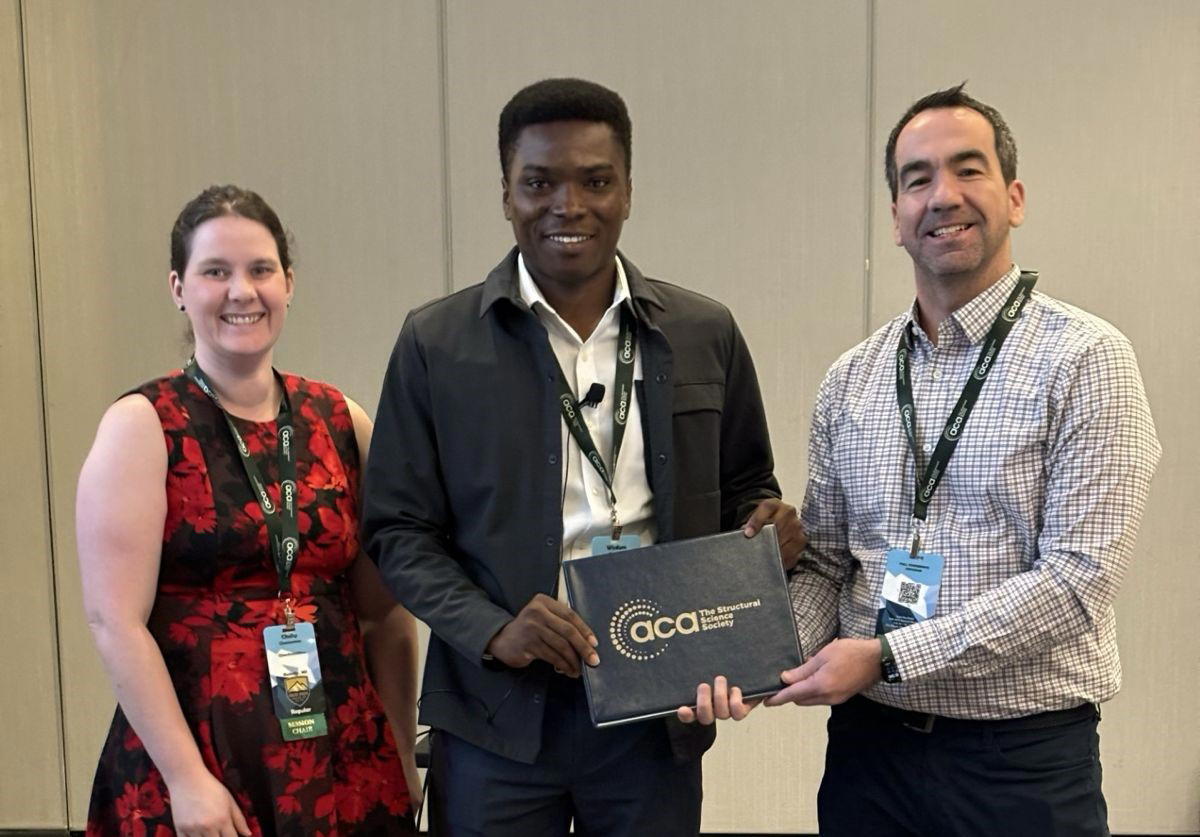
In light of this context, the achievement of Wisdom Oshireku Abiodun in winning the prestigious Margaret C. Etter Student Lecturer Award takes on even greater significance. It’s not just a personal triumph but a manifestation of the “Naija no dey carry last” spirit on the global scientific stage. Wisdom is a graduate student in the Department of chemistry and biochemistry.
In a groundbreaking achievement for Nigerian science, the Margaret C. Etter Student Lecture Award has thrust a spotlight on the exceptional talent emerging from our nation’s research institutions. This prestigious accolade, bestowed by the American Crystallographic Association (ACA), is not just a feather in the cap of its recipient but a beacon of hope for aspiring scientists across Nigeria. Named after the illustrious Professor Margaret C. Etter, this award is no mere academic formality.
It serves as a launchpad for the brightest minds in science, offering them a global stage to showcase their innovative research. The honour is particularly significant in the Industrial Scientific Interest Group (SIG) division, signaling the practical, real-world impact of the winning research. The award-winning study by our University of Ibadan and Ilorin-trained biochemist, which marries structural biology, drug design, and cancer research, represents a tour de force in scientific innovation.
By addressing one of the most pressing health challenges of our time, this research not only pushes the boundaries of scientific knowledge but also holds the promise of tangible benefits for millions worldwide. The recognition from the ACA is more than just a pat on the back from fellow academics, it is an unofficial motto that reflects a deeply ingrained cultural belief that scholars like Wisdom and other Nigerians must strive to excel and outperform others, regardless of the circumstances. It’s a mindset that pushes individuals to overcome obstacles, challenge limitations, and achieve greatness on both personal and national levels. This ethos is not just about avoiding last place; it’s about the determination to be at the forefront, to stand out, and to make a significant impact. This mindset has propelled Nigerians to excel in various fields, from academics and sports to entertainment and business.
This groundbreaking study by Nigerian researcher Wisdom, studying in one of America’s top University, Brigham Young University sheds light on how cancer cells use a survival mechanism called autophagy to resist treatment. His research targets a key protein, VPS34, crucial in initiating autophagy, enabling cancer cells to withstand therapies. In a bold move, Wisdom’s research introduces new small molecule inhibitors that are derivatives of RD-I-53, designed to precisely block VPS34 activity without harming healthy cells—a significant improvement over existing treatments. This innovation could revolutionize cancer therapy by making treatments more effective while minimizing side effects. Beyond its scientific merit, Wisdom’s work promises to transform cancer care and bring hope to millions of patients globally. While Wisdom’s achievements are worthy of celebration, they underscore a troubling trend—many of Nigeria’s brightest minds are making groundbreaking discoveries outside the country. This outflow of talent not only hampers scientific progress but also limits economic development back home. Wisdom’s success is a reminder of what Nigerian researchers can achieve with the right support and resources. It calls for urgent investment in local research infrastructure to retain and nurture the nation’s scientific talent.
Recognizing this achievement by the American Crystallographic Association highlights the remarkable talent of Nigerian scientists. However, it also raises an important question: how can we ensure that such expertise thrives within Nigeria? This is a call to action for our country to invest in cutting-edge research facilities, allocate sufficient funding, and create an enabling environment for scientific innovation. This success story should inspire Nigeria to prioritize research and development as a cornerstone of national progress. By doing so, we can ensure that future breakthroughs not only carry Nigerian names but also happen on our soil, contributing to our national development and global scientific advancements.
While we celebrate this achievement, it must also motivate us to act. Nigeria’s scientists should have the opportunity to pursue groundbreaking work at home, where their discoveries can benefit both the world and their own communities. It’s time to turn applause into action and ensure that our nation’s scientific talent drives the future we all envision.
Disclaimer
Comments expressed here do not reflect the opinions of Vanguard newspapers or any employee thereof.