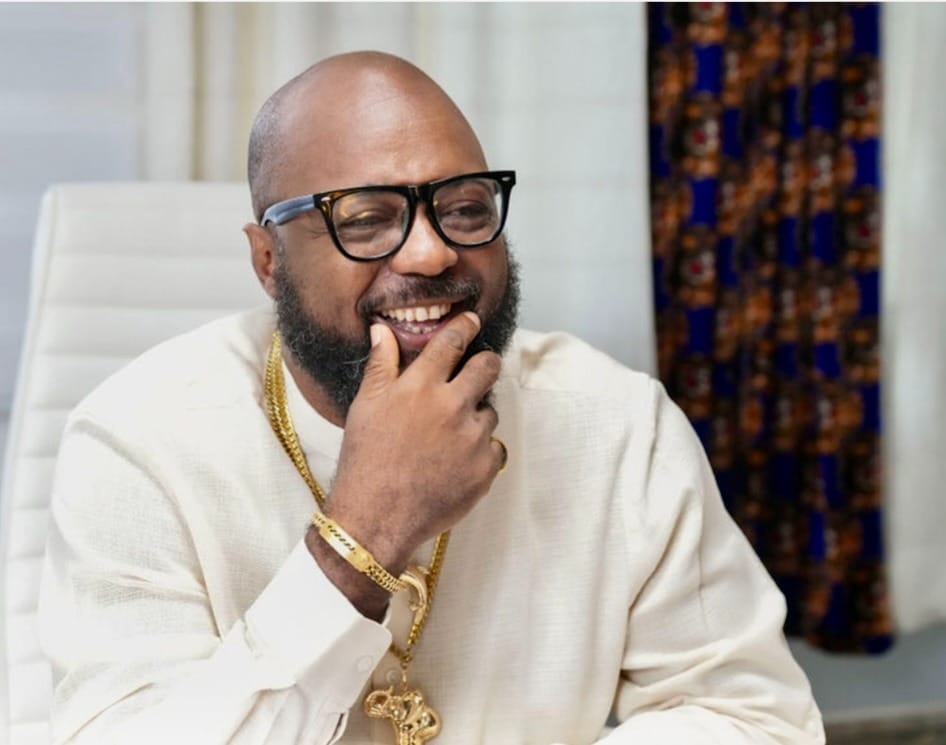
Ike Nnaebue is a renowned Nigerian film director, screenwriter, producer, and global speaker, celebrated for his impactful contributions to African cinema. His recent documentary, “No U-Turn,” earned international acclaim, including a Special Mention Award at Berlinale 2022 and several other accolades. With over 15 years in the industry, Ike has a diverse filmography that addresses pressing societal issues. He is the founder of LP House of Creatives, fostering creative hubs across Africa, and Passion8 Communications, a leading media production company. Ike is also committed to mentoring emerging filmmakers through various educational initiatives.
He shares his inspiring story in this interview.
What inspired you to create your latest film, “No U-Turn,” and what message do you hope to convey through it?
Honestly, I don’t think of No U-Turn as a film I created in the traditional sense. It feels more like a film that found its way to me. This story came to me 29 years ago when I first left Nigeria, attempting to migrate to Europe through the Sahara Desert and the Mediterranean Sea.
No U-Turn is based on my personal journey from nearly three decades ago. It’s a story that has lingered with me, one that I always knew I needed to share. The experience was profound and lifechanging, and I felt a deep responsibility to tell it, not just as a gripping adventure but as a cautionary tale for others.
I felt an obligation to my society to share this story, to help others understand the immense dangers of attempting such a journey. For years, I waited for the right opportunity and resources to bring this story to life, and when the moment finally came, I knew exactly the message I needed to convey: Irregular migration is perilous and should not be taken lightly.
Many people feel they have no other choice, but embarking on such a journey can be akin to a suicidal mission. I believe it’s crucial to warn people so that if they decide to proceed, they do so fully aware of the risks involved, unlike me when I made that journey 29 years ago. At the time, I had no idea how dangerous the path was or how treacherous the desert could be. It was only after I started that I realized the true peril, forcing me to turn back. Although it took me two years to return to Nigeria, continuing the journey was simply too dangerous.
My primary motivation for making this film was to share this incredible story of the journey I undertook at just 20 years old. This experience has left an indelible mark on me. Additionally, I wanted to bring the attention of Europeans to the plight of migrants, to help them see that migrants are not criminals, murderers, or fugitives. Migrants are people like you and me, with dreams, aspirations, and a desire to self-actualize. They are often driven by a sense of hopelessness in their home countries, feeling that leaving is their only option.
It was important to me to humanize the conversation around migration. Too often, migrants are reduced to mere numbers on a screen, stripped of their humanity. I wanted to give them a face and a voice. That was the message I aimed to convey, and these were the motivations that led me to make this film.
How did it feel to receive the Special Mention Award at the Berlin International Film Festival for No U-Turn?
It felt almost like an out-of-body experience. Just being accepted into such a prestigious festival was already a significant achievement for me. The Berlin International Film Festival is one of the top five film festivals in the world, so getting accepted there felt like a breakthrough into the international film community.
But it didn’t stop there. No U-Turn went on to compete in two categories: Best Documentary and the Audience Award for Best Film. This was particularly exciting because, before the festival, European film critics had selected No U-Turn as one of the top 10 films to watch out for, out of over 400 films screened at the festival.
That alone was a huge deal. And then, on the day of the awards, hearing my name and the name of the film called out on stage for the Special Mention—it was surreal. It was a beautiful, amazing moment, filled with a deep sense of accomplishment.
The film’s premiere at such an influential festival opened up incredible opportunities. Almost immediately, we began receiving invitations from international film festivals wanting to program the film. We hardly had to submit to festivals; instead, we were flooded with emails from festivals eager to screen No U-Turn.
It was an unforgettable experience, one that will stay with me for the rest of my life. And, of course, it’s an experience I hope to repeat many times throughout my career. Receiving this kind of recognition, especially for a film that carries such personal and social significance, was both validating and motivating. It reaffirmed my belief in the power of storytelling to transcend borders and resonate with diverse audiences.
Can you share some highlights from the international film festivals where No U-Turn has been screened?
Absolutely. Since Berlin, No U-Turn has been showcased at a variety of prestigious international film festivals. We’ve screened in Switzerland, including in Geneva and Zurich at the Black Movies Film Festival.
The film also made its way to Canada at the Human Rights Watch International Film Festival, and it’s also been featured at the Human Rights Watch festivals in New York and London. Additionally, we’ve screened at the London Migration Film Festival and numerous others.
No U-Turn has been shown in the United States at Pittsburgh University and a couple of other universities, including Cambridge University, Bournemouth University, and Comrade Wolf University in Germany. It was also featured at the American Film Institute (AFI) festivals.
Back in Africa, we’ve screened at the African International Film Festival in Nigeria, where No U-Turn won Best Documentary, and at the Edo International Film Festival. The film also won Best Documentary at the Africa Movie Academy Awards (AMAA). Additionally, I was honored with the Artistic Bravery award at the Durban International Film Festival. We’ve also screened at the Johannesburg International Film Festival and many others that I can’t even list right now.
The highlight of this journey has been the overwhelmingly positive reception. Audiences have praised the film for putting a human face on irregular migration, helping them understand the plight of migrants, their dreams, aspirations, and the factors that drive them to embark on such perilous journeys. The film’s success across these varied locations underscores the universality of its message, and it has been deeply gratifying to see how it has touched people from all walks of life. It’s a testament to the power of cinema as a tool for social change and empathy.
As a global speaker, how do you tailor your message to resonate with diverse audiences across different cultures and regions?
As a global speaker, understanding and respecting the cultural nuances of my audience is paramount. I always start by researching the specific region or group I’ll be addressing to ensure my message is relevant and sensitive to their unique experiences. Whether I’m speaking in Africa, Europe, or the Americas, I strive to connect universal themes—such as storytelling, resilience, and innovation to the local context. By sharing relatable examples and emphasizing common human values, I aim to inspire and engage people, regardless of where they are from.”
What was the inspiration behind founding LP House of Creatives, and what impact do you hope it will have on African creatives?
The inspiration for founding Love Portion House of Creatives is quite simple. I wanted to create a safe space for creatives.
When I was starting out, there was very little institutional support for artists—if any at all. Most of us were just struggling to survive on our own. There were no dedicated spaces for artists to gather, exchange ideas, network, or collaborate.
I realized how important it would be to establish such spaces across Africa, where creatives can come together, feel safe, and connect with their creative tribes. The goal was to foster the crosspollination of ideas and provide a supportive environment for growth and collaboration.
That’s the core idea behind founding LP House of Creatives, and the impact has been tremendous. We’re committed to continuing this growth and building on our successes. My vision is to create a network of creative hubs across the continent, each one serving as a beacon for innovation and artistic expression. By nurturing talent and providing resources, I hope LP House of Creatives will play a crucial role in the cultural renaissance of Africa, empowering artists to tell their stories and contribute to the global cultural tapestry.
How do you balance your roles as a film director, screenwriter, producer, and cultural entrepreneur?
I don’t see any hard lines between these roles—they all naturally complement each other. First and foremost, I am an Igbo man, and the Igbo are known for their entrepreneurial spirit. In our culture, no matter what profession you choose, being an entrepreneur is almost a given. It’s something that comes naturally to me.
Each of these roles feeds into the others. My screenwriting informs my directing, which in turn enhances my production work. As a producer, I’m inherently an entrepreneur, organizing and overseeing projects from start to finish.
Being a cultural entrepreneur is especially important to me. I’m passionate about preserving and promoting our cultures, encouraging people to connect with their roots, and empowering communities. I strongly believe in the wealth of the collective—no matter how rich an individual becomes, if the community is poor, the individual is poor as well.
For me, success isn’t just about personal achievement; it’s about uplifting the society around me. That’s why I’m deeply committed to cultural entrepreneurship and social enterprise. It’s not just a career, but a mission to ensure that both I and my community thrive together.
This balance allows me to wear multiple hats without feeling overwhelmed. Instead, I see it as an integrated approach to my life’s work, where each role enriches the others, and together they enable me to make a meaningful impact on both the cultural and business landscapes.
What societal issues do you aim to address through your filmography, and why do you feel they are important to highlight?
Awareness is the cornerstone of my work. I believe that if people know better, they will do better. My filmography is focused on educating and sensitizing audiences through storytelling and entertainment.
I’m convinced that information is power. Knowledge has the potential to liberate and empower, making it crucial for societal progress. That’s why my films often revolve around social issues, mental health, cultural topics, and similar themes.
By highlighting these issues, I aim to better inform society, contributing to a more aware and betterfunctioning world. The power of film as a medium for education and change cannot be underestimated. It reaches people in a way that few other forms of communication can, engaging both their emotions and intellect.
Through my work, I hope to spark conversations that lead to positive changes in attitudes and behaviors. Whether it’s addressing the stigma around mental health,
Disclaimer
Comments expressed here do not reflect the opinions of Vanguard newspapers or any employee thereof.