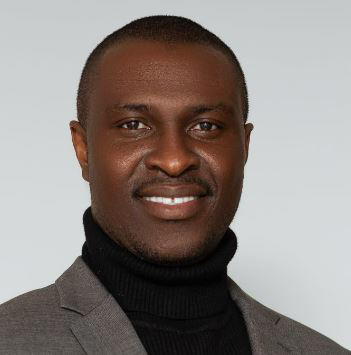
By Osa Amadi
Blessing Okenini is an internationally reputed writer, an economist, policy adviser, project manager, consultant and certified life coach.
His research interest is on macroeconomics, political economy, good governance and contemporary leadership in Africa.
He has studied, worked and lived in four different countries and has travelled to over 12 countries — Italy, Germany, England, Ireland, Romania, Netherlands, Belgium, Sweden, Denmark, the U.S. Canada, Switzerland, etc. In this interview with Vanguard, he shares some of his thoughts about Nigeria:
You are a Nigerian writer, why did you choose to reside in the U.S. instead of Nigeria?
Well, thank you for this interesting question. I have always wanted to further my studies abroad. When I was in the university, I told one of my roommates, Onyekachi Umah, who is now a brilliant and exceptional lawyer, nominated for the position of Senior Advocate of Nigeria, that I will be furthering my studies abroad. So after my studies, I did part of my National Youth Service in Uvwie Local Government Area and Chevron Nigeria Limited, Warri, in the Human Resources Department 2009/2010 as an HR assistant. As my National Youth Service ended, I worked hard to see if I could be retained. I asked my boss then if he could help, and he told me that all employment decisions are made in Chevron Lagos.
So, I got shortlisted and traveled to Lagos for the interview, did my best, and that was all. I never heard from them on whether I made it or not. So, after my service, I resumed my plan to further my studies. I got admitted to a Joint Master’s degree in Economics at Universitas di Pisa and Sant’Anna School of Advanced Studies, Italy. From Italy, I did an Erasmus exchange program in Germany for one year, went back to Italy, graduated, and returned to Germany to start another Master’s program in Quantity Economics, which I left after the first semester and moved to the U.S because I discovered it was similar to what I did in Italy.
What informed your intention to relocate abroad?
Curiosity. I loved knowledge and learning. My dad was one of the first to distribute newspapers in Warri. My father’s company, Dimako News and Advertising Agency, supplied newspapers and magazines to NNPC Warri, Delta Broadcasting Service, DBS, and PTI, Effurun. Most newspaper companies, such as Vanguard, Guardian, ThisDay, Tribune, Punch, Observer Newspaper Benin, Daily Times, Newswatch Magazine, and Times Magazines management, knew my dad as a major distributor. So as a teenager, I read newspapers extensively, current affairs, and global news. This widened my horizon about the world as a young boy and sparked my curiosity to seek more knowledge beyond the country’s shore. And I did. Being introduced and exposed to extensive information about the world as a teenager ignited the spark and motivation to relocate abroad.
Could you speak briefly about your educational background and experiences in Nigeria and abroad?
I attended Ogbe Primary School and Urhobo College Effurun. After Secondary school, I worked a bit with my dad before proceeding to Madonna University, where I studied Economics. During those formative years, I realized the importance of commerce, global trade, business, and law. At an early age, I decided to actively participate in shaping the rapidly changing global economy and to understand the complexity of how the world economy works from a micro and macro perspective, and economics, as a discipline, was just the right tool to satisfy those curiosities—I became an economist.
I have an extensive idea of how the world economy works, particularly from consumption behavior and why people do what they do when making a consumption decision. I believe everyone should have a basic understanding of economics and finance to learn how money works and what drives their consumption behavior and habits.
Based on studies, I also learned that humans are not rational consumers but emotional consumers. After my first degree, I went further with a Master’s in economics in Italy and moved to the U.S., where I later earned an MBA. I am currently preparing to go to law school in the fall. People often ask me why I want to attend law school or why I am so ambitious. The answer is always the same: curiosity. I dislike ignorance, so I seek knowledge intentionally, purposefully, and sacrificially.
As an economist and an entrepreneur, I have seen how law shapes political and economic systems from various perspectives and how it significantly impacts society. I want to combine knowledge of the economy and business with a formal legal education to pursue a career focused on international law, human rights, and immigration law. I have an extensive idea of how the world economy works; now, I am also interested in the legal framework of this complex global system. The whole system is based on some legitimacy. People often ask me, why international law?
My response is I have immersed myself in global affairs since I was 14, reading international newspapers, and all through my academic journey and practical experiences, I am eager to contribute my skills to promoting fair trade transactions and economic justice in a global space, particularly as it relates to China’s unabated, aggressive and arguably, unlawful predatory trade relations and economic dominance in, and with Africans countries. Understanding the legal framework of international laws, contracts, and obligations of nations in trade relations would adequately equip me with the tools needed to work on global trade issues from the position of knowledge, experience, expertise, and strength.
Chinese economic dominance in Africa poses a serious and imminent threat to the continent’s security. There have been allegations of China’s predatory loan condition and clause to confiscate the country’s assets, like airports and other national security assets, should they default on the loan. My in-depth understanding of international trade, contracts, and countries’ obligations would give me a nuanced understanding of these trade challenges. I am enthusiastic about leveraging my expertise to address complex legal issues and make a meaningful impact in the public international law space in Nigeria and Africa. These lofty goals are enormously challenging but doable.
I’m very passionate about Nigeria and Africa. I feel obligated and duty-bound to do my part, no matter how minor, to ensure we move Nigeria and Africa from an unfair trade imbalance into a mutually beneficial transaction for both countries. One of the essential skills I have acquired and developed over the years as an MBA graduate, economist, and entrepreneur is the relentless commitment that every professional and academic work must be adequately researched, appropriately sourced, sufficiently cited, and correctly referenced. I look forward to helping in any way I can when the time comes.
As an internationally reputed writer who has traveled widely, what do you think is lacking in your country that can be improved on?
Lack of love for the country, especially among the ruling class, is lacking. The first thing I noticed in every country I have lived, studied, and worked — Italy, Germany, Canada, and the U.S. — over a dozen European countries, is they may have domestic issues, but you can see their genuine and sincere love for their country. It was easy for the citizens to love their country because they saw that their leaders loved the country. In most of these countries, their politicians don’t do medical tourism, they don’t send their kids abroad to study, and their kids go to universities in their countries.
There is nothing grandiose about them. They see public office as a privilege to serve, and not an opportunity to amass wealth, influence, and power because they see themselves as servants first. They are not perfect, but they genuinely love their country. It shows in their conducts. Nigeria is richer than most of those countries in terms of natural and human resources, but our resources are not efficiently utilized.
I understand why the average Nigerian would not love the country: they see that the leaders do not even love the country they are ruling. We lack patriotism among the ruling class, which affects all of us. This is a fundamental problem we are yet to address. For too long, we have had people who decided to run for offices, but they are not patriots. This is why our public schools, hospitals and other government-run institutions are minimally functioning and inefficient. There is no love for the country among our leaders, and it shows in all facets of the country.
For solution, the political class has to learn how to authentically love the country. No matter where they go, Nigeria is still their country. Everything they admire in western countries, the reasons they travel to those countries, such as medical treatment or children’s educations, they can put the same things in place in Nigeria, if they really love the country. This is the most important thing. When they love the country, they will want it to function. They will sympathize with every Nigerian. They will ensure our infrastructure works, including roads, lights, schools, hospitals, and other government-run services. If we continue to have leaders who don’t love the country, the country will not have a future.
There is also the problem of lying to ourselves. We have no idea what it means to live in a culture where lies have been normalized. This is one of the biggest challenges we have as a country. It seems an average Nigerian is untruthful. We don’t have a culture of telling the truth. We can see it in every area of our country — in business relationships, friendships, relationships, etc. You always wonder whether one is telling you the truth, half-truth or lying by omission.
I have never seen any country that has normalized the habit of lies like Nigeria. Lying seems to be innate in every individual. It exacerbates when it becomes a culture in a society, because such a society cannot function in sustainable ways. Trust and truthfulness are critical components for a society to thrive. When we live in a culture where you are unsure if the people you are dealing with are telling you the truth, you are less likely to do business with them. If you don’t do business because of a lack of trustworthiness, the implication is that the system will be stagnant. Economic stagnation due to a lack of optimum economic activities will lead to hardship.
Many businesses have gone down because of the culture of lies and deceit. Nigeria is constantly ranked as one of the least business-friendly environments, and one primary reason is the untruthfulness in the whole process, which leads to uncertainty.
So, we have to start developing the habit and culture of honesty and truthfulness. A society built on lies will certainly stumble. In the U.S., lying to the FBI is a crime. That does not mean that Americans don’t tell lies; they do because they are humans, but the culture of lying is greatly abhorred. People just know that it is unacceptable, and society frowns at it.
As simple as these two reasons I gave, if they are in place, it will fundamentally change Nigeria, and things will significantly and positively improve within the shortest possible time.
Other issues are tribalism, nepotism, corruption, and a lack of love and respect for our fellow citizens. Nigeria doesn’t have skill and competency problems because we are among the most intelligent people in the world; we have character problems, and these problems are caused by the factors listed above.
Disclaimer
Comments expressed here do not reflect the opinions of Vanguard newspapers or any employee thereof.