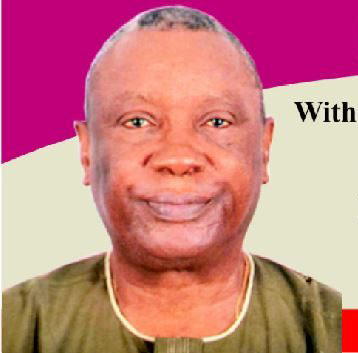
From last week, continues the narrative of how the Obasanjo regime hastily appointed Dr Ibrahim Ayagi to defend the presidency in the face of the crisis arising from the introduction of Shariá law in the North. Dr Ayagi was a former director of Continental Merchant Bank, formerly Chase Merchant Bank of Nigeria.
THE same government owned majority equity in the bank, and after, a lawsuit filed by Continental Merchant Bank against the Central Bank, he was relieved of his position.
He returned to Kano and was appointed Director of the Kano State Foundation. The foundation built two schools, and traded in farm supplies but his tenure ended in controversy due to a confrontational style in his dealing with the state government.
Dr. Ayagi took the challenge and defended President Obasanjo’s government. He appeared on television, radio, seminars and workshops. He held numerous press conferences.
In January 2003, he published a 14-page pamphlet, Obasanjo Has Not Marginalised The North.
Apart from Mallam Nuhu Ribadu, the National Security Adviser, Mr. Bayo Onanuga, Presidential spokesman and the Minister of Information and National Orientation, Mallam Mohammed Idris Malagi, we don’t hear of prominent voices defending the Bola Tinubu’s Presidency these days.
Shortly after his appointment, Dr. Ayagi was in the office of the Secretary of the Government of the Federation, to collect data on appointments made by President Obasanjo and other policy decisions. My immediate boss, Prince Dosu Oyelude, and all of us gave him the necessary assistance for which he expressed his gratitude.
Let’s go back to his 14-page pamphlet.
Dr Ayagi asserted in the phamplet: “these are days of ‘Politics’. Politics in Nigeria is the profession of politicians who earn their living and/ or who thrive on practising the art of the possible. The art of the possible is the skill to make people believe in the possibility of the possible. Many Nigerian politicians have that skill in ample supply.
These are days of “politicians” who profess their own feelings, beliefs and understandings as dogmatic and unquestionable truths and who go about castigating those who do not believe in those “truths” of theirs as enemies of their people and even as enemies of higher revered authorities.
These are days of the “politics” of resuscitation and the realignment of sentiments. The “politics” of resuscitating old conjectures and sentiments and using them to antagonise and to secure lost political glory and privileges.
The Nigerian nation is full of such politicians. They exist and thrive in all parts of the country. They say what they want to say whenever they want to say it. They talk about how bad the Nigerian economy has been; the “collapse” of the naira; how people have been suffering, with no employment and no income; how the rate of crimes has risen: armed robberies, communal, religious and ethnic/tribal clashes in all parts of the country; market fires, bomb blasts; and especially for the part of Nigeria where the writer lives, “the marginalisation of the North.”. All these ills and evils have been happening, according to them, because of the Federal Government—the government that came to power through a popular election in 1999 under the leadership of President Olusegun Obasanjo.
If these accusations have been properly analysed and found to be justified by unbiased and professionally competent minds, one could argue that the responsibility could be heaped on the Federal Government and its leader. That might be a legitimate leadership price to pay. The led have the privilege to blame their leaders for the wrongs of society.
However, the accusations have not been proved. Of course, the communal, religious, ethnic/tribal conflicts and large-scale killings and destruction of property took place in many parts of Nigeria during this period. But this is not the first time such atrocities took place in Nigeria.
Disregarding the periods of the military regimes (which can be explained away by those with the art or skill of the possible), one could trace, through sheer memory, the upheavals and calamities that took place between 1963 and January 1966 and between October 1979 and December 1983. None of the proponents of marginalisation could argue that those calamities took place because of the incumbent prime minister or president in the two periods respectively. And if they even dare to do so, they could not say it was because of the incumbent’s “betrayal” or “marginalisation” of a section of the country. These are new forms of accusation invented by members of the newly formed elite group of the Arewa Consultative Forum, ACF.
The most favoured and used words from the lips of many members of the elite group in the part of the country of the writer are: “The North”, “betrayal” and “marginalisation” mostly expressed in Hausa.
One hears these words virtually every day, especially from the Hausa section of the British Broadcasting Corporation, BBC, and the Voice of America, VOA, whose correspondents in Nigeria interview these politicians of “marginalization”, and what they tell them as if they were established truths. It is very common to hear from these broadcast organisations such things as: “To, ganin cewa mafi yawancin Yan Arewa suna ganin wannan Gwamnatin bata son su, ko bata yi musu kaza-da-kaza, ko ta yaudare su domin su suka zabe ta, amma ita kuma ta fi taimakawa ‘yan kabilar su da basu zabe su ba, yaya kaza da kaza?”
Meaning something like this: In view of the fact that most Northerners believe that this government is anti-North, or has betrayed the Northerners (who actually elected them) or has marginalised them, and so forth, what would you think about?”
Disclaimer
Comments expressed here do not reflect the opinions of Vanguard newspapers or any employee thereof.