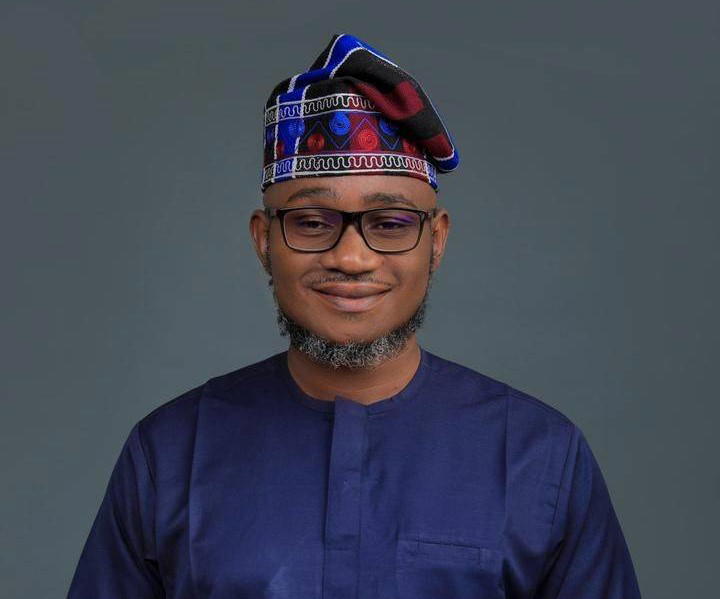
By Comrade Daniel Onjeh
Indeed, the call for a nationwide protest against the economic hardship facing the majority of Nigerians is explicable. Hunger is pervasive across the country, asphyxiating the poorest of the poor. This is occasioned by runaway inflation, with food prices rising daily. Nigerians from all walks of life can feel the pulse of the moment. However, while peaceful protest is an inalienable right of all citizens conferred by the constitution, we must tread this path with extreme caution.
First of all, it is clear that the planned 1st-10th August, 2024 protest tagged, “End Bad Governance”, is not a spontaneous one, unlike the Arab Spring Movement. Not every hungry Nigerian who joins the protest to ventilate his anger and frustrations can be referred to as a leader of the protest. The protest was conceived by either an individual or a group, which takes responsibility for mobilizing other individuals or/and groups to join. Therefore, it is imperative for the leaders of the protest to be unveiled, and for the goals and modalities of the protest to be clearly defined. An uncoordinated protest that lacks clear leadership has a high tendency of being hijacked my mischievous elements.
Basically, there are two kinds of protests; violent and nonviolent. From the verdict of history, only one type has yielded the desired results, which is nonviolent, in the form of passive civil disobedience as practiced by Mahatma Ghandi of India and reinforced by Martin Luther King (Jnr) during the Civil Rights Movement in the United States of America. All violent mass protests are usually catastrophic. They could plunge cities and/or nations into crises that they may never recover from.
A nonviolent protest usually has a clear-cut agenda and demand(s), and its intention is mainly to draw public or global attention to an issue or set of issues, with the view to seeking redress. The nonviolent protest approaches the negotiation table. It is only when it fails to gain the attention of the relevant authority that it returns to the trenches or the streets. But violent protests are generally without an honest agenda and articulated demands. They usually lack leadership, and if they ever make it to the negotiation table, which should be the intention of any peaceful protest, it would be after much casualty. I must state in all honesty that from all the feelers on the ground, the “End Bad Governance” protest, being lacking in clear leadership, has a strong tendency to be hijacked by infiltrators, miscreants, other persons with sinister intentions; or even by uncoordinated hungry and angry youths seeking an avenue to ventilate their angst.
Let’s not forget that there were negative predictions about the disintegration of Nigeria even before the 2007 General Elections. The fact that we have remained a viable, united corporate entity in spite of our diversity till date must leave the naysayers in awe. It is natural for them to want to see it come to pass. Our country has survived through religious, ethnic and political crises. But it is difficult for any nation to survive the hunger crisis. I’m afraid we are at the edge of already existing fault lines in the society; therefore, we must be very careful not to risk losing everything we’ve toiled for.
I am sure that the surviving patriots and nationalists that fought for the return to democracy in this country, even though they are aware of the current hardship, will never encourage a violent protest knowing its grave implications. We need to educate the younger generation, christened Gen Z. Many of them haven’t witnessed any serious crisis in the nation since they were born. They lack the slightest idea of what a large-scale religious, ethnic or political crisis is, and probably didn’t witness the era of military rule. They don’t understand how much freedom they’re enjoying now with their mobile phones and data. The propellers of this protest should be mindful of this fact.
And because the new generation hasn’t witnessed violence on a large scale, they may go to the extreme without knowing the consequences. So we must guide them, and inform them that in the event of a breakdown of law and order, there’ll be no more schools for our children to attend. No more hospitals to cater for the sick. No more security, because a mass movement is likely to overwhelm the security apparatus. We are already inundated with enough security challenges in the country. Usually terrorists and bandits capitalize on the fault lines in our society to penetrate us. A protest like the impending one will give room to terrorists, bandits and other criminal elements to infiltrate the system because we would have weakened our already overstretched security. I’m cautioning youths all over the country, because some of the persons instigating the protest already have their immediate family members safely tucked away abroad, and if anything goes wrong, they can equally afford to fly their private jets to reunite with their families.
Lest I be misunderstood, it is instructive to state that I’m a veteran human rights and development activist. A glean at my antecedents will reveal that I’d been in the vanguard of the fight for the rights of the oppressed and downtrodden in Nigeria for more than two decades. I’m a product of struggle and protest, and I wholeheartedly believe in them as veritable instruments for achieving societal change. In 2002, I was at the fore of the anti-fuel hike protest organized by the Nigeria Labour Congress (NLC), during Com. Adams Oshiomhole’s tenure as President of the congress. The Federal Government deployed its might to frustrate the protest. Most workers couldn’t turn out because the government had issued a stern warning to them, and even threatened, “No work, no pay”. But it took the timely intervention of Nigerian students under my leadership to salvage the situation.
As President of the National Association of Nigerian Students (NANS) then, I led students to the trenches and reinforced the confidence of the NLC leadership. The security forces came hard on us, but we stood our grounds and forced the Federal Government to the dialogue table. I also led several protests for reforms in the Nigerian educational sector. Therefore, I’m adept at wielding protest as a tool to agitate for a noble cause, or to confront the authorities to do the needful. That said, I humbly urge all those who have resolved to participate in the protest to define what they hope to achieve from it. And their demands must be legitimate, realistic and attainable.
We must all remember that the removal of petroleum subsidy is a policy the presidential candidates of the three major political parties in the last general elections were committed to pursuing. Therefore, had the PDP or LP won the elections, and remained faithful to their manifestos, their administrations would have towed the same thorny path that President Tinubu is towing now. This painful but inevitable open-heart surgery being conducted on our economy is a necessary evil. It is a measure any sane leader must take to save our economy from total collapse. If the primary drivers of the protest are unveiled, and the general public sees that they are sincere, the people may queue up behind them. I may even consider joining a peaceful protest against poverty and hunger or advancing the genuine interests of the masses because the hardship is biting severely in my community.
It is instructive to note that as soon the President and Commander-in-Chief are duly elected, all citizens ought to eschew bitterness and avail him of their honest support to succeed, regardless of political party affiliations. But if we are desperate for a change of leadership, there are only two ways to go about it. It’s either through the National Assembly by way of impeachment, or we wait patiently for the next election to cast our ballots. If a change of leadership is not what the protest seeks to achieve, it may be assumed to be well-intentioned. But having gained the attention of the relevant authorities, as well as the local and international community, all the protesters need to do henceforth is to put forward their demands, so that government can consider them.
In any case, an attempt to be hoodwinked into contemplating a violent change of leadership is an open invitation to anarchy. It is a subversive activity, and the Federal Government will surely respond to secure the nation. In the process, there is bound to be friction between the protesters and the security agencies. Where our right to protest begins to infringe on the rights of other people by way of looting, harassment or mayhem by hungry protesters, the President is duty bound to intervene. The situation could snowball into a conflagration, and by the time that happens, the enlightened citizens that are having fun while fueling the protest on social media may realize it’s too late for them to reverse what they have caused.
The angry mob may seem to be coming for the political class and the elites only, and others may be clapping for them. But when they have chased out the political class and the elites, they’ll come after the middle class. When they are done with the middle class, they’ll turn on anyone and themselves. The situation may degenerate into full anarchy, where survival will be for the fittest. That’s why I fear for the nation, in consideration of our explosive population and current economic and social realities.
As President of the West Africa Students’ Union (WASU) in 2005-2006, I witnessed firsthand the devastation in some African communities and nations shortly after violent upheavals, including Liberia and Ivory Coast. Many nations that have been engulfed in violence are still struggling to recover several years later. We may even end up worse after the protest, and set the wheels of our national progress in the reverse gear. Against this backdrop, if there must be a protest, I urge the protesters to ensure that it is peaceful. Whenever a violent protest is embarked upon, anything achieved from it can best be described as a Pyrrhic victory, because we would have lost friends, family members and associates in the process. That’s not what we need at the moment. What we need is a win-win situation.
Therefore, those who have resolved to come out and protest on 1st August 2024, must clearly define their objectives and set out their goals. It is puerile to jump onto the bandwagon of the cries for protest, and spill onto the streets to shout “End Bad Governance”, without having a clear vision of what they hope to achieve by their actions. Because like many other Nigerians, I see the protest as an act couched with good intentions, but invested in the wrong target.
The proposed mass action seems to be targeted at the Federal Government, in essence, President Tinubu. There is no wisdom or fairness in pillorying a man who, against all odds, approached the Supreme Court to secure a historical judgment which returned democratic power to the local government administrations, hence governance to the people at the grassroots. A president who does this cannot be an enemy of the masses. In my opinion, it is a germane national quest such as the actualization of local government autonomy that I expected all Nigerians to take to the streets in protest for. But one man, President Tinubu, has saved us all that trouble against the general interest of the state governors.
In addition to the statutory FACC Allocations to state governments, which has increased by over 23% since the fuel subsidy regime was removed by the Tinubu Administration; the Federal Government releases huge sums of money and other palliatives to the state governors to ameliorate the sufferings of the people. Unfortunately, most of these monies and palliatives are diverted to other causes by some state governments. The protesters actually ought to be holding their state governments to account on fiscal responsibility, the full implementation of local government autonomy and sundry issues. That’s where the general public is being mostly shortchanged. That’s why we have poor primary healthcare systems, inadequate agricultural systems and dysfunctional educational systems.
With local government autonomy, the third tier of government will be capable of making significant contributions to addressing these issues, as well as providing scholarships for indigent students and tackling the all-important issue of security logistics in their respective domains. The protesters may equally suggest better ways out of our foreign exchange quagmire, so that their demands can come to the table for government action. That, in my view, is progressivism and patriotism.
Good governance isn’t about doling out money to citizens, but about initiating policies that stimulate institutional changes, and that is what President Tinubu is doing. It is through policies that nations advance. President Tinubu has tackled the fuel subsidy cabal, where only few people were milking the nation. The fuel subsidy regime was a monumental scam by a few, against the interest of the majority of citizens. And it has now stopped, thanks to the audacious policy initiative of President Tinubu.
I humbly urge all Nigerians to give a little more time for the implementation of the new institutional changes under the “Renewed Hope Agenda”. The Federal Government is moving expeditiously to have the Local Government Independent Electoral Commission, so that our local governments can have full administrative autonomy alongside the financial autonomy already secured. That way, there’ll be governance domiciled with the people at the grassroots, and they can determine their priorities and set out to achieve them.
We must equally bear in mind that the biting hunger due to the rising prices of foodstuffs in the country is largely attributed to smallholder farmers being unable to access their farms as a result of insecurity, and likely worsened by the greed of the middlemen in the agriculture value chain. It’s not just about the fuel subsidy removal. There is shortage of food supply in the country, and from rudimentary economics, when demand for a product or service exceeds supply, there is bound to be commensurate increase in its price. In fact, despite the removal of fuel subsidy, the price of fuel in Nigeria is still amongst the cheapest in Africa. The average price of fuel per litre globally is currently N2,170.8.
According to recent figures posted by Statista, a reliable online data platform, Nigeria was ranked 5th amongst 41 African countries in terms of the least price per litre of fuel. Aside from Libya, which has one of least fuel prices in the world of N48.6/litre, other oil producing countries have fuel prices which are not markedly different from what obtains in Nigeria. As at February 2024, Algeria had the second cheapest oil price in Africa of N550.8/litre, followed by Angola with N583.2/litre, and Egypt with 664.2/litre. Nigeria was fifth in the ranking, with N680 /litre.
Amongst our neighbouring countries: Benin Republic, Niger, Guinea, Chad and Cameroon, Nigeria has the cheapest price of fuel, the reason many greedy oil marketers divert their products to sell in those countries, thereby compounding the challenge of fuel scarcity in Nigeria. Fuel price in Benin Republic is N1,830/Litre; Cameroon (N2,251/litre); Guinea (N2,268/litre); Chad (N1,372.14 /litre) and Niger (N1,581.12/litre). In Ghana, which is equally an oil producing nation, fuel price is N1,668.6/litre. In Sudan, another oil-producing African country, fuel price is pegged at 1,134/litre. Central African Republic has the highest fuel price of in Africa, of N2,948.4/litre.
The preceding analysis shows that the current hardship and food crisis in Nigeria is not only caused by the increase in fuel price. There is the issue of heightened insecurity, which has discouraged many smallholder farmers from producing optimally, and the fact that previous administrations have paid little more than lip-service commitment to economic diversification.
Furthermore, we must not lose sight of the fact that there are nations that are exploitative by nature. Amid a national crisis, these exploitative nations will swoop down on us, capitalize on our division and fret away our natural resources. Any by the time they begin to plunder our natural resources, they’ll not want the crisis to end. They’ll continue to fuel it. Since our airspace will be porous, all kinds of arms and ammunition could be brought in. We’ll all be locked in. I’m scribbling this long thesis and describing these gloomy scenarios so that all Nigerians will be mindful. I consider this an act of patriotism for history, humanity and God Almighty.
Those who are committed to protesting should suggest the ways that fuel subsidy removal ought to have been implemented. They should take their suggestion to the president for consideration. Who knows, he may consider reversing the policy of fuel subsidy removal, or implementing their suggestions if it is not too late. This is progressivism. It is more effective than flooding the streets and shouting, “End Bad Governance!”
We have come a very long way as a nation. What we need to do right now is to consolidate the gains of our democracy and socioeconomic development. And I believe we can do it. The president has fought so many battles since his assumption to office. But the rot in the system cannot be cleared in a day or a single term in the Presidency. President Tinubu has fought the fuel subsidy cabal. He has also fought state governors over LGA financial autonomy. It is strategic for him to avoid needless battles at the moment, especially against the masses that he is fighting for. Judging from President Tinubu’s policy direction thus far, it is clear that his administration is pro-people. Just a few days ago, a new National Minimum Wage of N70,000 was announced, against the previous paltry sum of N30,000.
For many of us, our families and loved ones reside in this nation. It is a known fact that if Nigeria is plunged into widespread violent crisis, the displacement of its huge population would destabilize the entire West Africa sub-region. A nationwide breakdown of law and order, the type the proposed protest has the potential of causing, would have a serious negative impact on the well-being and livelihood of all Nigerians. The hunger in the land could push people over the edge, and as the saying goes, “A hungry man is an angry man.” There is no length a hungry man cannot go to vent his anger. Hence, the dire need to tread with utmost caution.
Comrade Daniel Onjeh (B.Sc. Political Science & Economics), former Chairman, Governing Board of the Projects Development Institute (PRODA), Enugu; is also a former President of the National Association of Nigerian Students (NANS) and the West African Students Union (WASU). He is currently a socio-economic and political analyst.
Disclaimer
Comments expressed here do not reflect the opinions of Vanguard newspapers or any employee thereof.