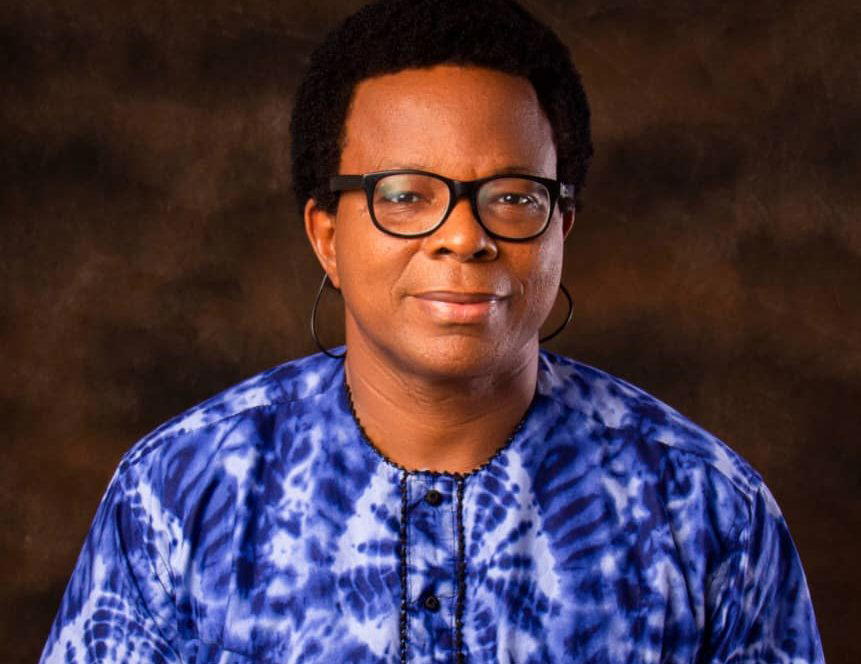
Ugoji Egbujo
One year has passed. The bold economic reforms Tinubu started have faltered. On day one, he had removed petrol subsidies with a pumped fist. But one year after sounding revolutionary at oath-taking, his government now pays petrol subsidies through the backdoor. And because nobody bothers with transparency, Tinubu hasn’t informed the public how much he now spends on petrol subsidies. Policy reversals have become a permanent feature of his government. Critics say the president does more soundbites than thorough planning and has been too arrogant to admit his mistakes. The opposition says the myth is unravelling itself. Tinubu’s ardent supporters believe he is an oracle. They think he only needs time to tame the tempest.
When Tinubu floated the naira, investors were delighted. It was supposed to open up the economy to foreign capital and investment. Tinubu said he had taken the bulls by the horns. But soon, the local currency tumbled off a cliff. The CBN seemed helpless. It said the naira was seeking its true value. Soon, speculators were made the scapegoats. Apparently, the new government hadn’t looked at the books before going for the bulls. Without a critical appraisal of dollar liabilities and liquidity, Tinubu embraced an option he didn’t have the resources to prosecute efficiently. After running helter-skelter and dashing to the Middle East, pan in hand and returning almost empty-handed, Tinubu must have realised he wasn’t a magician after all. But a man who perpetually brags about his accomplishments and taunts his opponents is unlikely to be in a hurry to manage expectations. Millions have been left disappointed.
The failure to stabilise the naira has imposed ruthless hardship on the masses and a scorching fever on the economy. When food protests began, the government said it was the handiwork of its enemies. Propaganda might hoodwink, but it can’t fill stomachs. So, after some conspiracy theorising, the FG read the handwriting on the wall and opened its wallets and pantry to do some firefighting. Though the government inherited warts, haphazardness and thoughtlessness have been its greatest undoing. On the one hand, it has tried to remove subsidies and impose high interest rates to raise revenues and curb inflation. On the other hand, it has subsidised religious pilgrimage wantonly and engaged in carefree cash handouts. It hasn’t espoused cost-cutting. It hasn’t lived frugally. This reign of confused policies and attitudinal ambivalence has helped neither investor nor public confidence. Critics say Tinubu has a penchant for simplistic reduction of complex matters. His fans say he is the financial engineer who built Lagos and tamed the Atlantic.
By the time Tinubu formed his government, some of his most stubborn supporters realised it wasn’t precisely the Tinubu of the early 2000s. Cronies were rewarded. Political hustlers who did dirty jobs during the elections were appointed to high offices. Tinubu no longer cared about professional competence or moral appeal. Some said he actualised Awalokan, the mother of Emilokan. Others said it was more narrow-minded because it was all about Lagos. Brazenly and contradicting his prior nationalistic bent, he reserved the most critical offices for people from his section of the country. That, he called meritocracy. Some said he had taken his eyes off posterity to service his political dynasty. Others said, “We warned you.”
Tinubu, the first politician to occupy the office of president in the fourth republic, showed shocking tunnel vision in his appointments. A man who once had an uncontested reputation for inclusion is now being compared with other champions of tribalism. But it wasn’t just ethnicism or sectionalism. The talent hunter appointed redundant former governors, some of whom the electorate had rejected at the polls for bad governance, many of whom were wanted by the EFCC for corruption. Those who thought the president had seen it all in politics and would dedicate the rest of his life to building a virile nation and enviable institutions witnessed startling, short-sighted, self-serving political gamesmanship instead of statesmanship and knew right away that hopes had perhaps been deferred.
The vetting process lasted months, but some of the ministerial nominees were dropped off the screening list at the door of the venue of the confirmation hearings. Five months after a minister was handed over to the EFCC for alleged misuse of funds earmarked for the vulnerable, she is yet to be prosecuted or exonerated. The former EFCC chairman was arrested and detained for four whole months. The public hasn’t been informed whether he was found culpable or not and why he was held for so long. The talent hunter has shown early signs of unpreparedness, abject lack of thoroughness, and a knack for arbitrariness.
One of the benefits a politically savvy Tinubu was supposed to bring was national unity. Buhari had a disdain for party politics and political compromises. Tinubu was the dyed-in-the-wool politician who should wheel and deal without flinching. An astute politician ought to know that gracefulness in victory would douse many flames. Tinubu won about 8.8 million votes from 90 million registered voters. With barely over 36%of votes cast at the elections and losing in the two largest towns and two-thirds of states, Tinubu should have known that his mandate, which his rivals deemed dubious, may be constitutionally sufficient but is politically tenuous.
Tinubu should have prioritised political rapprochement. Gestures at genuine reconciliation. Not through moles seeking to damage opposition parties but by extending a hand of fellowship to the opposition parties and ethnic groups. Nation-building requires more than gloating. Rather than take a tour of the country to search for peace and unity, Tinubu has often spoken like a conceited kickboxer, taunting the opposition, lionising himself, and perpetually condescending to his critics. After elections, governance should take priority over adversarial politics. If the winner of a presidential election isn’t disposed to wooing the opposition, he should attempt to mobilise the citizenry. He should paint a new vision.
Tinubu inherited a mess, but he was the leader of the party that created a portion of the mess. It’s worrisome that he often deflects blame and yet has done little to institute transformational leadership. In a sick and sodden nation, he never preaches moral rebirth. His body language announces that ‘it’s business as usual’. Impunity has continued to reign. A former governor, his political ally, has defied arrest by the Anti-corruption police. Tinubu probably thinks it’s not his business. An undercover journalist exposed rot in the Customs and named an industrial-scale smuggler. No investigation was initiated despite tons of evidence. The president probably thinks it’s not his job. Perhaps he lacks the personal attributes to lead a revolution.
The president ought to be conscious of the picture his opponents paint of him. If they portray him as stupendously wealthy by cornering revenues of a state and land grabbing, then during his tenure as president, he must seek to avoid anything that reeks of conflict of interest in government business. During his presidency, he must seek to stamp out corruption and impunity. As president, he can’t afford to promote politicians whom the EFCC has fingered for corruption. If the president chooses not to be bothered about optics and moral appeal, then let him show the fruits of expediency. Real change agents lead by personal examples. If a president can’t lead a transformation, then let him steady the ship till a change agent arrives. A hypocrite will be quick to recommend sacrifices for the poor but can’t redirect this government away from profligacy and routine indolence. A president who makes Ganduje the chairman of his party only pays lip service to nation-building.
The beleaguered president is marking his first anniversary by resurrecting a 64-year-old long-discarded national anthem bequeathed to the nation by a British housewife. But while the president chases shadows, it’s important for the public to focus its attention on critical matters. The public must play the watchdog because the Opposition is hopelessly disorganised.
ELECTIONS AND ELECTORAL DISPUTES
Only about 25 % of registered voters cast their votes in the last presidential elections. The youth are vulnerable to election apathy. To sustain their interest in politics, elections must be credible. The last elections showed that the politicians and electoral bodies are not sufficiently desirous of free and fair elections. All the gains expected by the introduction of electronic accreditation and prompt transfer of result sheets to a public viewing portal were undermined by thuggery, which was often police-assisted, knavish electoral staff who altered and substituted result sheets, vote buying and other electoral malpractices.
The judiciary didn’t help matters. The INEC flagrantly ignored court orders and suffered no consequences. The judiciary interpreted the law restrictively and made electoral fraud almost impossible to prove.
As it stands, elections in the country are doomed without new legislation. If election disputes aren’t concluded before presumptive winners are sworn in and given access to the treasury and coercive forces of state, then the odds will continue to favour and encourage the win-at-all-costs mentality.
President Tinubu has a duty to conduct an honest review of the challenges that marred the last elections and start early electoral reforms to save democracy in the country.
NATIONAL UNITY
Tinubu inherited a divided country. The president knew that Muslim Muslim ticket aside, the barbed rhetorics of the election campaigns, disputed results, and judicial process pushed the country to the precipice. The president ought to know that as president, it’s his duty to find the balms to heal the country. The president should understand that without unity and harmony, he cannot mobilise the citizenry to redirect the sinking fortunes of the great country. The president should devise a strategy to court his opponents and their followers. Not to pull them into his party but to make them feel he cares for them and will protect them. The president must stoop to conquer disenchantment and unify the country. A cross-country tour of the regions to interact with the opposition, business, traditional and religious leaders, ethnic nationalities, and aggrieved groups will heal many wounds.
SECURITY
One of the difficulties the president inherited is rampaging pan-country insecurity. Many who voted for the president believed he would overhaul the national security architecture. Tinubu had watched Buhari and concluded the security agencies needed millions of youths. But after one full year on the saddle, insecurity has continued to ravage the country and President Tinubu’s response has lacked imagination, vigour and urgency.
A few days ago, 170 people were abducted from their homes in Munya, Niger State. Mangu in Plateau state is now a killing field. Katsina, Zamfara, Sokoto and Kaduna have all been besieged by blood-sucking and ransome-seeking bandits. The Northeast and Southeast are still volatile. During the campaigns, the president had said he wouldn’t disclose his security strategy. The president must start with police reforms. The president must find a sense of urgency. Violent crimes have become lucrative. The state and insurgents are effectively sharing sovereignty. That isn’t sustainable.
State or regional policing, despite all expressed doubts about potential abuse, must be embraced. Infused in such decentralisation must be the practice of community policing. So that communities can decide policing priorities and hold the local police accountable.
The chief of army staff recently reminded the country to pursue non kinetic approaches to solve security problems. The president must empower political taskforces in the six regions to find homegrown solutions to local security problem. But beyond that the president must appraise, promote and fire, service chiefs and commanders strictly by their ability to contain insecurity in their areas of responsibility.
POWER GENERATION AND DISTRIBUTION
As governor, the Tinubu had pioneered independent power generation. However untidy that project turned out, it was some evidence of innovation. Tinubu, who prepared himself for the role of president, should have a ready and comprehensive power plan. One year on, nothing creative has happened besides a continuation of the slow, diffident devolution of authority to the subnational started by Buhari. One year might be too early to judge the president, but Tinubu, who used to mock the PDP for having wasted 16 years and leaving Nigeria in darkness should know his party has blown nine years and hasn’t been better despite the gift of hindsight. The Siemens plan initiated by Buhari has suffered major delays. It can’t be the only plan. If we desire industrial transformation, our plan must be ambitious and multipronged. Tinubu must start a new power road map where Siemens will only be a small part of the show. Without a marked improvement in power generation and distribution, the national economy cannot experience any significant growth.
ECONOMY
The data is damning. Nigeria’s GDP per capita is now lower than that of Ghana. Food inflation is at a 28-year high. A basket of Tomatoes sells for N150,000. Lending rates are prohibitive at over 30%. Productive capacity has depreciated. At naira-dollar exchange of about N1500, the middle class has been effectively wiped out. One year after, crude oil theft is still rampant. The government is more focused on taxation than conservation and stoppage of leakages. Despite early posturing to the contrary, the government still subsidises consumption more than production, religion more food production and processing. Only a holistic and purposeful approach to ramp up productive capacity can revamp the economy.
SILVER LININGS
The president has sorted out the passport issuance mess. The president has started a student loan programme that will begin with about 1.2 million students. This is laudable, though the initial proposed figures are meagre. It is hoped that the programme will be well funded. Our Forex backlog has been cleared. The president has suspended the dubious Nigeria Air Project. Dangote refinery will soon begin full production. The military has made substantial gains in the Northeast, but only a political solution can guarantee sustainable peace.
CONCLUSION
Prof Soyinka said it was too early to judge the president. Our people say from the smell of the fart, the dog can predict the taste of the faeces. The masses are hungry. A poll said over 75% thought the president’s first-year performance was abysmal. The youths are jobless and disillusioned. The president’s “Business as usual mode” is treacherous. The country needs transformational leadership. Jonathan seemed weak and permissive of corruption. The people thought that an idealistic Buhari would stem corruption and restore discipline. But Buhari couldn’t transmit intentions into practical good governance, and insecurity and corruption flourished under his nose. Tinubu, the pragmatist, has come. The country needs a paradigm shift in work ethics, productive capacity, moral bearing and political culture. A national rebirth. But Tinubu is yet to present a vision let alone a roadmap. President Tinubu has time, but can he find the courage to prioritise leadership over politics and country over self before the country implodes?
My president, I hail thee.
Disclaimer
Comments expressed here do not reflect the opinions of Vanguard newspapers or any employee thereof.