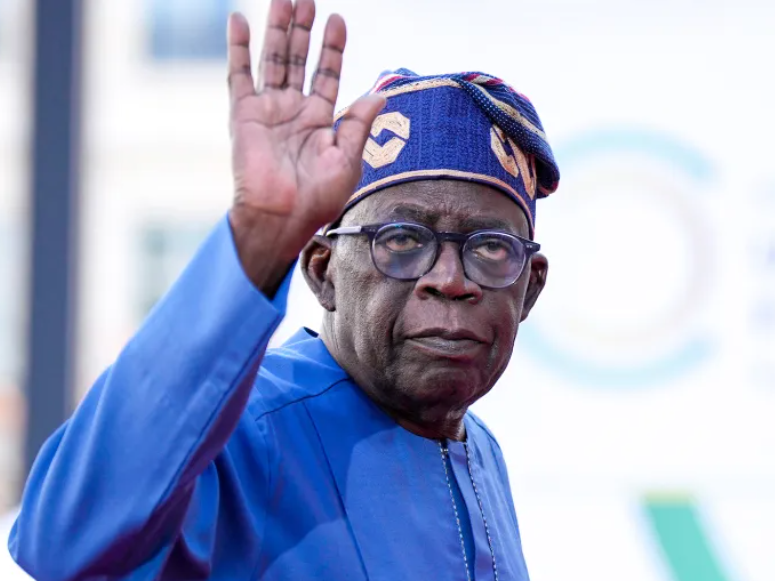
President Bola Tinubu
•Critical issues of struggle not fully achieved – Okunniyi
•No resolution until SDP gets power – Adebayo
•Nigeria has become a failed state – Unagha
•Our country has moved further away from June 12 – NADECO USA
•Why June 12 remains unachievable – Ameh
•President understands Nigeria’s problems, addressing issues – Presidential aide Rahman
By Clifford Ndujihe, Politics Editor
The 2024 Democracy Day celebration billed for Wednesday, June 12, will be historic and expected to be markedly different from past occasions.
Why?
It is the second Democracy Day that President Bola Tinubu will be marking since he assumed power on May 29, 2023.
It is also the 31st anniversary of the annulled June 12, 1993 presidential poll won by the late business mogul and politician, Chief MKO Abiola.
Last week, Tinubu, the first June 12 activist to become Nigeria’s leader, declined a national broadcast on May 29, saying he would do so on June 12.
May 29 used to be Democracy Day until immediate past President Muhammadu Buhari effected a change in 2018 declaring June 12 as the new Democracy Day in honour of Abiola.
Last year, while marking Democracy Day, Tinubu, who was barely two weeks in office, said the fierce opposition to the annulment of the June 12, 1993 presidential election and the unrelenting pro-democracy onslaught it unleashed was the equivalent of the battle against colonial rule by our founding fathers that resulted in the gaining of Nigeria’s independence in 1960.
He stated: “The democracy that will yield the right dividends to the people who are the shareholders means more than just freedom of choice and the right to get people into elective offices. It means social and economic justice for our people,” a reason he said MKO Abiola believed that democracy offered the best chance to fight and eliminate poverty.
In 1993, according to him, Abiola “christened his campaign manifesto, ‘Farewell to Poverty’ because he was convinced that there was nothing divine about poverty. It is a man-made problem that can be eliminated with thought out social and economic policies.”
The president continued: “It is for this reason that, in my inauguration address on May 29 (2023), I gave effect to the decision taken by my predecessor-in-office to remove the fuel subsidy albatross and free up for collective use the much-needed resources, which had hitherto been pocketed by a few rich.
“I admit that the decision will impose an extra burden on the masses of our people. I feel your pain.
This is one decision we must bear to save our country from going under and take our resources away from the stranglehold of a few unpatriotic elements.
“Painfully, I have asked you, my compatriots, to sacrifice a little more for the survival of our country. “For your trust and belief in us, I assure you that your sacrifice shall not be in vain.
“The government I lead will repay you through massive investment in transportation infrastructure, education, regular power supply, healthcare and other public utilities that will improve the quality of lives.
“The democracy MKO Abiola died for is one that promotes the welfare of the people over the personal interests of the ruling class and one where the governed can find personal fulfilment and happiness. That is the hope MKO Abiola ignited throughout our country in 1993.”
What has changed?
Indeed, the June 12, 1993 election shares some similarities with the 2023 poll.
While Abiola campaigned with ‘Hope’ and ‘Farewell to poverty’ manifesto, Tinubu campaigned with ‘Renewed Hope Agenda.’
Abiola, a Yoruba from South-West flew a Muslim-Muslim ticket with a northern running mate.
Tinubu also hails from South-West and is a Muslim, and had a Muslim running mate from the North.
Abiola polled 8.3 million votes in the 1993 election; Tinubu also scored a similar figure – 8.79million votes in 2023.
Their margins of victory were not strikingly different. While Abiola beat his opponent, Bashir Tofa, who polled 5.95 million votes, with 2.389 million votes; Tinubu beat Alhaji Atiku Abubakar, who got 6.98 million votes with a margin of 1.81 million votes.
A year after Tinubu’s first Democracy Day speech, has there been any positive change in social and economic justice for Nigerians?
Are the pains that Nigerians are bearing saving the country from going under and taking our resources away from the stranglehold of a few unpatriotic elements?
Are the governed finding personal fulfilment and happiness?
Is the government repaying the sacrifice of Nigerians through massive investment in transportation infrastructure, education, regular power supply, healthcare and other public utilities that will improve their quality of life? Has the cause of democracy and Renewed Hope been served? Have the June 12 issues been fully resolved now that a key actor in the June 12 episode is the President? Have Nigerians learned from June 12, and building on the gains?
Critical issues of June 12 not fully achieved – Okunniyi
Speaking on the issues in a chat with Sunday Vanguard, General Secretary, The Patriots, Comrade Olawale Okunniyi, a visible actor in the June 12 struggle, said: “The critical issues central to the June 12 struggle have not been fully achieved. “Though we achieved the reversal to civil rule and civilian administration in 1999, we are yet to achieve democracy and real popular democratic government as civil rule was hurriedly decreed into existence by the military under the leadership of Gen Abdulsalami Abubakar without a democratic people’s constitution which ought to be the foundation and basis for every democracy and democratic governance.
“Nigerians expect that given Tinubu’s involvement in the National Democratic Coalition, NADECO, struggle for the restoration of democracy based on convocation of Sovereign National Conference, SNC, he was indeed genuinely committed to the NADECO struggle not for personal interest of building private dynasty and empire in power, it should not be difficult for his regime to convene a People’s National Conference or Constituent Assembly of Nigeria to facilitate and actualise a democratic people’s constitution for Nigeria in its first term so that democracy can be fully restored in Nigeria from the current self-serving opportunistic civil rule of a few elites aided by the military to take power in 1999.”
No June 12 resolution until SDP gets power – Adebayo
To Prince Adewole Adebayo, the 2023 presidential candidate of the Social Democratic Party, SDP, many June 12 issues remain unresolved and will only be resolved when the SDP, the platform Abiola used to contest in 1993, gets to power.
Asked if June 12 had been resolved with the emergence of Tinubu as president, Adewole said: “No. June 12 has many unresolved aspects. Tinubu is also not governing like Abiola would. There is no resolution of June 12 until, among other things, SDP has come to power and governance to eradicate poverty and insecurity has been instituted all over Nigeria.”
Nigeria has become a failed state – Unagha
Former presidential aspirant and June 12 activist, Chief Mumakhai Unagha, said the issues of the June 12 struggle have not been fully addressed.
However, he said he is glad that June 12 has been formally and officially recognized as a public holiday. His words: “Some of us who risked our lives in the struggle are happier as our efforts are not completely in vain even though the expectation of Nigerians is not met yet.
“There is no doubt, we would have moved from the present condition we find ourselves; we have no true leaders. We got it wrong when Obasanjo came in. “The situation became worse when Buhari took the mantle of leadership.
“Buhari, who was not an apostle of June 12 but was manipulated by the Northern Oligarchy, introduced a dangerous precedent.
“I raised the alarm that Nigeria was sinking under Buhari’s administration and that we needed a change.
“Some APC chieftains demanded my head for sacrifice and called me unprintable names.
“I told Nigerians that Buhari’s government would be worse than the Shagari government.
“I was vindicated when his own party chieftains turned round condemning him.
“Today, hunger, sorrow and tears are ravaging the average Nigerian.
“It has dawned on me to say that we have no true leaders.
“The common Nigerian cannot have two meals a day.
“Frustration and starvation have thrown the people overboard as marriages are broken daily. Parents can’t afford their children’s school fees.
“Presently, the Buhari government seems to be better than the current government of Tinubu.
“The democracy we fought for is crying for help. This is because Nigeria is already a failed state.
“Most of my colleagues in the corridor of the Villa were apostles of June 12, which made me to believe that they fought a tribal and regional agenda unknown to some of us.
“Nigeria is already a failed state and, therefore, we must go back to the drawing board. Tinubu is a man I owe much respect to but I’m wondering about the turn of events in his government.”
Nigeria has moved further away from June 12 – NADECO USA
On his part, Mr lloyd Ukwu, the Chairman of the United States Chapter of NADECO, said the issues of June 12 had not been resolved in spite of a June 12 activist being in the saddle.
Asked if the June 12 issues have been fully resolved now that a key actor in the June 12 episode is the President, Ukwu said: “Not at all, the June 12 issues have not been resolved.
“On the contrary, Nigeria has moved further away from the fulfilment of the June 12 ideals, goals, and aspirations.
“It is one of the biggest ironies in the political history of Nigeria that one of the supposedly big drivers of June 12 is not only responsible for literally killing the movement but now wants to bury it once and for all. “However, that will be impossible. As long as NADECO lives, the June 12 movement shall continue forever.
“NADECO could be analogized to the traditional male child who takes over the affairs of the family when the father is incapacitated.”
On how Nigerians are building on the gains of June 12, he said: “Mr. Tinubu methodically tried to wipe out all the gains through the actions of himself and his co-actors in 2023.
“In fact, one could say that MKO Abiola was turning in his grave when he found out that one of his supposed proteges was now responsible for destroying that which he sacrificed his life for.
“The 2023 election was a divine renewal handwriting on the wall that in exactly 30 years, from 1993 to 2023, God has codedly renewed the June 12 movement.
“Just look at the similarities of the two events beginning with the Moslem-Moslem ticket and the fact that we are having this debate exactly 30 years from June 12.
“The good news is that the actualization of June 12 is certain and near.
“Therefore, Nigerians must continue to resist the state capture by this administration.
“State capture is anti-June 12. That was not what MKO Abiola died for. God, in his infinite wisdom, has renewed the June 12 struggle through the savages of the 2023 elections and Nigerians must take advantage of this new opportunity to hand a posthumous birthday gift to Chief MKO Abiola as we celebrate him this June 12 by taking back Nigeria from the cabal.”
Why June 12 remains unachievable – Ameh
Also speaking, National Secretary of the Coalition of United Political Parties, CUPP, Chief Peter Ameh, said: “June 12 has become a concept that has remained unachievable in Nigeria.
“It was variously described as a watershed in Nigeria’s elections.
“It was considered to be the fairest and freest election, and despite its being the freest and fairest election, the presumed winner was never allowed to assume office, perhaps because of where he came from.
“What lessons has Nigeria as a nation learned from the impasse generated as a result of the annulment of June 12 elections, which brought the country to the precipice?
“In my opinion, no lessons have been learned. The electoral processes have become increasingly worse.
“Electoral manipulation and attendant violence have become the norm rather than the exception.
“A cursory look at the history of elections since 1999 shows that each election cycle has become increasingly worse than the preceding one.
“What may seem to be the only free election since the return of democracy was the zero-party local government election of 1998.
“The 1999 general election was as free as the military wanted it to be.
“The successive 2003 and 2007 general elections were a sham where results were announced while voting was still ongoing.
“The acclaimed 2015 general election was fraught with irregularities, even though it went uncontested by then-sitting President Goodluck Jonathan.
“An example of irregularity was the case of Kano State, which is a largely illiterate society.
“In 2015, Kano State returned close to two million votes without any void vote.
“The 2019 and 2023 general elections were more of electoral heists than elections, notwithstanding the seemingly beautifully looking amendments to the Electoral Acts of 2011 and 2022.
“In the area of nationhood, which the June 12, 1993 election nearly cured its absence in Nigeria, Nigeria has taken 20 steps backwards.
“In the area of uniting Nigeria as a nation, June 12 almost acted as a catalyst for eliminating religion, tribe and tongue as some of the most dangerous evils bedevilling our country and the quick resolution of nationhood. Votes were not cast based on religion, tribe and tongue
“The presumed winner won in all the areas that were considered hostile to his tribe and tongue, but with the annulment of that election and the later introduction of tribe and religion as avenues for victory in national elections, the cleavages that we once papered have now turned into gulfs.
“Votes are now cast based on who is related to us ethnically and religiously. Merit does not count anymore.
“Merit and unity were what June 12 represented. We have discarded them on the altar of ethnicity and religion.
“Our fault lines have widened so much that we may be swallowed by them if we do not do the needful.”
Tinubu understands Nigeria’s problems, addressing issues – Rahman
However, Mr. Tunde Rahman, Senior Special Assistant, SSA, to the President on Media Matters, said to a large extent, that the issues of June 12 had been resolved.
He added that Tinubu has demonstrated that he understands the nation’s problems and is offering the right solutions, and resetting the economy.
His words: “The 31st anniversary of June 12 offers us another opportunity to reflect on how far we have travelled on our democracy journey.
“The issues thrown up in the June 12 election annulment episode are about justice and ensuring that the will of the people is respected.
”It would be recalled that the agitation for the de-annulment of that election forced the military out of office and eventually led to the re-emergence of representative democracy in the land in 1999.
“Since then, we have been having elections every four years, involving a change of guards. We have produced five presidents including the present President Tinubu.
“Our democracy has been running unbroken for 25 years now. So I believe to some extent that the June 12 issues have been resolved.
Ingredients of democracy
“Yes democracy is not about election alone. There are other ingredients of democracy like rule of law, independence of the judiciary and the legislature, free press, etc.
“I believe that taking everything together, we have made progress.
“We are recording incremental improvements and fine-tuning our governance systems and processes along the way.
“Don’t forget, democracy is a journey, not a destination.
“As we go along, mistakes will be made and corrected. And indeed, mistakes are being made and corrected.
“Our laws are being reworked to accommodate the loopholes and lacuna that are being discovered along the way.
Tinubu understands Nigeria’s problems
“Yes, we have a key actor in the June 12 episode in the saddle in the person of President Tinubu.
“Along with several others, he fought for the ouster of the military and re-birth of democracy even at great risks to his life.
“President Tinubu has demonstrated he understands the nation’s problems and he is offering the right solutions. He is resetting the economy.
Retooling power sector
”There is a gradual retooling going on in the power sector. He has decentralized power generation and distribution, opening the doors for the sub-nationals to operate.
“Under the Presidential Power Initiative, particularly the Siemens power projects, more megawatts have been added. And it will continue to grow. And you know, electricity is an enabler of the economy.
“Oil production is rising with insecurity going down particularly in the Niger Delta Region where we have the oil bearing communities.
“Let me not even talk about petrol subsidy removal, which has freed the money that would have gone into the pockets of some oil cabals to the Federation Account for sharing by the three tiers of government; and the merging of the multiple exchange rates that allowed arbitrage to walk on all fours.
Revolutionary initiatives
”Let me talk about revolutionary initiatives. I mean the Students’ Loan Programme for indigent students of tertiary institutions, and the Consumer Credits which will help power production indirectly if people are empowered to make purchases.
“Add also the improvements in agric production with all-year-round farming as exemplified in dry-season farming in more states now like Jigawa, Kebbi and Niger among others.
“Let me talk about the big infrastructure projects like the Lagos-Calabar Coastal Road connecting the nine littoral states and its concomitant effects on commerce and business in those areas.
“And even Mr President’s agitation for autonomy for our local councils.
Leader with institutional memory
”These show we have a leader with institutional memory, who had been part of our political struggles and knows what should be done to revamp the country and create and spread prosperity.
“Of course, like I said, we are not there yet. But those are important and progressive efforts.
Building on June 12 gains
”We must keep working at it and continue to play our part. I mean, all of us must understand that we all have our roles and responsibilities to play in our various corners.
“The government cannot do everything. All of us must play our part and play it well so we can move forward”.
Disclaimer
Comments expressed here do not reflect the opinions of Vanguard newspapers or any employee thereof.