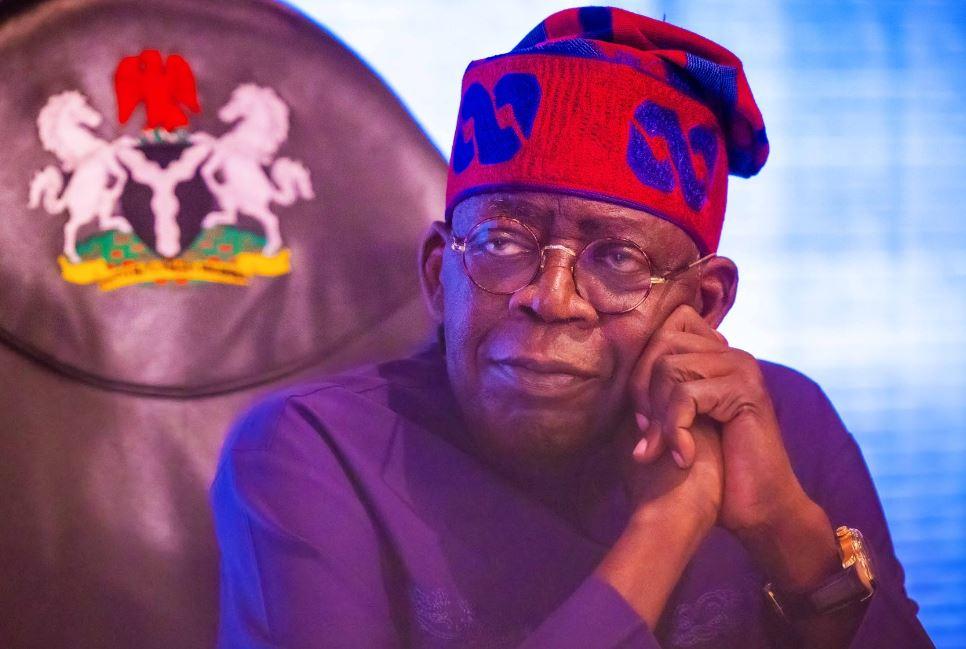
President Bola Tinubu
By DAISE AGWU
THE recent declaration by the President of the Nigeria Labour Congress, NLC, Jeo Ajaero, that there will be no strike while the union awaits Tinubu’s final approval of a national minimum wage is unprecedented in the history of labour activism in Nigeria. It gives an insight into the uncommon strategic capacity being adopted by President Bola Tinubu to neutralise labour agitations and ensure industrial peace and harmony. This has made the labour leaders and their followers to be more patriotic and pursue issues with more understanding and maturity and in the national interest.
According to reports, Labour said it will not rally its members for strike until President Tinubu makes his final approval on what should be the ideal national minimum wage. The clarification came as the Tripartite Committee on National Minimum wage submitted its report to the Secretary to the Government of the Federation, SGF, for transmission to the President. Reports say what was submitted to President Tinubu was the recommended N62,000 minimum wage.
The organised labour is proposing N250,000, which is a shift from its earlier proposition of N494,000. The Director of Information and Public Relations in the office of the SGF, Segun Imohiosen, confirmed the submission. He said that a formal presentation of the report will be made to President Tinubu for appropriate action when the labour leaders who went to Geneva, Switzerland, for the International Labour Organisation, ILO, conference were back to the country.
Speaking in Geneva, Ajaero, leader of NLC, said contrary to expectations in some quarters, labour would not down tools from Tuesday June 11, being the expiration of the five days grace period given to the Federal Government to conclude every talk on the lingering minimum wage issue. Ajaero said labour will await Tinubu’s final nod which he expects will be above the approved N62,000. President Tinubu is expected to send an executive bill to the National Assembly for legislative action. Truth is that it takes uncommon tact to get the NLC to pipe down on strike. This is where President Tinubu has demonstrated uncommon capacity to compel the NLC to see reason and refrain from threatening more devastating strikes after the five days grace period it gave to the government.
Before now, the NLC acted like a bully in the conduct of its affairs. By now, it would have been flexing muscles threatening hail and brimstone if government failed to meet its demand at the end of the five days grace period. Every now and then, the NLC had engaged governments on one labour issue or the other. Strike threats were frequent and real time strikes were rampant. Gone were the days of Comrades Pascal Bafyau, Adams Oshiomhole and others before them, whose tenures as NLC presidents witnessed frequent and long strikes that paralyzed the country. In those days, the fear of the NLC was the beginning of wisdom.
For instance, in 1988 under Ibrahim Babaginda the NLC engaged the government in opposition to the Structural Adjustment Programme, SAP, of the administration. Again, in July 1994 under Sani Abacha’s regime, there was NLC agitation for the restoration of democracy. In January 2004, under the Olusegun Obasanjo administration, the NLC embarked on a strike to protest against the reintroduction of fuel tax.
And in May 1981, under Shehu Shagari’s administration, there was NLC strike against the poor management of the economy by the Federal Government and minimum wage issues. Perhaps the most recent strike took place under Presidents Jonathan and Buhari. In January 2012, under President Jonathan, the NLC embarked on a strike that lasted for five days to kick against the removal of fuel subsidy and increase in the pump price of fuel from N55 to N138.
And in May 2016 under Muhammadu Buhari’s administration, there was a four-day strike to protest the increase in the pump price of petrol from N86.50 to N145. It is instructive that this culture of strikes is dying down under the Tinubu administration since May 29, 2023. It is remarkable that under Tinubu, no strike has lasted for more than 24 hours.
On June 3 2024, the NLC and Trade Union Congress, TUC, declared an indefinite strike demanding an increase in the national minimum wage and the reduction of electricity tariffs. As part of the action, the NLC shut down the national grid. Flights and businesses were crippled across the country. However, the strike which started on Monday June 3 was suspended the following day, June 4 following a high-powered meeting called at the instance of President Tinubu. The strike was called to protest the failure of the Federal Government to approve a new minimum wage by May 31 as well as failure to reverse the hike in electricity tariff.
Reports say after six hours meeting with the leadership of the organised labour in Abuja on Monday night, the Federal Government expressed the commitment of President Tinubu to raising the N60,000 offered as minimum wage and that served as soothing balm.
The suspension of what was planned to be an indefinite strike hours after it commenced is unprecedented in Nigeria. President Tinubu appears to have the magic wand to sooth frayed nerves of labour and make them agree to a dialogue. To this end, labour agreed to hold meetings of its organs to consider the new offer. Currently, the minimum wage is N30,000 and not all the 36 states in the country are paying it. The Minister of Information and National Orientation, Mohammad Idris, said the sum of N494,000 which the labour union is demanding is not sustainable. Government has shifted a bit to offer N62,000 which is what is being considered now.
It needs to be pointed out that the minimum wage in Nigeria has been revised a number of times but has never kept pace with the cost of living. It was N250 in 1991, N5,500 in 2000 and N18,000 in 2011. The current N30,000 was negotiated in 2019.
Obviously, Nigerians are among the least paid workers in Africa. That explains why there are frequent contentions between labour and the government. Could President Tinubu do everything within his powers to settle this matter in a more sustainable way? There is no doubt that the N62,000 being offered is unsustainable, it would still lead to another strike in no distant time. Offering N62,000 to an average Nigerian worker at a time the price of a bag of rice is going for N80,000 is ridiculous. Government should use the price of a bag of rice as a yardstick. I must state that with frugal management of resources, the wage bill is payable.
Meanwhile, the NLC has restated its demand for the new minimum wage, saying that it remains N250,000 and not N62,000 that was submitted to President Tinubu.
Acting president of NLC, Adewala Adayanju stated this the other day in Abuja, while reacting to Tinubu’s Democracy Day speech. He said the union appreciates the work of the Tripartite National Minimum Wage Negotiation Committee to proceed unhindered despite some hiccups. He stressed that labour demand still remains N250,000 as there was yet no compelling reason to change the position.
In view of the foregoing, President Tinubu should see this as a historic challenge and an opportunity to demonstrate his uncommon capacity to settle a recurrent and hydra-headed national minimum wage problem. The President should not allow parochial interest of individuals or groups to derail his patriotic desire to lift more Nigerians out of poverty. It is time to settle the minimum wage issue once and for all to prevent another strike sooner than later over the same issue.
•Agwu, a public affairs analyst, wrote from Enugu
Disclaimer
Comments expressed here do not reflect the opinions of Vanguard newspapers or any employee thereof.