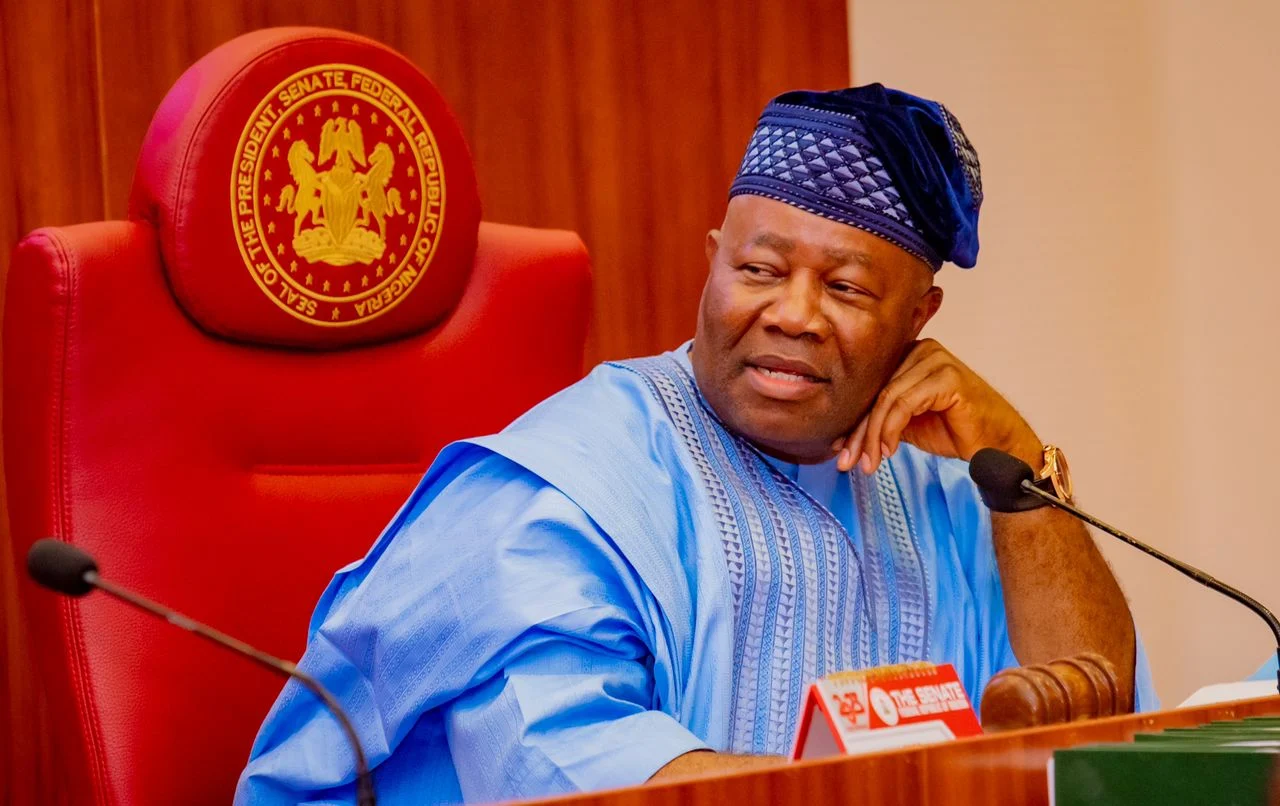
Godswill Akpabio, Senate President
By Jackson Udom
When the Nigerian Senate elected Godswill Obot Akpabio as its Primus Inter Pares on June 13, 2023, not a few Nigerians expressed excitement at his emergence as President of the Senate and Chairman of the National Assembly of Nigeria. The reason for that excitement was not far to seek. Many people knew that in Akpabio, the Senators had elected a ranking legislator with rich experience in governance, lawmaking and diplomacy.
For those who know, the job of the legislature transcends the popular functions such as lawmaking, vetting of budgets, confirming executive appointments and serving as a watchdog on the Executive and the Judiciary.
In fact, functional legislatures, the world over, have been known to set the pace and hold the aces with regards to the socio-economic development of their countries because they explore the limitless opportunities presented by Legislative Diplomacy, which has to do with the process of creating and negotiating laws, regulations and policies at the international level, involving diplomatic efforts and cooperation among nations.
Legislative Diplomacy aims to harmonise legal frameworks, promote consistency, and address global challenges through collaborative lawmaking.
This all-important function of the legislature has come to assume such a great place in the life of nation-states that lawmakers are seen as not only passive individuals making the laws to underpin developments but as active statesmen at the vanguard of making development happen.
Scholars all over the world have argued that individual members of the House and Senate have been known to frequently travel overseas on congressional delegations to confer with foreign leaders, investigate problems that arise, promote the interests of their countries and constituents, and even represent the president.
With the intentions of promoting global governance, enhancing economic cooperation, protecting human rights and the environment, combating transnational crimes and facilitating international trade and investments, among others, Legislative Diplomacy presents great imperatives for the socio-economic development of any nation-state.
The recognition of these imperatives made millions of Nigerians to celebrate the emergence of Godswill Akpabio as President of the Senate, having known his pedigree as a technocrat, who ventured into public administration and demonstrated a passionate commitment to the development and socio-economic uplift of, first, Akwa Ibom State, where he was governor for eight years and later, Nigeria, which he has served in different capacities as Senate Minority Leader, Minister and now President of the Senate.
Indeed, Akpabio and Legislative Diplomacy seemed to have been made for each other. As the number one lawmaker in Nigeria, he has proven beyond a doubt that Legislative Diplomacy comes easy and can achieve greater mileage in the hands of individuals of his ilk, as his personality, carriage and candour have, no doubt, helped the nation in achieving unprecedented results in terms of economic growth and rebuilding the trust reposed in Nigeria by countries and international organisations in just 12 months of his leadership of the National Assembly.
As it is known that Legislative Diplomacy requires effective communication, negotiation, and collaboration among governments, international organisations, and stakeholders to shape global legal frameworks and address shared challenges, Senator Akpabio’s adept skills, honed in his years as a corporate lawyer and his immense experience garnered in the corridor of power have been brought to bear, as he has succeeded in breaking barriers and making lasting impacts in attracting socio-economic developments to Nigeria through parliamentary diplomacy.
One of the obvious successes of the President of the 10th Senate in the area of Legislative Diplomacy was his attendance at the Inter-Parliamentary Union Assembly in Luanda, Angola, where he was elected into the Executive Committee of the IPU thus breaking a 59-year-old jinx. Nigeria was last elected into the Committee 59 years ago. He also participated at the IPU in Geneva, Switzerland, where he presented a paper asking the world to speak against the needless bloodletting in Gaza and save the innocent women and children from avoidable deaths.
Senator Akpabio has, also in the last one year as the Senate President, engaged in diplomatic courtesies with foreign missions in Nigeria, demanding collaborations with Nigeria on the economy, security and power and also seeking partnership with sister Parliaments across the globe for world peace and development.
As evidence of his credentials as a legislative diplomat, the IPU nominated the Senate President and 15 others as Preparatory Committee for the Sixth World Conference of Speakers of Parliament coming up in August 2025.
In line with the President Bola Ahmed Tinubu’s Renewed Hope Agenda, Akpabio’s Legislative Diplomacy has seen him court friends in different countries of the world, seeking partnerships and collaborations to improve security and peace in Nigeria, which without a doubt, is central to the socio-economic development and the progress of the country.
Through different fora and platforms, the Senate President has used the weapon of Legislative Diplomacy to the greatest advantage of Nigeria and Nigerians, seeking fresh opportunities and friendships for the country and building on the framework of renewed hope and vision of President Tinubu across different sectors.
For instance, it is on record that the Senate President met with the President of the Serbia Parliament, Ms Ana Brnabic in London, calling for parliamentary collaboration between the Nigerian Parliament and its Serbian counterpart and also extensively discussing issues of mutual interests between the two countries.
At another meeting with the members of the Saudi Arabia/Nigeria Parliamentary Friendship Group, led by Dr Abdullah Bin Hamad Al-Salamah, the President of the Senate called on the Government of Saudi Arabia to assist Nigeria in the fight against insurgency and trans-border terrorism, through sharing of intelligence.
On economic partnership, Akpabio rallied the Saudi Arabia delegation, saying: “Our relationship today has gone beyond pilgrimages and oil because Nigerians are now studying and working in Saudi Arabia in various spheres of human endeavours. The mutual economic ties and benefits are worth commending, especially in the aviation sector.
*Udom is Special Assistant on Media(Print) to the President of the Senate
Disclaimer
Comments expressed here do not reflect the opinions of Vanguard newspapers or any employee thereof.