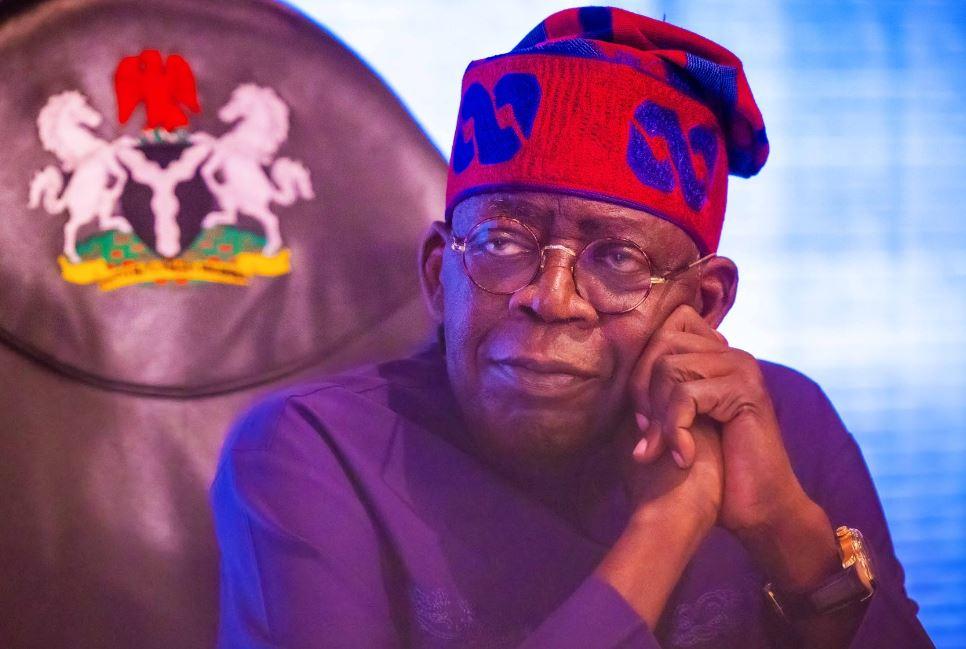
President Bola Tinubu
By Morenike Taire
Truth be told, governance in Nigeria has been replete with false starts, failed promises and dashed hopes. Hence, President Bola Tinubu’s “Renewed Hope” tagline largely fails to strike a chord with the majority.
His records as governor of Lagos State were largely that of an effective reformer who brought his private sector exposure to bear in laying the foundation for what largely transformed Lagos from a symbol of urban disorder, to a widely cited example of effective African governance. Managing political tradeoffs with several political constituencies, Tinubu’s impact as governor saw the emergence of a functionally improved megacity that continues to attract millions of new residents from within and outside the country yearly.
But the story seems different with the job he so ardently fought for. Tinubu’s DNA of performance has been slow in manifesting now that he presides over the nation, leading many to argue that he is not the same man that Lagos State hired as governor in 1999. Of course, he cannot possibly be. He was under fifty years of age when he was sworn in as the twelfth governor of Lagos State, bursting with energy and ideas, having recently returned from exile when he fled Nigeria from the reach of Abacha’s fangs.
In contrast to his physical appearance, he has always been an enigmatic leader with a reputation for boldness. As Governor, he assembled a highly effective team comprising of competent aides whom he sought out regardless of ethnic, religious or social orientation.
So, when the Independent National Electoral Commission, INEC, declared him winner of the presidential election on March 1, 2023, many Tinubu fans heaved a sigh of relief, believing that he is the man largely endowed with the skills and experience to solve the country’s protracted problems as he had done in Lagos State few decades earlier. To them, the stage was now set for the man to replicate the magic he had performed in Lagos State on the national scene.
Nowhere in President Tinubu’s, or his fans’ calculus existed a scenario where he would be flat-footed for almost the entire first half of his administration’s first year.
The administration teed off on the wrong footing as he took the audacious step of declaring “subsidy is gone” in his inauguration speech on May 29, 2023, provoking widespread backlash. The populace read his declaration as a knee-jerk pronouncement devoid of empathy for the masses who were left to grapple with the anguish of an instantaneous 329% increase in fuel price at the pumps.
Despite a refining capacity of 450,000 barrels per day, the country reportedly expended $30 billion on subsidies from 2004 to 2022, according to a PWC report released in May 2023. This aligns with a period during which the refineries remained inactive, yet paradoxically incurred an estimated $25 million in maintenance costs between 2013 and 2023.
Rather than hold them to account, Tinubu gifted the NNPCL leadership he had inherited another term to the apparent shock of many sector players.
Nigerians who were still battling the agonizing impact of the surge in fuel pump prices were soon to be hit with a succession of deadlier forces. Headline Inflation has jumped from 22.41 % as recorded around inauguration day to a peak of 33.2 % in March 2024, followed by a full blown food crisis that sparked choruses of sustained protests across the country.
The president struggled to inspire confidence that he and his economic team had solutions. Rather than project confidence, they sounded incoherent with every utterance, inept and rudderless with every move. In desperation, they appeared to be throwing anything and everything at the wall to see what would stick. This continued as the blinding headwinds of inflation running amok and a currency in apparent free fall continued to deal its debilitating impact on the citizenry and the hemorrhaging continued.
The confluence of these negative economic forces would precipitate the sharpest political volte-face seen in recent times as many of the President’s supporters literally watched their hopes extinguished by the man they had placed all their bet on, while his political opponents gloated gleefully.
” I wish today’s difficulties did not exist. But we must endure if we are to reach the good side of our future,“ the president said in his October 1 address as foreign exchange liquidity further tightened, wiping out profits for several multinationals across different sectors while oil theft raged on unabated. His message failed to hit a mark particularly as the elites, a tiny fraction of the populace made up largely of the political class, showed no interest in taming their wanton propensity for lavish spending.
In that same month, Nigeria recorded oil production of 1.56 million barrels a day on average, representing 89 % of its OPEC quota and $14.4 million of lost revenues daily to the country and its oil company partners. The inefficiencies in the country’s mainstay industry remain a giant elephant in the room.
The Tipping Point
Sociologists espouse the theory that our lives are driven by network effects that compound over time. This network effects theory explains the scientific basis by which people attract other people of their ilk. Tinubu’s network is shaping out to be his greatest asset, gradually beginning to help filter out the noise and potentially laying the groundwork for what his administration could accomplish in its lifetime.
The president appointed six special advisers in June 2023, widely described as round pegs in round holes. The following month when he announced his ministerial cabinet though, a national newspaper headline captured the general sentiments. “Tinubu’s ministerial gyration fails to inspire, “ read the newspaper’s editorial published on July 31, 2023.
And one year into the PBAT administration, the overwhelming perception remains that Tinubu’s widely touted reforms are yet to provide any measurable impact or provide succour to the millions of Nigerians who continue to wallow in hopelessness and on the edge of desperation.
A lot remains structurally wrong with Nigeria. Chronic institutional inertia in the workings of government is bound to hobble progress despite the best intentions of any administration. The debate that restructuring the country could portend a silver bullet remains an ongoing discourse. However, silver linings manifest in strange ways.
With years of progressively ruinous governance, what the country so desperately needs is a deviation from the status quo approach. Radical creativity in ideation and fiercely bold execution of ideas is the only way to circumnavigate the chronically dysfunctional civil service structure; the platform upon which governance is currently built to run. The broken, hierarchical and highly bureaucratic civil service structure is best attuned to running the country when affairs are in steady state. In an existential situation, we need a system that deviates from the business as usual – one that accelerates decision-making and execution. After all, a normal hospital workflow does not work in an emergency room.
A number of initiatives recently approved by the President deserve to be on the public’s radar; if not for awareness, for public scrutiny, progress monitoring and accountability checks. Original, creative and ingenious, they have the potential to alter the trajectory of Tinubu’s administration permanently, and for the greater good of Nigerians. In short, they might represent the onset of an inflection point for this government.
Curiously, there is one common denominator among these programmes. It’s the fact that they are all spokes orbiting around a common nucleus. The hub where they are being birthed and incubated is the FIRS, whose chairman – Dr. Zacch Adedeji, also doubles as Special Adviser on Revenue to the president. Interrogating these programmes reveal the emergence of a fast accreting flywheel geared at radically transforming government’s economic (revenue) base. Also, they all appear to be fashioned on a template.
Some of the programmes
The National Single Window Initiative, NSW, is an inventive programme conceived to mobilize over $2 billion in annual economic benefits through streamlining trade processes. Its sponsors say it will provide small businesses access to global markets and enhance trade operations efficiency. Most importantly, it will tackle head on the inefficiencies at the nation’s ports which result in an estimated $4 billion in operational losses.
The Renewed Hope Infrastructure Development Fund, RHIDF, is established as an innovative infrastructure investment vehicle to attract and consolidate capital that will be deployed to reduce the country’s infrastructure gap, an enabler to the achievement of Tinubu’s ambitious growth target of 6% starting in 2025. With a target fund size of $25 billion per annum, it seeks to attract capital from diverse sources to fuel Nigeria’s growth through focused and sustained investment in critical and strategic infrastructure across key sectors. The World Economic Forum estimates infrastructure investment in Nigeria has the potential to generate $3.80 economic return for every dollar and 22% IRR in financial returns. “ We are taking a holistic approach to how we sustainably mobilize resources for the country’s development ,“ said Dr. Adedeji, the man pivotal to the conceptualizations.
The Presidential Compressed Natural Gas Initiative, PCNGI, intends to catalyze the widespread use of compressed natural gas as a cheaper, cleaner and safer alternative to gasoline. The president says his vision is for the programme to serve as a palliative for the masses affected by the removal of fuel subsidies. Note that 80% of Nigerians rely on public transportation.
The PCNGI plans to deploy tens of thousands of CNG conversion kits and CNG fuelled tricycles and deploy bi-fuel buses to jump-start an alternative energy fuelled mass transit system. The target is to establish 100 conversion workshops by the end of 2024 and deploy 60 refueling stations across 18 states of the country. A key KPI has been established to have one million CNG fuelled vehicles operating on Nigerian roads by the year 2027. To this end, the PCNGI have succeeded in attracting commitment of $50 billion in investment from private sector partners.
Consumer Credit
Tinubu established and capitalised the Nigerian Consumer Credit Corporation, NCCC, to expand access to consumer credit for Nigerians. Consumer credit is the biggest GDP multiplier globally, accelerating livelihoods by supplementing incomes and enhancing purchasing power.
Consumer credit in Nigeria is a dismal 11% of CDP contrast to the USA at 216% and China at 185%. The fastest growing global economies (BRICS) spurred consumption by methodically enabling consumer credit to over 50% of GDP. To achieve the potential impact of consumer credit, Nigeria needs to do the same, quintuple the sector to NGN176 trillion from its current size of NGN34.7 trillion. This is the problem the NCCC is out to solve by fixing the structural barriers to assessing creditworthiness, building a centralized credit registry and scoring system with NIN as the singular unifier. Catalyzing the market with capital guarantees the policy.
There is also the Presidential Metering Initiative, PMI, which aims to eradicate the legacy practice of billing estimation by the electricity distribution companies and in doing so, shore up revenues significantly, while reducing collection losses from 38% currently to fall within the global average of 12 – 15%. This initiative can transmute the energy landscape into a more equitable, efficient and commercially sustainable one. Governance for the PMI will be coordinated through a committee to be chaired by the Power Minister and the Special Adviser to the President on Energy – Mrs Olu Verheijen as head of the secretariat.
The president is enveloped by a network that seems to be shaping a new economic order amid the chaos. Specific nodes (individuals) within his network are crowding in intellectualism rapidly and contributing positively with mold-breaking ideas that could lay the groundwork for the president to replicate his past successes in Lagos State.
To what extent these portfolio of programs decimate the status quo, time alone will tell. But we will keenly monitor them for the renewal of hope they offer and the economically transformative potential they hold.
Disclaimer
Comments expressed here do not reflect the opinions of Vanguard newspapers or any employee thereof.