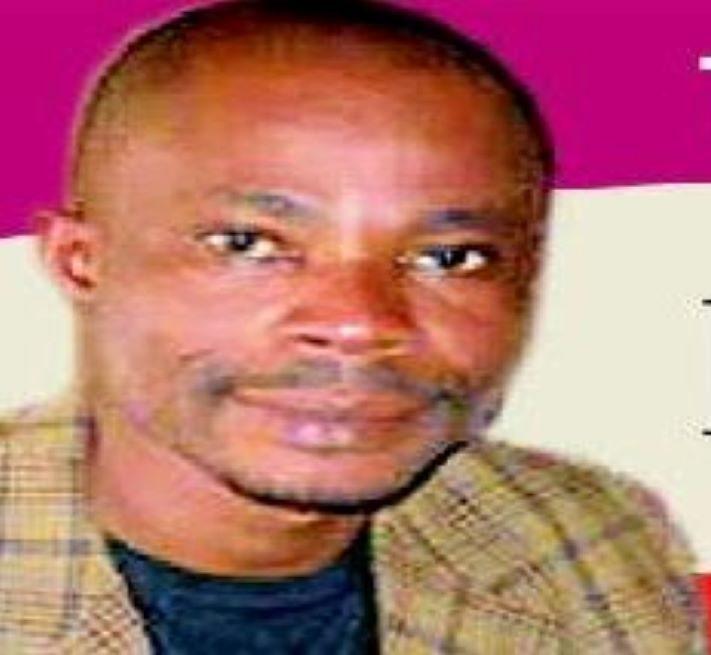
IT is, perhaps, a mere coincidence that has nothing to do with the unfolding saga between him and the Economic and Financial Crimes Commission, EFCC, but a couple of video clips of the embattled former governor of Kogi State and lately fugitive from the law, Yahaya Bello, have made their way to the public space of Nigeria’s social media. Each footage portrays the White Lion of Lokoja engaged in exerting fitness tests and his favourite sports of boxing.
Being the boxing enthusiast, that he is, this should not be surprising about Bello but coming at this time he is involved in a gruelling test of will and flexing of muscles with the EFCC, video extracts of the former governor shadow boxing, hitting a punching bag, ducking and swerving fort and back at invisible adversaries in the airconditioned ambiance of an ante room that was apparently repurposed to serve as a gymnasium- these video recordings would seem to suggest that Yahaya Bello is either ready or getting set to take on the EFCC.
But since the slugfest started in earnest last Thursday with an EFCC siege that turned into a standoff at one of the Abuja residences of Bello, his reaction, turning his back on his assailants with his tail between his legs and fleeing into empty air, he has been anything but a pound for pound prize fighter. Unlike Ayo Fayose, who knew there would be a day of reckoning when he would be called to account, after years of hurling vicious attacks and insults at President Muhammadu Buhari-unlike the Oshokomale who voluntarily walked into the offices of the EFCC, Yahaya Bello chose to play hide and seek with the anti-corruption agency by first procuring legal protection against prosecution and, when that failed, hid in the secret alcoves of his Abuja residence, thereby triggering a standoff between him and the EFCC.
Bello the bully who casually brought violence, tatatatata-fashion into the lives and homes of his adversaries, took to his heels like the coward that he is when somebody finally stood up to him. As the standoff lasted, he waited long enough for his self-anointed successor in office, Ahmed Usman Ododo, to visit and, as it has since been alleged, whisk him off to safety, perhaps in the cozy environment of the Kogi State Government House. But for how long can the ex-governor run and if he runs where will he hide? For how long can he evade the law? These are questions which don’t cut any ice with him but which Bello should obviously be asking himself as he goes on with his cowardly response.
Eight years after he first entered the Government House in Lokoja, it is still debatable if Yahaya Bello should have been governor in the first place. He lacks the finer qualities of a good leader and but for the unfortunate demise of Audu Abubakar who won the 2015 governorship election in Kogi, Bello might still be a struggling politician, loud but vacuous, like Dino Melaye. Maybe the people of Kogi would have been better served with somebody else in office. James Faleke should have been the logical replacement but both the APC and the courts thought differently and controversially invited Bello to step in. He had contested with and lost the APC primary to Audu. Never a candidate in the election that resulted in him becoming governor, Bello was just the beneficiary of what Nigerian Pentecostal Christians call unmerited favour.
While the part of him not meriting the boon he received seem wholly appropriate, I can’t see the favour to the people of Kogi in a two-term rule that is fast turning out a debacle. Maybe he can see the good thing about his terms as governor but for many if not most Nigerians, Bello’s emergence as a governor was both a blight and a setback for Nigerians’ struggle for youth participation in politics and governance in general. He was one of the few youthful Nigerians who since the country’s return to civil governance in 1999 have shaken the confidence of Nigerians in the ability of the youth to effect national transformation.
From the very prominent ones like Salisu Buhari, Dimeji Bankole to scores of other young people who have served and besmirched their offices across the different levels of governance across the country, Nigerian youths have been badly served by those among them that have had the opportunity of being in political leadership. Yahaya Bello is one of the most execrable and easily forgettable. A lot about him raise some questions beginning with his credentials as a youth which he liked to wear like a medal and badge of honour.
He was for the entire period of his terms in office considered the youngest governor in Nigeria. Born, according to his biography, in June 1975, he was just 35 when he came into office in 2015. When his mother died five years later at a little over a hundred years, precisely 101, a simple calculation and comparison of her age with that of her youngest child (there are five others), told everyone that she must have been 57 when she had him, which is biologically hard to believe if not impossible. That alone should have qualified Bello for a special place in Nigerian history above and beyond the distinction of being his parents’ last child. But nobody told us that the young Yahaya was a miracle baby. Yet, he was by reason of his date of birth in a class of his own, which probably explained why he started school at 11 in 1984, five years later than most Nigerian children.
Yahaya Bello is yet to provide a full account of his biography, especially the mystery surrounding his date of birth and primary school education. He is not alone in this. If there is one thing that unites Nigerian politicians and sets them apart, it is their natural bent to lie about their age and educational qualifications. Yahaya Bello is not the kind of youth he portrayed himself to be. He may look sturdy and energetic but he may be much older than he claims. His bullying and infantile behaviour shows the entitled ways of a spoilt last child.
It’s this attitude he brought to politics where he hectored his way around, raining fire and brimstone on his enemies, real or imagined. He is used to having his way and can’t see himself accounting for his actions. Which could be why he was asked to account for funds meant to fight COVID-19 while he denied its existence and refused to pay civil servants salaries. He cannot see why he should account for tax payers’ money. This is why Yahaya Bello is running from his own shadows.
Disclaimer
Comments expressed here do not reflect the opinions of Vanguard newspapers or any employee thereof.