…vows to restore peace, democracy in Niger, others
By Ezra Ukanwa, Abuja
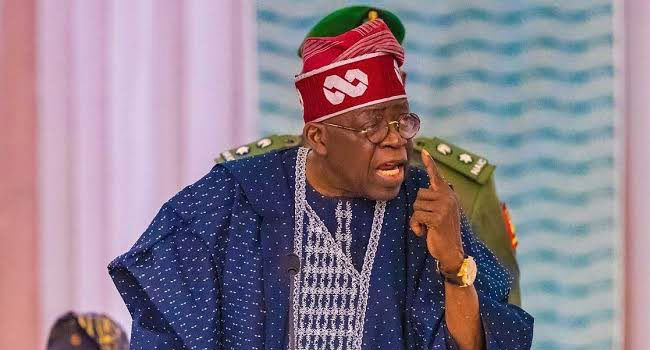
President Bola Ahmed Tinubu has called for increased collaboration between the African Union (AU) and the United Nations (UN) to put an end to the proliferation of arms and light weapons in Africa.
Tinubu expressed grave concern over the rampant availability of weapons in many African countries, which has led to conflict, insurgency, violence, loss of innocent lives, and increased crimes.
Speaking during a dialogue themed ‘The Africa we want and the UN we need’, President Tinubu, represented by the Secretary General of the Federation, George Akume, emphasised the democratisation of the UN System to address the evolving myriad of challenges of global governance.
He said: “As a government, we are seriously concerned about the rising threat of wide-spread terrorism across international borders, insurgency, and the disruptive intervention of the military in governance in Africa, particularly in West Africa.
“As part of our collective response to these challenges, which have grave global implications, may I urge the participants to find innovative and cost-effective strategies by which the African Union would collaborate with the United Nations and the international community to stem the tide of the proliferation of arms and light weapons into Africa, end terrorism and resurgent insurgency, and check the retrogressive return of the military in governance in Africa.
“May I use this medium to call on our fellow African leaders to key into this innovative and visionary move to get the African voice to be heard as a partner in the resolution of the global governance challenges in the years ahead.
“We are making every peaceful effort necessary, under my Chairmanship of the Authority of the Heads of State and Government of ECOWAS, to negotiate the peaceful return of democratic governance and membership of the organisation by the affected ECOWAS member states within the shortest possible time.”
Also, the former Chief of Staff to ex-president Muhammadu Buhari and founder/chairman of the Savannah Centre for Diplomacy, Democracy, and Development, Ibrahim Gambari, while calling Africans to be vocal advocates, said: “As Africans, we must be our champions and very vocal advocates.
“All Africans must desire for each other a continent that is peaceful, secure, united, and prosperous. We must promote constitutionalism and respect for human rights and human dignity. These we must reach a consensus on as our non-negotiables and upon which all else will be built,” he added.
While calling for the reform of UN, Gmabri said: “Our position for reform of the UN Security Council is to evolve into a body that is not paralysed by the misuse of vetoes as demonstrated in the wars in Ukraine and Gaza. It must also be a more inclusive body by making changes to the configuration of both permanent and non-permanent member states, and more importantly, Africa deserves two permanent seats at the council.
“The International Multilateral Institutions, especially the Bretton Woods institutions, should play a stronger role as an effective partner, understanding where we are in the development lifecycle while promoting trade facilitation, efficient harnessing, and maximisation of Africa’s resources for its economic growth and benefit.
“Equally important is the governance of these multilateral institutions to reflect effective African participation and thus responsiveness to its needs. Africa cannot be asked to defend that in which it did not participate in its definition and design.”
Also, Chairperson of the AU Commission, Moussa Faki Mahamat, represented by the Commissioner for Political Affairs, Peace and Security African Union Commission, Professor Bankole Adeoye, said part of the agenda 2063 of the commission is to completely change the African continent.
He also mentioned that part of the reasons why Africa is yet to achieve its desired development and progress is hinged on Africa’s inability to deepen democracy and collective security.
Disclaimer
Comments expressed here do not reflect the opinions of Vanguard newspapers or any employee thereof.