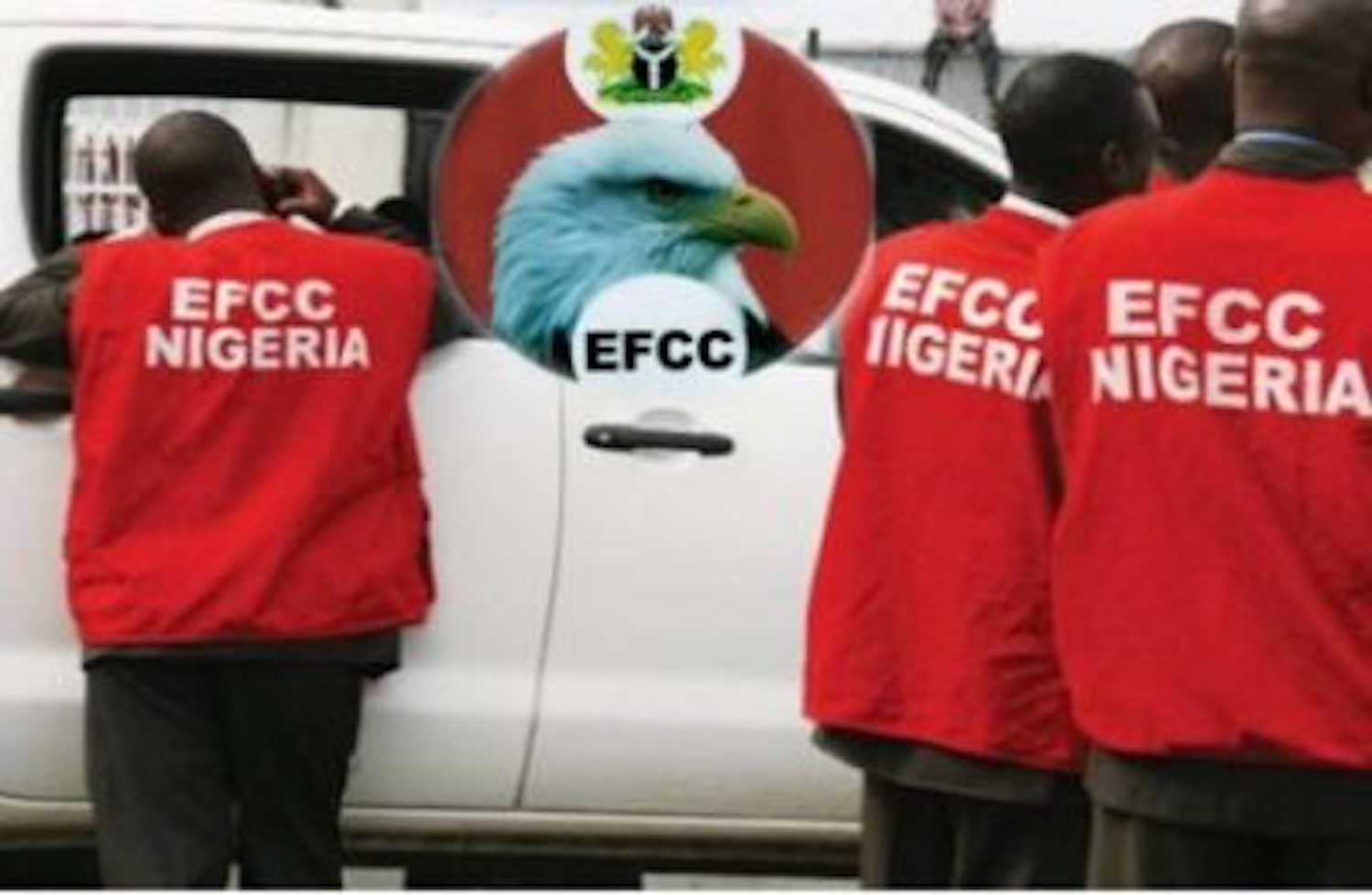
Stock photo
…we won’t spare any Nigerian in our corruption fight-ICPC
By Joseph Erunke, ABUJA
Chairman, Economic and Financial Crimes Commission,EFCC, Ola Olukoyede, has lamented that corruption in Nigeria was not abating despite the federal government’s efforts to that effect through the passage and enactment of relevant anticorruption laws, regulations and policies.
He regretted that even as criminals and corrupt individual are being arrested, investigated, prosecuted, convicted and sent to prison on daily basis by law enforcement agencies, corruption still pervades Nigerian societies.
Ola Olukoyede,who spoke yesterday, through his representative and the Commission’s Head of Legal and Prosecution,DCE Francis Usani,at a Workshop on Institutionalizing Behavioural Approacches to Reduce Corruption in Nigeria National Chairmen and Women Leaders of Political Parties in Nigeria,noted that corruption had been allowed to fester for so long in the country and had become a norm.
The event was organised by the National Institute for Policy and Strategic Studies,NIPSS,with support from MacArthur Foundation.
The EFCC boss,who said he was delighted and honoured to be invited to give a goodwill message in the workshop, said “the topic could not have come at a most auspicious time like now when law enforcement agencies are over burdened with the fight against corruption and financial crimes.”
Hear him:”It is disheartening to say that efforts made by government through the passage and enactment of relevant anticorruption laws, regulations and policies, corruption still
has not abated in our society.
“This not to say that criminals and corrupt individual are not arrested, investigated, prosecuted, convicted and sent to prison on daily basis, but despite all this achievements by law enforcement agencies corruption still pervades our societies.We constantly ask ourselves the question, “why is this so?”
Also speaking at the occasion,the Independent Corrupt Practices and Other Related Offenses Commission, ICPC, vowed to deploy technology to track down and prosecute corrupt Nigerians irrespective of their standing in the society.
Chairman of the ICPC, Musa Aliyu,who was represented by the commission’s acting Director of Operations, Shehu Yahaya, tasked political leaders to promote core values that will positively impact the practice of anti-corruption social norms across the country.
According to him, the ICPC had in 2020, in collaboration with the National Orientation Agency,NOA, developed the National Ethics and Integrity Policy which he said has become a veritable tool for galvanizing national behavior modification aspirations.
“While the ICPC and the government are working tirelessly to promote these core values that will positively impact the practice of anti-corruption social norms across the country, we implore you, political leaders, to join us in mainstreaming this policy in the political system.
“The ICPC is committed to the resolve to leverage technology to eliminate corruption from the public service and this is a wake-up call to you, our political leaders, to play your parts in sensitizing your members before they are elected, appointed, or employed into public office, about the dangers of engaging or promoting negative social norms that influence corrupt behavior in their respective Ministries, Departments, and Agencies (MDAs), because our zero-tolerance for corruption is blind to political affiliations,”he said.
The ICPC boss noted that political parties could contribute actively to the anti-corruption fight if they institutionalise corruption-inhibiting behaviors like meritocracy over nepotism, transparency over opacity, and public interest over personal gain.
He said:”By instilling these values within our parties and encouraging our members to adhere to high ethical standards, we can set a precedent for ethical behavior in the political arena.”
On his part,Director General, NIPSS, Professor Ayo Omotayo, expressed optimism that with time, Nigeria would be rid of corruption.
“With what we are trying to do, that is having a behavioral approach to effect changes, we believe that with time, the behaviour of our political class will change. Yes, people might think that there can never be changes but during the last election, we see that violence that seems to occur during elections diminished,”he said.
He noted that behavioral approaches to tackling corruption in politics was the most effective compared to reactionary measures.
“To be to be candid, when you talk of the behavioural change, you must think in terms of a process and when something is a process, it follows a course of time. And of course, we need to have structural changes before we can begin to see a difference in the behavioral approach of politicians to elections.
“What we have today just did not happen. It has happened over time. And will take some time for us to correct what we need to correct. 2023 was the centenary year of political parties in Nigeria because the first party was formed in 1923 and after 100 years, NIPSS thought that there is a need for us to look into the behavior of politicians and of course, our political behavior generally,”he added.
Disclaimer
Comments expressed here do not reflect the opinions of Vanguard newspapers or any employee thereof.