By SUNNY IKHIOYA
There was one Dr Oberu Aribia, who served in the military regime of General Yakubu Gowon in the seventies and was later a lecturer of Urban Sociology at the University of Lagos. Taking his class this cool February morning of 1983, he turned his attention to the seeming conflict of a Maroko, a slum dwelling situated side by side Ikoyi, an exclusive reserved area for the elite.
He made it clear that given its location, Maroko constituted a great risk to those living in Ikoyi, especially if any form of riot occurred. It was not too long after that the Lagos State government embarked on a total demolition of the slum houses in Maroko.
Today, Maroko, now known as Lekki, serves as the perfect dwelling place for the rich folks in society. Like Pareto’s circulation of elites, the rich, including senior government officials, are more concerned about protecting themselves, while and forgetting the poor and down trodden. And the consequences? Terrorism, banditry, kidnapping and all the novel vices that we are witnessing in society today.
The rich among us have totally separated themselves from the poor, the middle class, who would have served as the bridge in eliminat ing the conflicts arising from this. This remains the root of the problem the country has found itself.
People of affluence do not send their children to schools here in Nigeria, neither do they spend their holidays here anymore because of the attendant risks. The rural dwellers have been cut off from those in the urban areas because of the security situation and the whole country is in a dilemma on measures to take to ameliorate the situation. Some people have advocated that we go back to what obtained in the sixties and seventies, when there was no segregation, the rich and the poor lived amongst themselves, their children attended same public schools, played and socialised together.
I am not a fan of Oberu Aribia’s segregation theory; I am of the belief that if the people are allowed to integrate properly, there will be proper bonding and the society will be safe for all of us.
Unfortunately, while we cry for better integration of the low income with their upper class counterparts, the authorities are building more barriers to widen the gaps by their actions; they are making the poor to be aware of their circumstances as low class and they are reacting accordingly. We must improve on our public institutions and infrastructure to give the poor a sense of belonging, otherwise our woes will continue. We are witnessing strange events. Traditional rulers are being kidnapped and killed while traditions and cultures are being messed up. We must locate the root causes and appropriately deal with them.
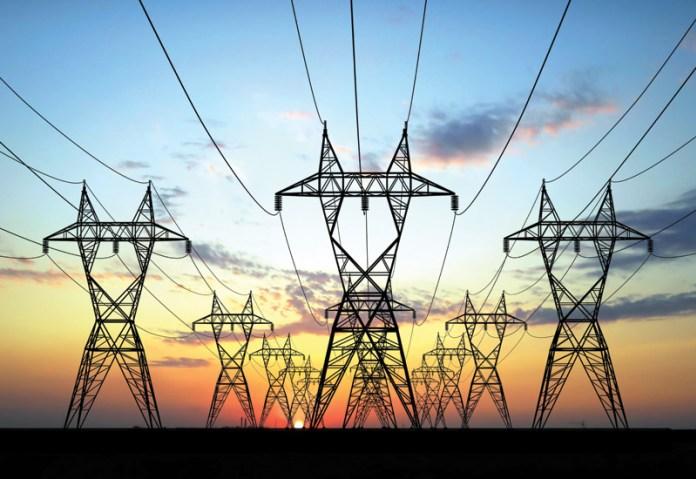
It is in the same light that I worry about the state of power supply and the manner in which it is distributed across the country. The emphasis seems to be on the rich and those who can afford it. So, you have some sections in Lagos and neighbouring states that are assured of a minimum of 22 hours of power supply daily.
Meanwhile, the neighbourhood of the poor gropes in darkness. Some will argue that it makes business sense to provide more electricity to the rich, but the consequences of this are not palatable. The rich can afford to supply themselves electricity when public power supply is down, but not so for the downtrodden. In fact, the lack of electricity supply to poor neighbourhood has made the rate of unemployment to rise.
People who are supposed to be busy with their technical crafts are unable to utilise their skills- welders, hairdressers, tailors, bakers and many other small businesses that depend on electricity for sustenance. So, what happens to the idle hands? They become the devil’s workshop. Let the priority for public electricity supply be to businesses and poor neighbourhood, even if government has to use subsidy to achieve this.
One of the quickest ways to douse the overbearing tension in the country today is for government to provide electricity to poor neighbourhoods. The other day, a group of Uvwie women trooped to the Effurun -Warri roundabout and blocked the road, causing traffic gridlock. Their grouse was lack of power supply to their neighbourhood. If government is listening, this is the area that should be the focus. It is so apparent that government officials are living in luxury when compared with the suffering masses. When the poor are properly motivated and galvanised, government becomes easy to run, because dissent and crime rates will reduce.
Majority of those in the bush kidnapping their fellow Nigerians do not know what luxury means; but they remain there to satisfy the cravings of their rich sponsors who take the chunk of the monies collected as ransome.
The worst of electricity nightmare in the poor neighbourhoods is the estimated billing; most of them cannot afford the pre-paid meters, so are stuck with estimated billings, which is usually higher than what they actually consume. The media reported recently that the Nigerian Electricity Regulatory Commission, NERC, sanctioned the 11electricity distribution companies, DISCOS, for non-compliance with the capping of estimated bills for unmetered customers. As part of its sanctions to the defaulters, NERC said the Discos would be charged N10.5 billion.
The question is: who gets the N10.5 billion? Or, what is the money going to be used for? One would expect that this money would be kept aside and properly channelled towards helping the unmetered customers, that is: helping to provide meters for them. Again, this money could be used to provide needed infrastructure to help deliver electricity to poor areas.
This money should not be shared or used as administrative expenses for NERC or any of its agencies, it should go directly to where it was sourced, the over-billed customer. What a joy it will be for all, if the masses are availed with regular electricity supply. It is a win-win situation for everyone.
*Ikhioya wrote via: http://www.southsouthecho.com
Disclaimer
Comments expressed here do not reflect the opinions of Vanguard newspapers or any employee thereof.