•Says 200 to 300 amputations done at Igbobi Hospital annually amid late presentation
By Juliet Umeh
Contrary to common belief that accident victims get their limbs amputated when they seek medical care at the National Orthopedic Hospital Igbobi Lagos, the hospital has said that the people who make the claim do not tell the full story. The hospital also noted that most patients present late at the hospital.
Managing Director of the hospital, Dr Mustapha Alimi told Vanguard during the health institution’s 78th anniversary celebration, that out of an average of 80,000 patients that visit the hospital in a year, not up to 200 to 300 undergo amputations.
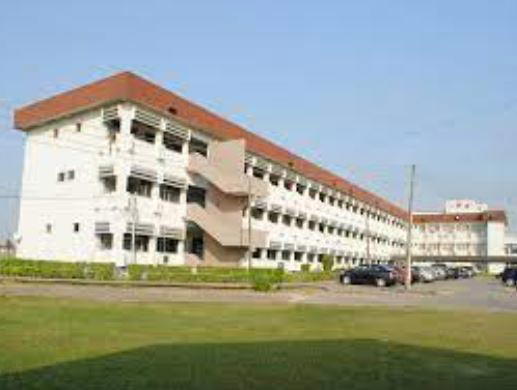
Shedding more light on the issue, Alimi said:“There is what we call amputation cycle, we don’t generate amputation, those that generate amputation are below the radar. Amputation is part of services. Amputation is done usually to save lives. So, if a person who has an injury decides to go to a healing home or somewhere else, and now develops gangrene of the leg which, if the leg is not amputated, will kill him. We take limbs to save lives.
So, we don’t generate amputation but those that generate it are below the radar. But, because we are a formal institution, the government will say when you get there, it gets done. Those that it gets done for did not say or tell the history.
“They don’t tell the history. What happened to you? Where did you go? What did they do there? How did you present at the home? That is one truth.
If you come here, take statistics of our patients, how many of our patients that come every year get amputated?
“Out of 80,000, how many get amputated? I can assure you, that we don’t generate, we don’t do up to 200 to 300 amputations out of 80,000 patients.
“Now, the third point is that those patients who ended up with amputation did they come here straight from a point of injury? So, that is a reputation that has been there for long and it’s been driven by those who benefit from generating the amputation.
Also debunking the fact that access to treatment from the facility is too expensive, he explained: “Now, if you listen to my speech, we talked about cost of care cost of care. The cost of care is relative to the services you provide. So, if you treat malaria, definitely it will be cheaper than the Igbobi. We put implants, we replace joints and limbs and we do complex surgeries.
“Now, what is the cost of those implants? Are they produced locally? Because they are not, if they are produced outside this country, what is the landing cost of those products? Is that the cost we give it to patients? Or the cost that they are giving to us that we now give to patients? So, if you want to say Igbobi is expensive, you compare Igbobi to orthopaedic services outside, then you can make that inference. Igbobi is the cheapest orthopaedic service in this country.
“Because implants are not cheap, If you listen to my speech, I said provision of care, the cost of basic care provision is expensive and exorbitant and we don’t cut corners, ” Alimi started.
And given some of the reasons that people, he explained that accident is not one of the major reasons people visit Igbobi.
Alimi said: “Because we provide speciality care, the common reason why patients present to this hospital is because of back and neck problems followed by other joint problems.
“Then, it starts coming down in actual fact, the common reason why they come is not accident, it’s not trauma, it is because of back and neck problems, and joint problems.
“Aging, poor lifestyles, obesity, redundancy sedentary lifestyle, cigarette smoking, alcohol consumption are the common reasons.”
Also speaking, former MD of the hospital, Dr Wahab Inosa, said the hospital has achieved remarkable milestones in the last decade.
He said: “In the past decade, we have gone into sub-specialization. We can now do arthroplasty, arthroscopy and spine surgery. Even paediatrics is a form of soft specialization.
“What this means is that we have trained specialists, manpower, for each of these soft specializations. So, we now have experts who can deal with any aspect of joint replacement.
“Joint replacement means the joint can be replaced. Joints, we have too many of them within the body, but the ones that cause problems mostly are the hip and the knee joints.
“As a result of the ageing process, these joints go into degenerative changes and people have problems with walking, they have unbearable pain because the joint surfaces have undergone some degeneration.”
On Japa syndrome, he said: “It depends on individual choice. We have the capability, we have the instrumentation, we have all it takes to treat all these conditions.
“You cannot stop anybody from going abroad. If they have their money, they will go abroad. All it takes to take care of them is available in this country. So the medical tourism will continue. All we need to do is to improve our services in the country.
“Once the services are improved, people will discover that there is no point in going abroad. Even when they go abroad, they still come back to us to continue the treatment. I will discover that we can do it better than going abroad.”
Also, the Director General, of the Nigerian Institute of Medical Research, NIMR, Prof. Babatunde Salako, who represented the Minister of State for Health at the anniversary said that Nigerians don’t need to travel abroad for medical care.
According to him, the two ministers of health, the Minister and the Minister of State for Health have drawn their road map towards improving health care services for Nigeria.
He also noted that Nigerians should build confidence in the system here, noting that there is nothing special that does over there more than the Nigerian system.
As part of the celebration, the hospital offered free surgical services and treatment to selected pupils of public primary schools within Somolu Local Government. It also gave humanitarian awards to organisations that rendering humanitarian service to Nigerians . The Health Writers Association of Nigeria, HEWAN, was one of the awardees.
Disclaimer
Comments expressed here do not reflect the opinions of Vanguard newspapers or any employee thereof.