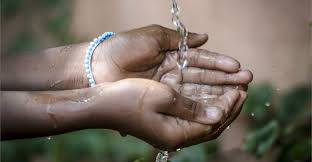
Stock image
By Omeiza Ajayi
The Federal Capital Territory FCT Water Board said it has generated over N3 billion between January and November this year, a sharp increase from the N2.47 billion it generated in 2022.
Acting General Manager of the Board, Daniel Audu Salka disclosed this at a media interface on Thursday in Abuja.
He said as a key revenue-generating agency of the FCT Administration, its main sources of revenue are the sales of water which constitute about 95% of its revenue, lifting points, water connections, water analysis, tender fee and prepaid.
According to him, one cubic metre of water which is equivalent to three drums of water is sold to residents at N110 and sold to commercial customers at N300, noting that the government is conscious of providing for the wellbeing of the people.
“As of today, the monthly IGR is N300 million plus, which is a total departure from the N200 million plus for year 2022.
“The successes recorded during the year under review includes improved IGR. In the year 2022 the Board’s IGR was N2,477,885,341.77k only but as at November 2023, the Board has made N3,055.685,882.42k only.
“Reduction in Non-Revenue Water. Non-Revenue water is the water that is lost to either leakage on the pipes, illegal connections, faulty meters etc which does not accrue to the Board as Revenue. The reduction in the NRW becomes possible with the constitution of the General Manager’s Task teams on Revenue drive and illegal connections.
“The task teams have been able to discover several illegal connections, disconnected them or in some cases formalized, similarly those who have not been paying bills for sometime have resumed payment to avoid being disconnected. In addition to the Task Teams, the Non-Revenue Water Unit also in the Office of the General Manager has been very effective in its activities thus reducing the rate of NRW in the last year”, he stated.
He added that the FCT Water Board has four Water Treatment Plants WTPS that produces the water being distributed to the residents of FCT.
“Water Treatment Plants 1 & 2 have the capacity of producing 5,000M3 (cubic meter) per hour each while WTPs 3 and 4 have the capacity of producing 10,000M3 each per hour. In the whole, the 4 WTPs have the capacity of producing 30,000M3 per hour for distribution to customers across the areas covered by the water distribution lines in phases I, II and III.
“The treated water leaves the treated water Tanks at Lower Usuma Dam and conveyed through the main Trunks by gravity and some by pumping to the reservoir Tanks in the respective areas of the FCT before it is released to customers for consumption.
“Presently, we are supplying, 13,00OM3 per hour x 24 hours =312,000M3 per day this is however not enough due to the inability of the facilities to convey more. Phases 3 and 4 of the Plants are meant to service Reservoir Tanks 1 and 6 that have been under construction for a while now. Similarly, it is important to mention that one of the WTP(Plant 2) is undergoing renovation and therefore not functioning for now. However, the Board has sustained the regular supply”, he added.
On the challenges facing the board, he said the original design of the Abuja Water Plan was to service about 3.5 million people in the FCT.
“At the time of the plan, this was a massive achievement. Infrastructure was put in place to service only a fraction of the City and a few suburbs like Bwari, Gwagwalada and Karu/Nyanya. Lack of the infrastructure in many developed areas today has made it impossible to service the Areas.
As a follow up to the above the available Infrastructure are also aging. Both the Plants and the other infrastructure (pipes) were installed over 3 decades ago. They are therefore prone to constant failures and high cost of maintenance. At this point, it becomes very essential to mention that the problem we encountered at the Karu/ Nyanya trunk line was a major failure in infrastructure of which the Administration is working around the clock to address.
“The Population growth in the FCT is very high and therefore adding pressure on the water facility. Some areas that were not originally in the plan for Water are yearning for it and some even resorted to self-help by illegally connecting to the Main Trunks thereby reducing the pressure of water from going to where it was meant to go. This is one of the major causes of low pressure being experienced in some parts of the City.
“Lack of a functional metering system allows for leakages and great loss of revenue as customers are charged on estimated bill”, he added.
Disclaimer
Comments expressed here do not reflect the opinions of Vanguard newspapers or any employee thereof.