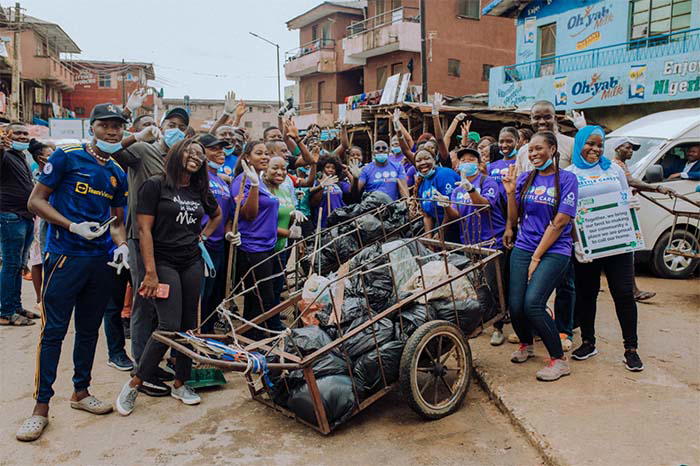
A cross-section of participants during the World Clean-Up Day event organised by Nestle Nigeria.
By Chioma Obinna
The state of drainage systems in Nigeria is unkempt, and a single rainstorm makes the already terrible conditions worse. Again, floods are said to cause havoc in Nigeria on a seasonal basis, particularly in densely populated urban areas like Lagos, where waste products such as plastic bottles and bags (sometimes referred to as polythene bags) clog drainage lines and prevent water from flowing freely when it rains. In addition to causing enormous losses, floods can harbour water-borne pathogens like cholera, typhoid, and dysentery.
Also, it’s not unusual to see people burning rubbish—including plastic—in an attempt to purge their surroundings of trash. Unfortunately, most of those who participate in this hazardous habit are not aware of the possible hazards to their health.
According to medical experts, chemicals emanating from burning and decaying plastic were inimical to health as well as marine life.
Findings have shown that the effect of plastic pollution is enormous because plastic items are non-biodegradable and cannot be broken down. Used plastic bottles that have decayed are a source of health dangers to humans. When they are indiscriminately disposed of by burning, chemicals that make up the plastics are contained in the fumes which could be inhaled. The chemicals contribute to health conditions such as lung cancer and asthma.
When they end up in oceans, the chemicals are released into the water which animals inhale. The chemicals contain toxic substances that cannot be broken down after the animals inhale them. Ultimately, some of the animals get to the man for consumption and unfortunately, cooking cannot destroy those chemicals as it only breaks down microorganisms like bacteria.
In realisation of the dangers of these wastes and its vision for a waste-free future, Nestlé Nigeria is taking necessary actions to promote behavioural change as well as building a circular ecosystem in waste management, starting from the company’s employees, to the communities where it operates and to a wider audience across Nigeria.
The company with a strong commitment to help protect, renew and restore the environment, Nestle is implementing many initiatives promoting Environmental Sustainability.
In 2022, Nestlé Nigeria launched her employee plastics collection scheme which inspires staff to protect the environment and combat plastic pollution by inculcating the habit of sorting wastes at source and recycling for sustainable environmental management.
Through the scheme, employees return all plastic materials, not limited to the company’s brands, and earn points culminating in exciting rewards and management recognitions.
Over the years, the company has partnered with the Lagos Business School Sustainability Centre on the “Advancing Nutrition, Health and Environmental Awareness through the Media” training which equips journalists to effectively communicate and educate the Nigerian populace on global best practices and lifestyle choices that impact everyday living and carry out fact-based reporting on nutrition, health, wellness, the environment, climate change, and corporate sustainability practices.
Nestlé has also extended her education campaign to the younger generations through the Sustainability Training for Kids which enables children to imbibe a sustainability mindset from an early age, thereby preparing them to become better stewards of the planet.
The training implemented in collaboration with the International Climate Change Development Initiative (ICCDI), furnishes children with information on waste management, introduces them to the conversion of waste to useful items, and encourages them to adopt positive behavioural changes to enhance environmental sustainability. The children are also taught sorting of waste at the source with the donation of segregated bins to participating schools.
In Nigeria where we have a nascent waste collection system, poorly managed waste ends up in waterways and clogs drainages, exacerbating the environmental hazards, including flooding which we are increasingly experiencing due to the effects of climate change.
Data shows that Nigeria generates more than 32 million tons of waste per year with Lagos alone producing about 10,000 metric tons of waste daily. Addressing the plastic waste challenge requires behaviour change from all and Nestlé believes that there is no better place to start than from within.
Nestlé Nigeria is therefore collaborating internally and with external stakeholders to address the waste challenge in line with the company’s global vision that none of its post-consumer packaging waste ends up in waterways or as litter in the environment.
The World Clean-Up Day commemorated annually in September, provides a platform for Nestlé’s employees to help promote awareness on environmentally sound waste management practices for a clean, safe and sustainable planet. Every year, volunteers under Nestlé Cares, the company’s global employee volunteering initiative, collaborate with the Africa Clean-Up Initiative (ACI), an NGO passionate about raising environmentally responsible citizens, for clean-up, sensitisation and advocacy on Environmental Sustainability.
This year, over 400 Nestlé employees joined the campaign by visiting twelve markets across the country. The clean-up exercise executed in Lagos, Kano, Port Harcourt, Sagamu, Ibadan, Jos, Abuja, Awka, Ota, Agbara, Enugu and Abaji, was powered by MAGGI, one of Nestlé’s leading brands.
Speaking on the initiative, Nestlé Nigeria’s Corporate Communications and Public Affairs Manager, Victoria Uwadoka, said the company was taking concrete actions to protect, renew and restore the environment every day.
“We are conscious that indiscriminate waste disposal coupled with limited recovery services aggravates the waste crisis. We also recognise that creating awareness through advocacy is necessary on our journey towards a waste-free future.
“Our priorities, therefore, include improving post-consumption plastic waste management by motivating behavioural changes and creating an efficient recovery system in collaboration with other industry and community stakeholders. We are also accelerating sustainability education through our employees, the media, our communities and children in our Nestlé for Healthier Kids beneficiary schools. The market clean-up exercises are one of the ways we have sustained our efforts of improving our environment over the past 5 years.”
Speaking, Founder/CEO of African Clean-Up Initiative, Dr Alexander Akhigbe, said: “Participating in clean-up exercises is a great way to get involved and make a difference in keeping our environment clean and healthy for everyone. At African Clean-Up Initiative, we are passionate about raising environmentally responsible citizens and communities, working for the highest good of the Planet. For this year’s exercise, we ensured the proper management of over 6,660kg of solid waste and 79kg of recyclables collected across all the locations, so that they do not end up back in the environment. We are honoured to be working with Nestlé Nigeria as her implementing partners for this year’s event”.
A member of the Ojuwoye market committee in Mushin, Lagos State, Comrade Aremu Komolafe expressed his pleasure with volunteers from Nestlé Nigeria who joined the traders and market leaders to clean up the popular market in South-West Nigeria. According to him, with the significant amount of waste generated daily due to a large number of visitors and traders buying and selling, the burden of keeping the market clean is huge. To mitigate the situation, every Thursday is designated by the Lagos State government for market clean-up and sensitization of shop and stall owners on the need for proper waste disposal.
He said that the cleanup initiative by Nestlé Nigeria will support these environmental sanitation efforts.
Nestlé Nigeria is a leading member of the Food and Beverage Recycling Alliance (FBRA), an Industry collaboration aimed at driving post-consumption waste management and recycling. Volunteers from the company also joined the FBRA-led clean-up initiatives for World Clean-Up Day.
Through the Nestlé Cares platform, employees have the opportunity to give back to society, impacting individuals and families, communities and the environment, by volunteering their time, resources and talents.
The company pledged its continuous commitment to ensuring a cleaner and healthier environment across her operating locations and helping to create a more sustainable world.
Disclaimer
Comments expressed here do not reflect the opinions of Vanguard newspapers or any employee thereof.