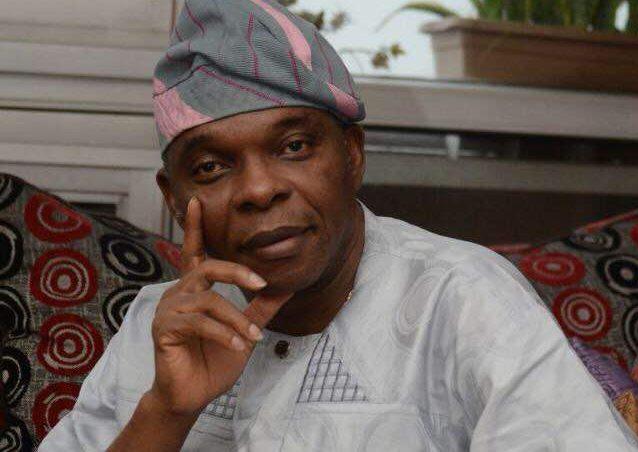
Muyiwa Adetiba
It has been sounding urgent and insistent for years with the decibels rising with each passing year. Initially, it sounded distant and the hard of hearing could be excused for not hearing it. But now, the once distant noise has long come close to home. And the faint noise of yesteryears has become a din; a cacophony.
Even the tone deaf would feel some unease at what is assailing their ears. I am talking about the sound of poverty. It is now strident, creating its own unpalatable rhythm and its captives are increasing everyday.Like a virus, it manifests itself in different ways and you’d be foolish to take the symptoms for the disease;just as you’d be unwise to take Covid19 for a common cold or a sore throat.
Unfortunately, this is what we have been doing, treating a very malignant disease with analgesics as if it is a common headache or such benign ailments. For the avoidance of doubt, poverty has been sounding loud and clear under different manifestations – the herder/farmer clashes, Boko Haram and other insurgencies, ethno/religious clashes.
These fights for turfare largely economic and should have been seen for what they are. And because our leaders are deaf to the rumblings of the economically disadvantaged, the symptoms of this malevolent disease have become harsher. The increased pace of kidnappings, of yahoo -yahoo, of extortions, of money rituals is the result. What really should we expect when just about 60% of our youths across board and about 80% in some parts of the country are unemployed and in many cases, unemployable?
Those who have lost their hearing but have not lost their sight can see the desperate signs of poverty in the society. They can see it in the rural – urban drift because farming of any kind has become endangered, in urban- European drift because there is very little in the cities. They can see it in the increasing number of the homeless as they look for shelter from the elements; in those who stay in the pelting rain because there is no alternative.
Because I sleep late and live in an area of town which has empty and underdeveloped plots of land, I see youths at midnight and beyond, as they saunter pass looking seemingly aimless in dimly lit areas;but in reality,they are eagle-eyed looking for where to lay their heads for the night. And at this time of the night or morning, any stray item which they believe has an economic value would be taken.
A lady who sells wares worth a mere pittance had a small cooler where she used to put soft drinks and perhaps pure water. She starts ‘work’ in the morning and stays until late at night. And probably because of the inconvenience – and cost- of ferrying the cooler everyday, she used to leave it behind. This cooler is rusted and weather beaten and of no economic value. Or so it seemed. But she got ‘to work’ one morning to find it was gone. It was the case of the poor robbing the poor.
A social media video assailed my eyes and my sensibilities recently. It probably caused me to write this article because it cost me some emotional pain. It should also assail the eyes of our leaders if they still see and cost them pain if they are still sensitive to the suffering of the poor. It was of a man having a meal by the street side. Battered looking kids came literally from the woodwork to watch him eat with hungry, expectant eyes.
You know how vultures lurk around an animal which is in the throes of death? That was how these kids lurked around this man. They couldn’t even wait to let him have his fill before they descended on the plate of food like animals of prey. I quickly deleted the clip but it had registered in my subconscious. Please try not to watch it if you have not already seen it. It is unsightly. It is unfortunately, the sight of poverty.
It is getting more and more common these days, not only in the north, but right across the country. Just this week, I was taking my evening walk when a kid walked across and called for help. He was about seven. I immediately averted my eyes and walked by – danger lurks in the evenings these days.But there was something about his cry that made me stop – it was like the cry of Blind Bartimaeus in the bible. I walked back and asked if he had eaten anything that day.
He replied in the negative. He was hoping to have his one meal of indomie later in the day. I asked him where he lived and he said it was a place called ‘the ghetto’ wherever that place is. He could be lying just to get a stipend. I wouldn’t put it past him. His likes learn survival tricks very early. But his apparel, emaciated body and gaunt eyes spoke more than words.
We are in the season of palliatives which is treating symptoms rather than addressing the disease. Even at best, perhaps these palliatives will reach just about a fifth of the truly hungry. The rest will go to the capricious middle class. Besides, it is said that it is better to teach people how to fish than to give them fish. The people will become dependent on it and the fish would finish someday – as in oil subsidy and other palliatives. The poor will then become poorer, the hungry will become hungrier, and the desperate will become more desperate.
We have to ask ourselves some hard questions in order to teach people how to fish. Do our people have the capacity to fish in terms of skills and opportunities? Is our growing number of unskilled youths not an albatross? Can we compel those who are breeding like rabbits to control their libido if they do not want poverty and insecurity to become a way of life? Do we have the will to correct both economic and political inequalities in the country? Can we address the growing gap between the very rich and the poorest of the poor? And last but certainly not the least, can we face corruption fairly and squarely?
Nigeria is a country blessed with natural and human resources. But if we do not identify the root cause of our poverty, and excise the malignant growths from the system, if our leaders continue to wear blinkers even as they continue to plug their ears, we shall continue to wallow in poverty and insecurity.
I don’t know what the labour unions want but palliatives are not the way to go. I would expect instead, a reduction in the cost of governance especially in the Executive and the Legislature. I would expect an economic plan that addresses poverty head on. That kind of agitation will have a groundswell of support. Palliatives and salary increments will only fuel further inflation and exacerbate the problems of those who are not on a wage structure.
Disclaimer
Comments expressed here do not reflect the opinions of Vanguard newspapers or any employee thereof.